Breaking
Now: Pedro Toledo named CEO, Petaluma Health Center By the numbers: 9 clinics. 42,000 patients. 220,000 visits. Heritage: Son of a 1950s Bracero farmworker Public service: 1 of 14 on California's 2020 Redistricting Commission Degrees: Stanford x2. Cornell Law. Georgetown. Target: 50,000 patients post-expansion Now: Pedro Toledo named CEO, Petaluma Health Center By the numbers: 9 clinics. 42,000 patients. 220,000 visits. Heritage: Son of a 1950s Bracero farmworker Public service: 1 of 14 on California's 2020 Redistricting Commission Degrees: Stanford x2. Cornell Law. Georgetown. Target: 50,000 patients post-expansion
YesPress / Profile / The Petaluma File

Pedro Toledo

A lawyer who studied anthropology, a sociologist who runs clinics, the son of a Bracero who now sits on the boards that shape American community health.

CEO, Petaluma Health Center Petaluma, CA JD - MA - MHSA Est. 2014 at PHC
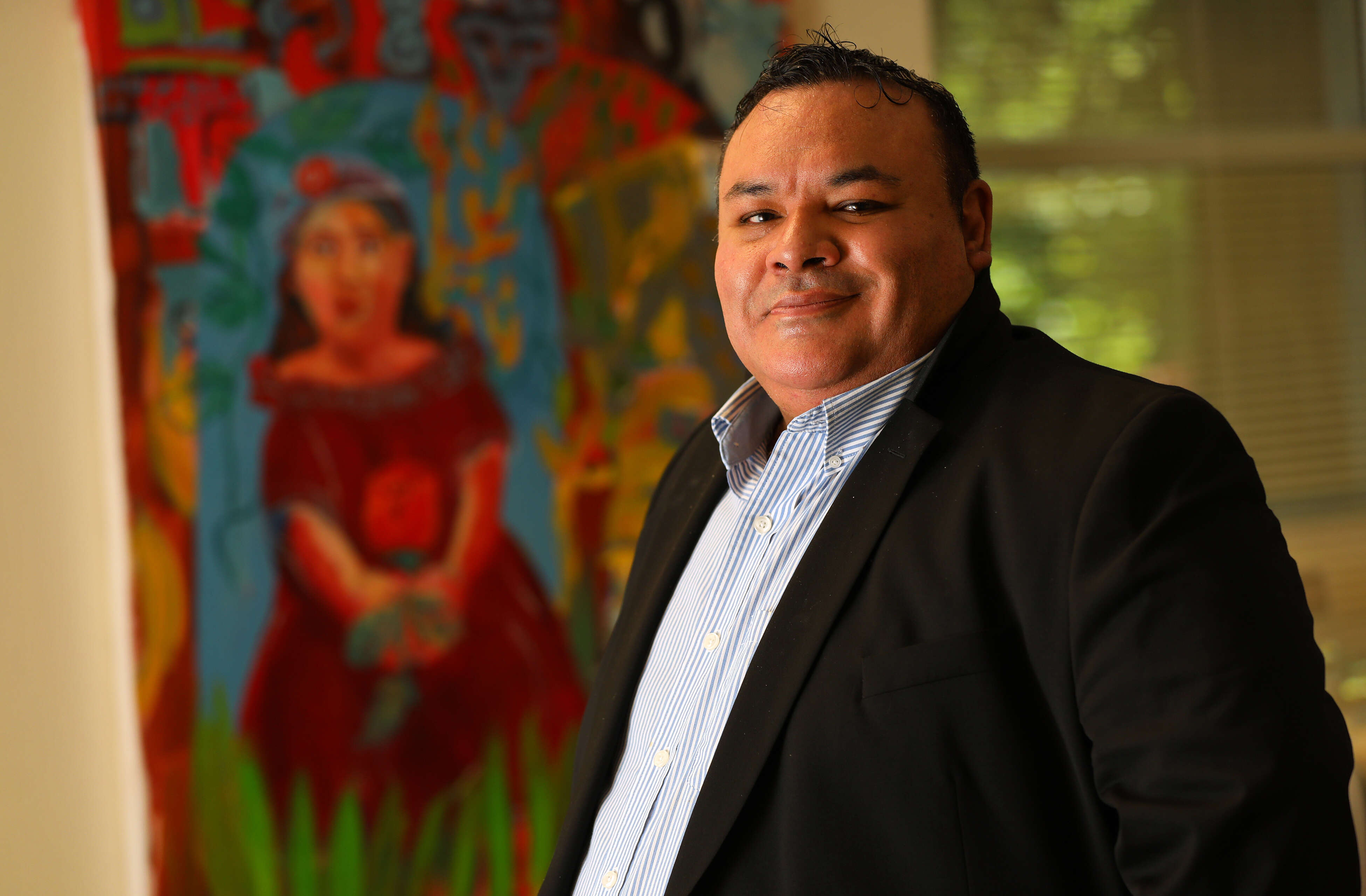
Portrait of Pedro Toledo
Toledo, photographed in Sonoma County / Press Democrat archive
The Lede

The clinic, the commissioner, the kid from Alameda

On any given Tuesday morning in Petaluma, the parking lot at 1179 North McDowell looks like a small city queueing for breakfast. Pediatric patients in pajamas. Dental appointments rolling in from West Marin. A mobile health van idling, ready to drive somewhere a clinic cannot reach. Pedro Toledo runs all of it - nine sites, a couple of hundred thousand visits a year, and a budget close to $77 million.

The strange specific: Toledo's name is the same as his father's. The first Pedro Toledo arrived from Mexico in the 1950s as a Bracero - a guest worker imported to pick crops while American men were at war or at college. He stayed. Worked the fields. Became a chef. Got citizenship in the 1980s and voted in every election that came after. The second Pedro Toledo went to Stanford. Twice.

He came to Petaluma Health Center in 2014 as Chief Administrative Officer, the role that other people might call "the operator." For ten years he ran logistics, government affairs, and the unglamorous work of keeping a federally qualified health center solvent under three sets of overlapping rules. In February 2024 the board moved him into the corner office.

What he inherited is unusual for a non-profit clinic - it's bigger than most hospitals in its category, with 650 employees, a mobile health unit, and a planned merger sitting on the desk. What he intends to do with it is even stranger: shrink in the right places, grow in the underserved ones, and keep insisting that the clinic is also a civic institution. That has been the through-line since the day he took the job.
42K
Patients / year
220K
Visits / year
9
Clinic sites
$76.5M
Annual revenue
Origin

An anthropologist walks into a law school

Toledo's resume reads like four different people decided to share a name. Bachelor's in Anthropology from Stanford. Master's in Sociology, also Stanford. Then Cornell Law in Ithaca, where the snow falls horizontally and lawyers learn to argue indoors. Then Georgetown for a Master's in Healthcare Services Administration, because law and policy alone do not make a hospital run.

It is tempting to call this overqualified. It is more accurate to call it strategic. American community health is run on the seam between federal grants, state Medicaid policy, county public health bureaucracy, and the labor economics of small-town California. You need a lawyer for the contracts, a policy person for the funding formulas, and someone who can read a chart of accounts without panicking. Toledo trained for all three, then for the fourth thing nobody teaches in school: keeping 650 staff inspired through a pandemic.

Before Petaluma, he did government relations for what is now Aliados Health - the regional network of community health centers in the Redwood Empire. It is the kind of job where you sit in Sacramento at 7am explaining to a legislative aide why a five-letter acronym matters to a town of 60,000 people. He kept the receipts. He brought them with him.

Toledo's toolkit

Degrees and where they go to work
AnthropologyStanford
SociologyStanford
LawCornell
Health AdminGeorgetown
Field note "We know that income is tied to life expectancy." - Toledo, explaining what a community health center was originally for.
"If there's been one recurring lesson over the past two years, it's been that inequality costs lives." - Pedro Toledo, 22 to Watch, 2022
The Work

How a clinic grew into nine

Petaluma Health Center is a federally qualified health center - the official designation for the non-profit clinics built across America to serve patients regardless of insurance status. There are about 1,400 of them in the country. PHC is now one of the larger ones in Northern California, and a lot of that growth lines up with the years Toledo has been running operations.

Build

From one site to nine

Since 2014 the center has added eight additional delivery sites across Sonoma County and West Marin, including school-based clinics and a recently purchased urgent care facility in Rohnert Park.

Reach

The mobile clinic

In 2022 PHC unveiled a state-of-the-art mobile health unit, designed to bring primary, mental, and dental care to people who do not, or cannot, come to a building.

Span

Full-stack care

Medical, dental, behavioral health, chiropractic, acupuncture, optometry, family-centered birthing. The clinic operates more like a small health system than a doctor's office.

Crisis

45,000 vaccine doses

During the pandemic, PHC administered tens of thousands of COVID-19 vaccinations - in a county where rural geography makes mass vaccination genuinely complicated.

Plan

50,000 patients

Toledo's stated target post-expansion. He has also said the volume will reach around 275,000 annual visits across the full service line.

Reality

The rightsize

In March 2024 PHC announced 32 layoffs as COVID-era federal subsidies expired. Toledo framed it as the cost of sustainable growth, not retreat.

Civic Life

The maps job

In 2020, California ran one of the strangest hiring processes in American politics. Out of 20,000 applicants, the state randomly selected eight commissioners, who then selected six more from the pool. The fourteen who ended up in that room were charged with drawing the boundaries of every congressional, state senate, state assembly, and Board of Equalization district in the country's largest state. Toledo was one of them.

He served as a Democratic commissioner on the California Citizens Redistricting Commission. The maps they drew shape the next decade of representation for 39 million people. It is the rare civic credential that genuinely cannot be bought or lobbied for.

He still lists it casually - one bullet on a bio that already includes four degrees and a CEO title.

Three boards he sits on

NationalNACHC
National Association of Community Health Centers
StateCPCA
California Primary Care Association
RegionalPartnership HealthPlan
of California
Selection rate 14 commissioners. 20,000 applicants. One Toledo.
"The mobile health clinic will bring care closer to the people who need it most - whether near their homes, schools or places of work." - Toledo, on the launch of PHC's mobile unit
Timeline

How he got here

Pre-2014
Government relations at what is now Aliados Health, the regional network of California community clinics.
2014
Joins Petaluma Health Center as Chief Administrative Officer.
2020
Appointed to the California Citizens Redistricting Commission - 1 of 14 chosen.
2021
Maps from the Commission are certified, redrawing California's political geography for the decade.
2022
PHC's mobile health van enters service for underserved Sonoma County communities.
2024 - Feb
Named Interim CEO of Petaluma Health Center.
2024 - on
Operates the merger pipeline, reopens the Rohnert Park urgent care site, and aims for 50,000 patients.
The Awards Shelf

Things people gave him

Lideres of the Year

MillerCoors. Awarded for leadership in the Latino community.

Hero in the Fight

National Alliance on Mental Illness recognition for mental health service expansion.

Forty Under 40

North Bay Business Journal. Awarded for regional impact.

22 to Watch in 2022

Press Democrat's annual list of people who would shape the year ahead in Sonoma County.

Personal File

Quirks and corners

Same name as his dad

The original Pedro Toledo arrived from Mexico in the Bracero program. He picked crops, then cooked, then naturalized in the 1980s, then voted in every election. His son carries the name and, by his own account, the lesson.

Anthropology to ops

Few CEOs of a 650-person organization started by studying culture. Toledo did. He treats community health like fieldwork - what people actually do, not what the spreadsheet hopes they do.

Four degrees, still working

Stanford BA, Stanford MA, Cornell JD, Georgetown MHSA. He uses them. Most days, probably all of them.

Federal to county

He has done government relations, ridden in mobile clinics, sat in commission meetings drawing political districts, and answered emails at 1179 N McDowell Blvd. Few healthcare leaders zoom in and out that hard.

Quietly bilingual mission

His public quotes specifically name "language-minority residents." That is a deliberate phrase. It is how he frames who PHC exists for.

Believer in income as health

He talks about life expectancy and income in the same breath. That is the sociologist talking, and it is the policy line he carries to Sacramento.

"We just have to have a sustainable model in which to expand." - Toledo, on growth after the COVID subsidies ended
Connections

The map of a Petaluma operator

Toledo's network does not look like a Silicon Valley operator's. There are no venture funds, no fellowship cohorts, no big-name accelerators. Instead there is a thicker, slower web: a network of California community clinic CEOs, statewide policy associations, county public health departments, the National Association of Community Health Centers, and Partnership HealthPlan of California. These are the institutions that decide whether a child in West Marin can see a dentist this year.

Add the redistricting commission alumni, the Sonoma County non-profit world, and the Stanford and Cornell alumni networks, and you have an unusually portable rolodex. He keeps using it the same way: not for himself, for the clinic.

What's next

The next five years, on his terms

Toledo's own headline goals are spelled out in the local press: take Petaluma Health Center to 50,000 patients and roughly 275,000 visits a year. Reopen the urgent care facility in Rohnert Park, this time with behavioral health and obstetrics services built in. Close the clinic merger that is reportedly on the table. Find a staffing model that survives the end of the COVID subsidies and still expands into communities PHC has not yet reached.

The harder, quieter goal sits underneath all of that. He believes income is tied to life expectancy, that inequality costs lives, and that a clinic is a civic institution as much as a medical one. Whether the next chapter of Petaluma Health Center proves him right is, in the most literal way, his job to find out.

Find him

Links and feeds

Share this profile