Lawyers do not need another chat window that writes with the serene confidence of someone who has never met a sanctions order. They need a fast way through the dull, expensive middle of legal work: finding authority, sorting the record, shaping a draft and showing a colleague exactly where the answer came from. Paxton AI is built for that middle. It is a web workspace for U.S. legal research, drafting and file analysis, with newer tools for medical records and shared litigation matters.
The best fit is a solo or small-to-midsize firm with more matters than research hours, especially in litigation, personal injury, family, employment or criminal practice. A larger firm can buy enterprise controls, but Paxton's clearest appeal is to a team that wants one capable subscription instead of a shelf full of point products. The individual price - $499 a user each month, or $2,999 prepaid for a year - makes the calculation blunt. If it reliably saves several professional hours, it can pay its way. If it becomes an occasional novelty, it is a very handsome browser tab.
Why Paxton exists
Co-founders Tanguy Chau and Michael Ulin arrived with unusually relevant baggage. Chau had worked in venture capital and served as chief compliance officer at a regulated investment adviser. Ulin had worked in regulatory affairs and built machine-learning systems for insurance risk. In a 2024 Law School Toolbox interview, they described the product as retrieval-augmented generation: Paxton first finds material in a legal database, then uses a generative system to answer from it. The source links matter more than the acronym.
Founded in 2023, the company raised a $6 million seed round that year. A $22 million Series A followed in January 2025, led by Unusual Ventures, bringing disclosed funding to $28 million. Paxton said monthly recurring revenue had grown 14-fold and active customers eightfold in the previous nine months. Those are company figures, useful as signs of momentum rather than audited proof of market dominance.
The workbench, not the oracle
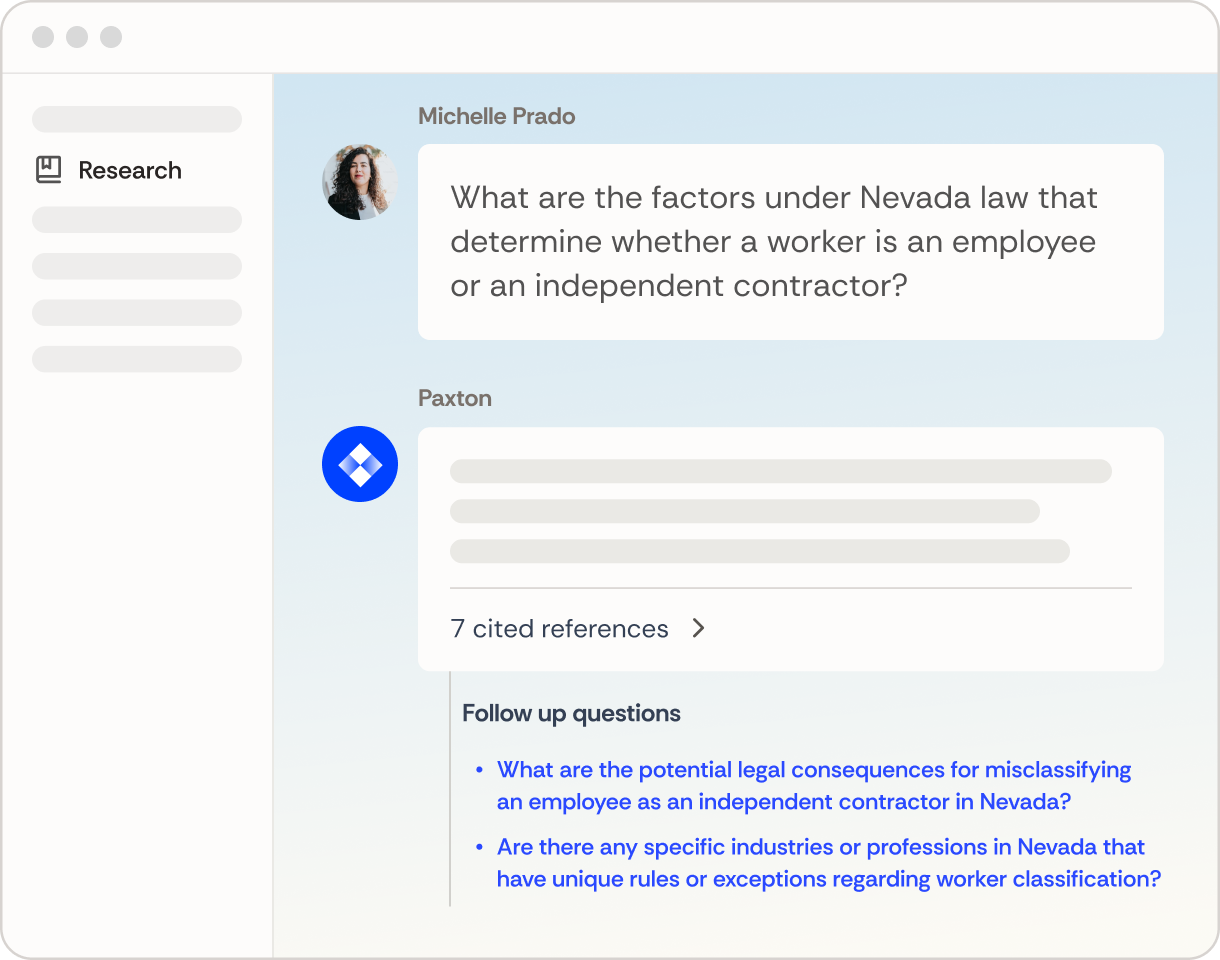
Open the assistant and the job can begin as a question, a drafting instruction or a file upload. Research mode covers federal and state statutes, regulations and case law. A lawyer can select a jurisdiction, ask an issue-based question and open the authorities attached to the response. Paxton's late-2025 update brought that research engine directly into the drafting conversation, which fixes an ordinary but costly irritation: finding law in one place and rebuilding its context in another.
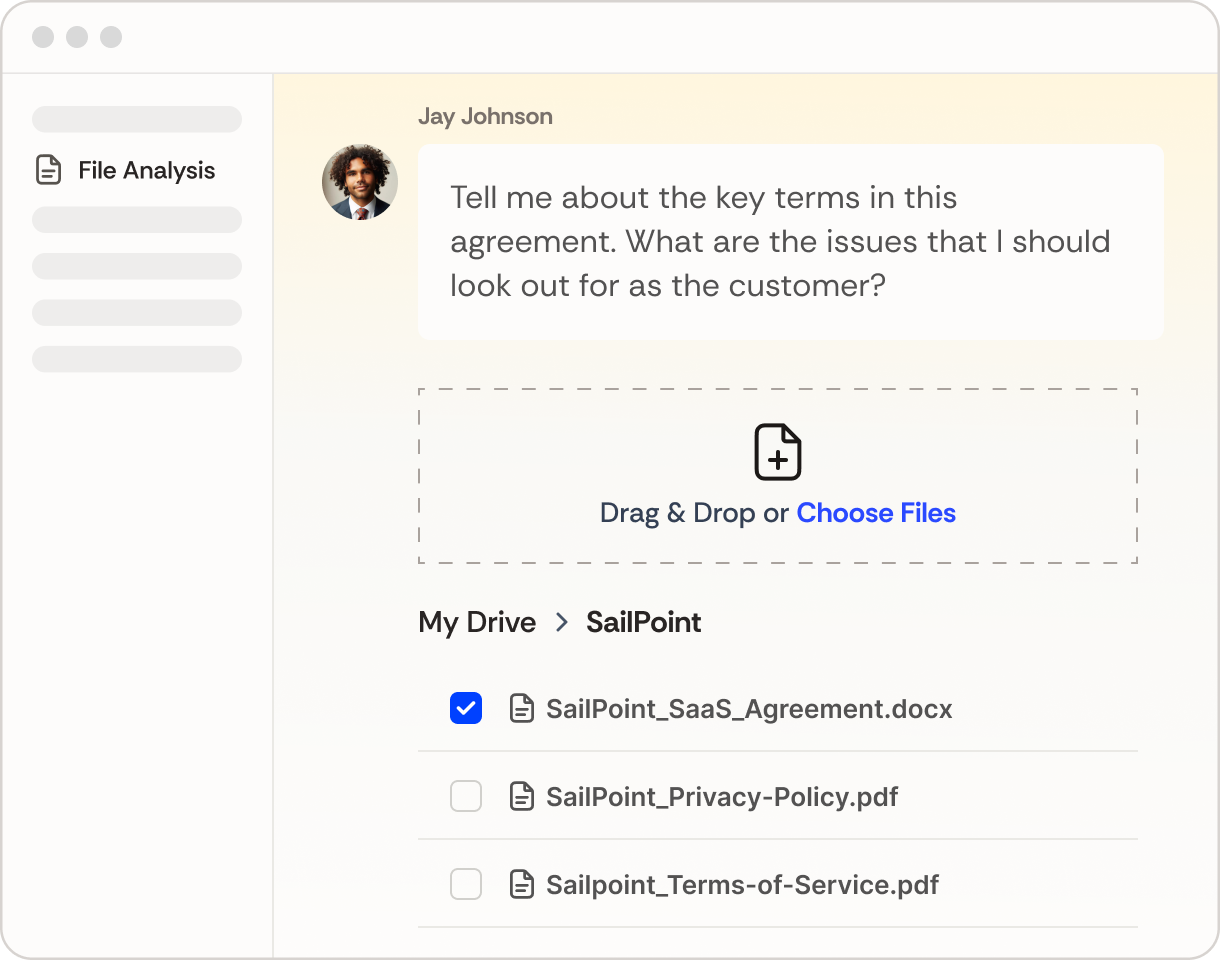
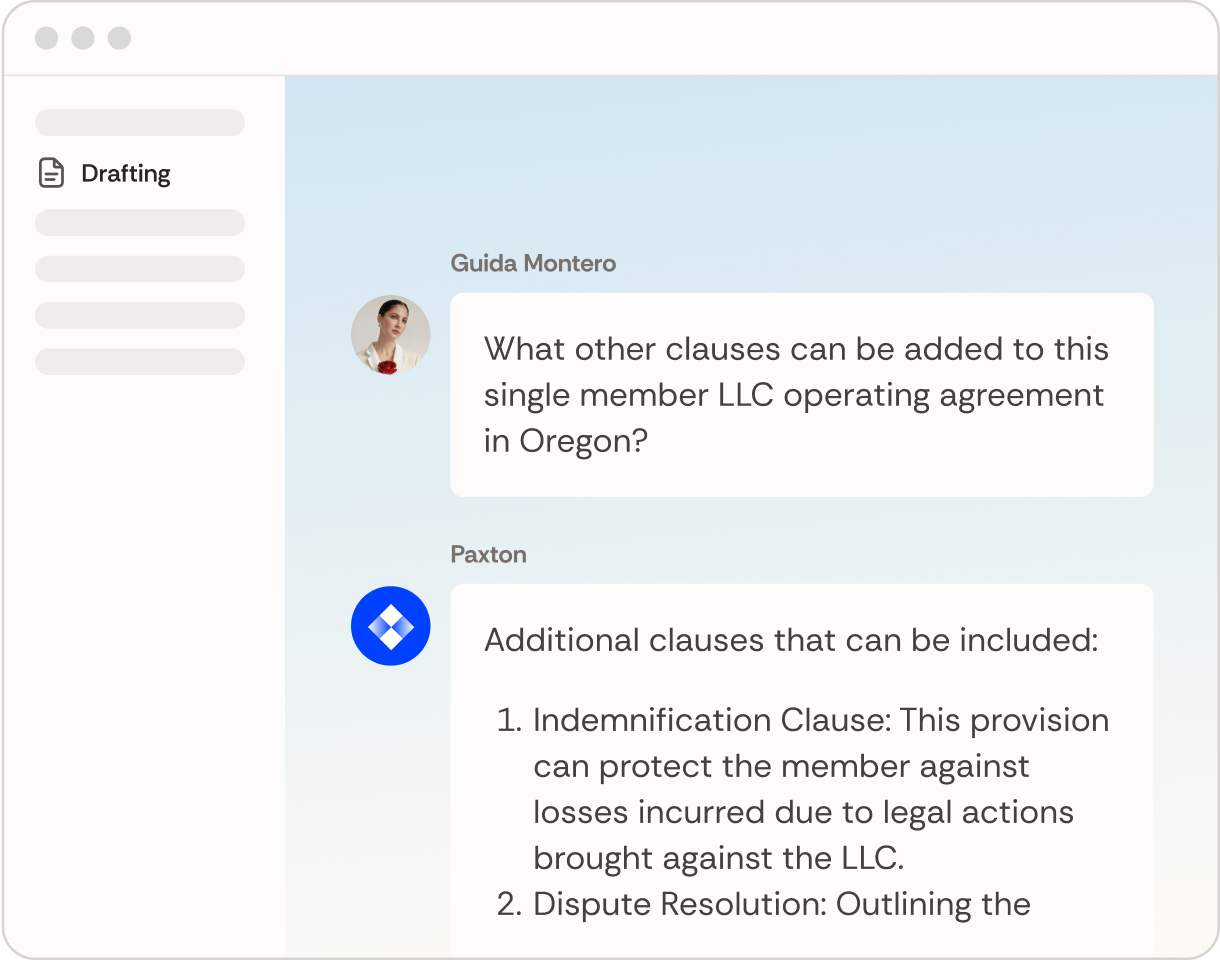
Drafting handles motions, letters, clauses, contracts and complaints. The result can be refined in Canvas and exported for review. File analysis takes one or several documents, extracts facts, locates important language and supports follow-up questions. Paxton's help center says a multi-file query summarizes the ten most relevant sections. That makes it a useful first-pass reader, not a substitute for knowing what landed outside the top ten.
Research
Ask in ordinary language, choose the jurisdiction, then inspect linked statutes, regulations and cases.
Draft
Move from authority to motion, letter or clause inside the same conversation, then export to DOCX.
Analyze
Upload a record, agreement or transcript and use questions to pull facts, issues and provisions into view.
Collaborate
Share a whole matter with teammates, including its files and generated work, without passing around one login.
Personal injury gets its own machinery
The product has moved beyond generic chat-and-draft features. Medical Chronologies, introduced in beta in September 2025, applies OCR to digital files, faded scans and handwritten notes, then organizes visits, diagnoses and treatments into a sourced Excel timeline. Medical Billing Summaries arrived weeks earlier to group charges by provider, calculate totals and flag lien-bearing costs. Paxton says the initial billing release focuses on amounts, providers and liens rather than medical-procedure context. That small-print boundary is worth remembering.
These features reveal the company's sensible product instinct: attack work with a visible beginning and end. A chronology can be compared with the underlying page. A charge total can be reconciled. A research answer can be checked against a linked opinion. Generative systems are easier to trust when the interface makes distrust productive.
The price changes the question
At $499 monthly per individual, Paxton is not competing with a casual consumer chatbot. The annual plan, $2,999 upfront, cuts the effective monthly rate roughly in half. Enterprise pricing is volume-based and adds onboarding, administration, collaboration and support. A card is required for the seven-day trial, so set a calendar reminder before curiosity becomes procurement.
The right comparison depends on the bottleneck. CoCounsel and Lexis+ AI sit beside established research ecosystems. Harvey and Legora court firms that want broad, configurable legal workspaces. vLex Vincent AI combines research with a large legal collection. Spellbook lives close to transactional drafting inside Microsoft Word. Paxton's lane is the independent all-rounder: research, files, drafting and litigation-specific processing in a single web app.
| Choice | Natural home | Test before buying |
|---|---|---|
| Paxton | Small and midsize U.S. practices seeking one web workspace | Your jurisdiction, ugly scans, complex drafting and actual review time |
| CoCounsel | Teams already deep in Thomson Reuters and Westlaw workflows | Which research content and tasks your subscription includes |
| Lexis+ AI | Firms centered on LexisNexis research | Fit with current contracts, sources and drafting habits |
| Harvey / Legora | Larger firms wanting broad workflows and implementation support | Seat commitments, rollout effort and matter-specific performance |
| Spellbook | Transactional lawyers who spend the day in Word | Contract depth versus your need for litigation research |
Accuracy has an asterisk
Paxton reported 93.82 percent average accuracy after testing a random 1,600-task sample from the Stanford Legal Hallucination Benchmark. Its published table included perfect performance on the sampled case-existence task and lower results on citation retrieval. The test is welcome detail, but it was run and reported by Paxton. It does not predict performance on your record, your court or a genuinely ambiguous question.
The wider evidence counsels modesty. A Stanford study of other retrieval-based legal research products found hallucinations remained possible even when systems were grounded in legal databases. That study did not test Paxton, so it is not a score against the product. It is a useful warning against treating RAG as an anti-error force field.
Counsel's red pen stays
Confirm that every case exists, that the cited passage supports the proposition, that the law is current, and that the jurisdiction is right. Then check the facts Paxton selected and the ones it ignored.
Practitioner chatter is mixed in the believable way. One Reddit lawyer called Paxton's document database useful but found it “limited with complex drafting.” Another discussion praised it as a contract-free alternative, while a broader thread warned that legal AI tools often sound smarter than they are. Anonymous comments cannot settle a purchase, but they point toward the correct trial: use a difficult task whose answer you already know, then count substantive edits rather than admiring the fluency.
Privacy is part of competence
Paxton lists SOC 2 Type II, ISO 27001 and HIPAA compliance. It says data is encrypted, customer documents are not used for model training and enterprise clients can negotiate retention choices, including deletion after a session or a defined period. Those are relevant controls for legal and medical files. They do not replace a firm's own duty to study the current agreement, understand subprocessors and retention, secure client consent where needed, and decide what should never leave its systems.
There is also a plain-language boundary in Paxton's site notice: it is not a law firm, its communications are not protected by attorney-client privilege or work product merely because they happen in the app, and it is not a substitute for counsel. The product is web-only, needs an internet connection and has no native mobile app. No current foundation model is publicly named. Buyers should evaluate the outputs and controls they can inspect, not guess which famous model may be backstage.
How to run the seven-day trial
Skip the polished demo problem. Choose one closed matter with known authorities, one hostile scan, one multi-document question and one draft your team has already finished. Ask Paxton to reproduce useful work. Record research time, missed documents, citation errors, structural edits and the minutes needed for verification. Invite the person who actually handles the files, not just the partner signing the invoice.
Then test handoff. In July 2026, Paxton introduced Secure Matter Collaboration so each authorized teammate can enter the same matter and see files, drafts, summaries and chronologies. That may sound less glamorous than autonomous legal reasoning. In a working firm, eliminating the “who has the latest version?” hunt can be the feature people notice every Tuesday.
The ruling
Paxton is for a U.S. legal team that values consolidation and has enough repeatable research, drafting or record work to justify a serious per-seat fee. Its strongest idea is traceability: a source behind an answer, a page behind a timeline and a shared matter behind a handoff. Buy it if the trial shows fewer paid hours reaching a reviewable result. Pass if your practice needs deeper specialist tooling, native Word work, non-U.S. law or only occasional AI help.
Relevant links
- Official website ↗
- Current pricing ↗
- Research coverage ↗
- Help center ↗
- Product news ↗
- LinkedIn ↗
- X / Twitter ↗
- Series A report ↗