Before there were enterprise platforms, there were Sundays. Pavan Peechara remembers his father travelling hundreds of kilometres, returning to the family in Warangal every Sunday or every other Sunday. This went on for seven years. His mother looked after him and his younger brother. The arrangement served a purpose familiar to many Indian families: give the children an education, then let education open the door.
He recalled that childhood in a 2012 essay, “Towns In India”. It begins with an eight-year-old’s town and grows into an uncomfortable question about success. Parents and places invest in children; the children prosper somewhere else. The departure can be perfectly sensible for the traveller and rather expensive for the place left behind.
For Peechara, now associated with Adaequare, Udyog and Taxilla, that question sits beside a career in business software. His professional life concerns systems, transactions and the machinery of running companies. His writing asks who gets to participate in the economy those systems serve. Read together, the two make a more interesting portrait than a collection of executive titles.
The town that paid for the ticket
In his account, Warangal offered education but relatively few industrial opportunities. He remembered public-sector employees, shopkeepers, traders and professionals, with parents concentrating their resources on their children’s schooling. He counted himself among the beneficiaries. The gratitude in the essay is personal; the argument quickly becomes economic.
He wondered whether towns could develop businesses capable of retaining the people they educated. He reached for examples close to home: Nirmal’s toys, Pembharthi’s brasswork, Warangal’s leather and weaving towns such as Gadwal. These were existing skills and local economies, deserving a future as well as a history. The essay’s concern was the distance between having talent and having somewhere nearby to use it.
Its comments brought a useful interruption. A reader listed obstacles to entrepreneurship in India, including infrastructure costs and difficulties winning work. Peechara replied by pointing to entrepreneurs who had built businesses under difficult conditions. It was an exchange between optimism and a fairly substantial bill of particulars. His preference was to look for precedents that encouraged action.
“I like to get inspired looking around for positives which prevailed in even worse environment.”
Pavan Peechara, replying to a reader in 2012
An engineer acquires a business vocabulary
Peechara studied electrical and electronics engineering at Gulbarga University, with his education listed from 1993 to 1997. His early entrepreneurial experience included an infrastructure business founded in 1997 and later handed over to his family. Software became the field in which his technical and commercial responsibilities accumulated.
His career has included implementation projects, systems analysis, application development and technology consulting. At ICSA, a technology services company, he worked in business development with responsibility for growth strategy. Those assignments put him on both sides of a familiar conversation: what a system can do, and why a customer should pay for it.
At Adaequare, his remit extends across organisation building, goals and operations. He is identified as its founder, president of the board and chief executive, alongside his role as a director at Udyog. He also holds a Microsoft solutions architect certification. The combination gives his career a practical texture: technical delivery, people, commercial decisions and the recurring work of keeping an organisation pointed in the same direction.
There is a useful historical measure of Adaequare’s business. In the 2010 Deloitte Technology Fast 500, the company ranked 487. Its reported revenue rose from $4.722 million in fiscal 2005 to $11.962 million in fiscal 2009, a listed increase of 153 percent. Peechara was named as CEO. These are dated figures, but they establish that the company had built a measurable business well before Taxilla.
2010 Technology Fast 500 · Rank 487
Commerce has more than one moving part
Excellor, an Adaequare spinoff founded by Peechara, brought another dimension to his work: enterprise ecommerce. His involvement covered product management and business strategy. A recorded eTailingIndia session introduced him as Excellor’s founder and carried the title “Beyond eCommerce”. It is an apt title for someone whose work has repeatedly reached into the processes surrounding a transaction.
Adaequare’s intellectual-property record also carries his name. A published US patent application identifies him as inventor of a method for assessing a content creator’s value to parties in a transaction. It sought to connect actions and content with commercial outcomes. That particular application was later abandoned. It belongs in the story as evidence of a technical investigation, with its status kept intact.
His 2014 writing on mobile technology explored a related commercial change. He saw digital distribution weakening the control of intermediaries in music, books and communications. Smaller producers, writers and service providers could reach customers through different routes. His interest lay in what this might permit smaller businesses to attempt.
He went further, wondering whether new patterns of globalisation could keep work closer to consumption or invention. These were his expectations, rather than settled predictions. They connect neatly to the earlier Warangal essay: an interest in how opportunity is distributed, and whether technology might give more people a reasonable place to begin.
Tax rules, with the sleeves rolled up
Udyog placed Peechara in the decidedly unromantic world of tax automation. Romance has generally struggled to survive a filing deadline. Yet there is plenty here for an engineer: different transaction types, calculations, rules, exceptions and reports that must agree with one another. A business can sell successfully and still spend a considerable amount of effort making its records intelligible.
In 2014, Udyog received CIO Choice recognition in the small and medium enterprise category for governance, risk and compliance. Peechara appeared with colleagues Janak Bhuta and Pravin Savant receiving the felicitation trophy from Sumit D. Chowdhury of Reliance Jio Infocom. The award attached to the company and its work, a distinction worth preserving when telling a founder’s story.
His writing about India’s proposed GST system showed interest in more than a new software requirement. In a June 2015 essay, he supported simpler compliance while raising questions about state autonomy, reporting burdens and repeated scrutiny by different agencies. For small businesses, he argued, the effort of responding could itself be costly.
He proposed ways of sharing information between agencies and discussed how a staged implementation might work. These were arguments made before GST’s eventual introduction, belonging to that moment in the debate. His closing description of himself was particularly revealing: an engineer working on tax and compliance automation. He approached the machinery with a builder’s eye, while acknowledging the limits of his expertise.
The company has rules to follow, too
Adaequare’s own operations also brought a compliance failure. In March 2021, the company settled a US Justice Department claim concerning citizenship-status restrictions in recruitment for a client. The department concluded that the screening unlawfully excluded protected applicants. Adaequare denied intentional citizenship discrimination, changed its recruitment policies and agreed to a civil penalty, training and monitoring. Peechara signed the agreement as president.
The company began asking clients for a lawful justification when they requested citizenship restrictions. The episode belongs alongside the growth figures and product work: a company selling technical capability also has to make its own procedures work properly. It is part of the operating record, without turning a company settlement into an allegation of personal misconduct.
From India’s GST debate to a room in Muscat
Taxilla, founded by Peechara in 2017, extends his work into enterprise data and regulatory technology. The platform addresses financial operations, compliance and electronic invoicing. Its subject matter follows naturally from his earlier interests: information coming from business systems, being processed under rules, and reaching the people or institutions that need it.
In August 2026, he appeared at a Muscat seminar on Oman’s Fawtara electronic invoicing rollout. Organised by MCA Oman with Taxilla, the event brought together more than 140 finance professionals, technology specialists and business representatives. Peechara discussed global electronic invoicing trends and enterprise readiness, then joined a panel with tax and advisory specialists.
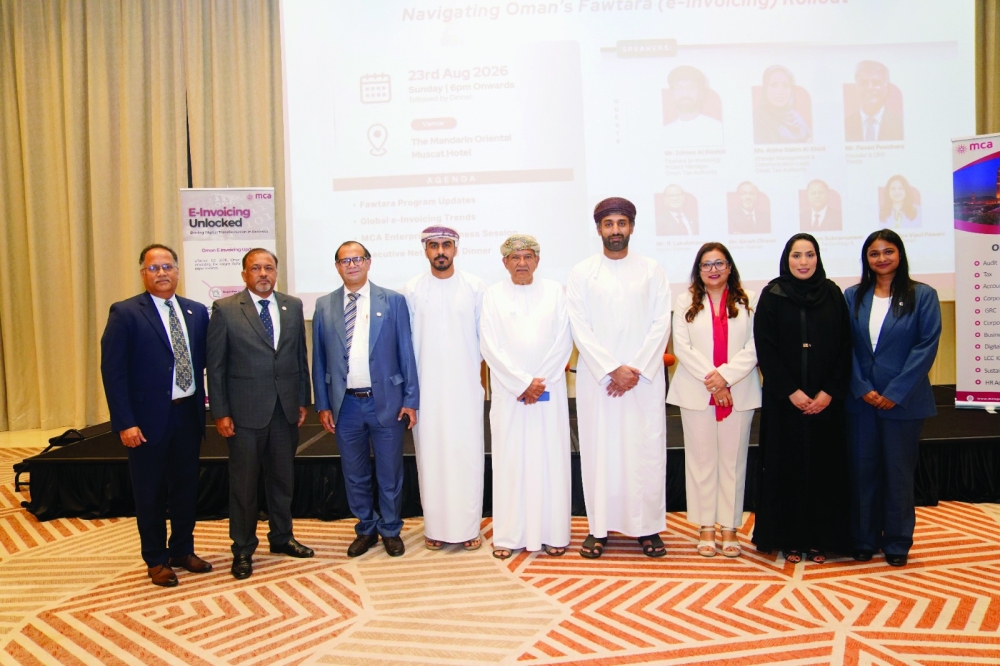
The setting had changed considerably from Warangal, but the topic remained practical: getting organisations ready for a different way of working. Taxilla’s presence in Oman, including local hosting capability, made the discussion concrete. Peechara was taking part in the operational questions that sit between a policy announcement and a business being ready to use the resulting system.
His other public commitments include TiE Hyderabad, where he appears among the chapter’s charter members and on its 2025 board. That places him among founders, executives and professional advisers concerned with entrepreneurship. It is another connection between running a business and participating in the community around business creation.
A useful question to carry home
Peechara’s stated ambition on LinkedIn is brief: “Creating a lasting business with purposeful innovation.” The useful word is lasting. His record moves through services, commerce, tax software and regulatory technology, with much of the work happening in the parts of business that customers expect to function without ceremony.
The question from Warangal remains a fitting companion to that ambition. Education can help a child leave; enterprise can help give the next child a choice. Peechara has written about that possibility and spent his career building businesses. His essays give that business career a personal context: the parents who made education possible, the industries he remembered and the opportunities he hoped smaller places could create. Warangal has a place in the picture alongside the companies.
Watch / eTailingIndiaBeyond eCommercePavan Peechara, founder of Excellor ↗