Paul Klein IV was watching football on his couch when he wrote the memo that would send him back into startup life. Three thousand words about internet browsers: an unusual accompaniment to a game, even in San Francisco. He had already helped build and sell a company. He had also told people he would not do it again. Then he found a problem he could not leave alone.
The problem was familiar enough to be irritating. At Stream Club, and later at Mux, he had worked with browsers running on servers. Keeping those browsers alive was difficult, repetitive work. Now developers building AI applications were discovering the same difficulties. Klein had accumulated a rather specific education, and the rest of the industry was beginning to need the notes.
His company, Browserbase, began in January 2024. Its proposition was wonderfully literal: software that does things on the web needs somewhere to open the web. Behind the talk of agents and intelligence sat a browser, waiting to be operated. Klein knew how much trouble that apparently modest requirement could cause.
A useful person to have in the room
San Francisco was part of his life before it became the setting for his companies. He studied computer science at San Francisco State University. His college activities included leading the Association for Computing Machinery chapter, founding SF Hacks, and serving as an alternate captain of the ice hockey team. In 2017, the computer science department named him a departmental honoree.
There is a pleasing range in that list: write the code, organize the gathering, take the ice. It gives some context to the founder who would eventually have to explain infrastructure, hire engineers, and persuade people to trust a company that had barely begun.
He joined Twilio as an engineering intern in 2016. At the first all-hands meeting he attended, the company announced its filing to go public. A first job can set a person's expectations. This one offered an unusually theatrical introduction to the business of developer tools.
Twilio made communications accessible through software interfaces. Klein went on to work in identity and access, eventually leading its Login team. The work concerned the entrance to the product: who could get in, how they proved who they were, and how to keep the machinery dependable. Years later, agents trying to log into other people's websites would make that experience newly relevant.
The weekend that acquired a company
His first startup began with a message from Lan Paje, whom he knew slightly from college. Paje and Jun Hong were working on a service for paid virtual classes. Klein offered to help. He put together a backend and a Zoom integration; the team launched on Product Hunt after a weekend of work.
The initial plan had failed to satisfy his private picture of how a startup should begin. He barely knew one collaborator and did not know the other. The idea had reservations attached. Working together, however, was enjoyable, and people wanted what they had made. That was a more useful discovery than a tidy origin story.
When Paje and Hong invited him to become a cofounder, he faced the price of leaving Twilio and its unvested stock. He decided that even a failed attempt would leave him with skills and relationships. Stream Club raised $2.1 million. The founders also spent time living together, with Klein sometimes cooking for the team. CTO was one job; dinner was another.
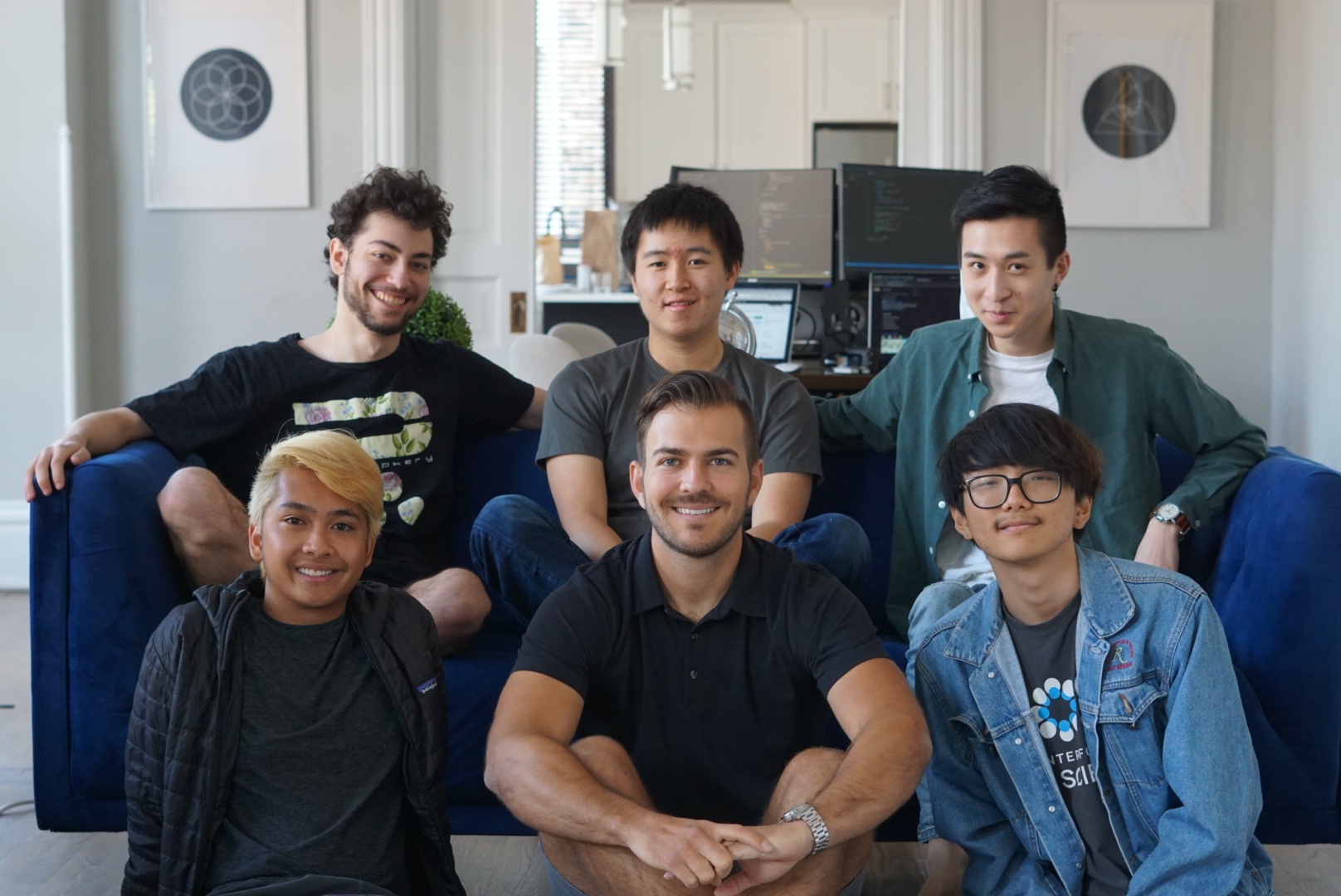
Stream Club's next version focused on a browser-based production studio. Graphical overlays, adjustable layouts, and cohosts would let creators produce a livestream without mastering an awkward collection of broadcast tools. Underneath that friendly surface, the team had to make unfamiliar video technology behave.
On December 22, 2021, Mux announced its acquisition of Stream Club, its first acquisition. The deal brought the studio technology into a company selling video infrastructure to developers. Klein joined Mux, where his work included engineering management and, later, directing its self-service business. He was learning both how to operate infrastructure and how people decide to use it.
A browser without the person attached
The browser is such an ordinary object that describing it as infrastructure sounds faintly comic. Yet a browser running in the cloud has demanding habits. It needs memory, persistent state, isolation, and somewhere to keep its session. Multiply it by thousands, and the little window on a laptop becomes a fleet-management problem.
Klein had encountered this directly while making browser-based livestreaming possible. A developer could write an automation script locally; making it run reliably elsewhere required another body of work. Browserbase would take responsibility for that operating environment, letting developers connect with familiar automation tools and concentrate on the task.
AI added a new reason to care. A model might work out what a user wanted, but completing the request could still mean visiting a website, reading a page, filling a form, or downloading a file. The web's existing interfaces remained in the way. There was no requirement that every useful website arrive with an accommodating API.
- 01A requestWhat needs doing?
- 02An agentChoose the actions
- 03A browserOpen, read, click
- 04The websiteComplete the task
Conceptual workflow. Browserbase supplies the browser infrastructure and tools around it.
In November 2023, Klein put the argument into writing. The memo explored a browser made for AI, along with the risks that could defeat the business. Writing let him examine the opportunity before committing to it. It also gave other people something specific to disagree with.
People responded. Some wanted to invest. Others had their own browser problems to describe. Fifty customer conversations followed. One prospective customer had sent a reply longer than a thousand words. During a conversation in Salesforce Park, that person made clear that he would pay for the product. Klein returned to his office and gave notice.
There are elaborate theories of entrepreneurial conviction. A customer volunteering to buy something does have the advantage of brevity.
The joke about having one trick
By March 2024, Klein had announced Browserbase and $1.8 million in pre-seed backing. Alana Goyal, Yuri Sagalov, and Guillermo Rauch were among the supporters. His career had acquired a pattern: Twilio offered an API for communications, Mux offered one for video, and his new company offered one for browsers.
“I truly do only have one trick.”
Paul Klein IV, February 2025
The joke captures his public manner: willing to make his narrow expertise the punchline. During that February 2025 conversation, he also recalled that Browserbase had joined an AI Grant batch while spending zero dollars on AI. An infrastructure company could participate in the AI economy by keeping the underlying machinery working.
He was candid about what had surprised him, too. Vision-based computer use had advanced faster than he expected. His original thinking had leaned toward the structured text inside web pages. The company could benefit from better models without its founder needing to pretend he had predicted every improvement.
Stagehand, Browserbase's open source automation framework, gave developers another way into the problem. Natural-language instructions could become actions in a browser. The surrounding infrastructure handled the sessions. It was a way of packaging specialist knowledge so that someone building an application could get on with building it.
Capital, with a purpose attached
In June 2025, Browserbase announced a $40 million Series B led by Notable Capital, with CRV and Kleiner Perkins participating. The announcement also introduced Director, an application intended to make web automation accessible through plain-language instructions. Klein's company was widening the entrance to the technology.
Company milestones, rather than a measure of personal wealth.
The investors had encountered a founder with a particular argument about software building blocks. Useful infrastructure lets other people create things that would be troublesome to build from scratch. Klein had been the person doing that troublesome work. The commercial bet was that enough developers would prefer to hire the specialist.
His writing around the same time was preoccupied with durability. A young company should survive a competitor's launch or a funding setback. He argued for broader products, adequate coverage across teams, and a recognizable brand. Momentum mattered, but a business needed enough substance to keep moving when momentum faltered.
The chef becomes the employer
Klein's description of Browserbase's working culture is fairly practical. In late 2025, he described a company working in person five days a week, looking for people able to take a difficult problem and find their way through it. He preferred leading through influence and inspiration to relying on authority.
One all-hands exercise made him proud. He asked colleagues to raise a hand if, during the previous three months, they had done something they once thought beyond them. Every hand went up. For someone who had once weighed a startup partly by what he would learn, it was a fitting way to measure an employer.

Outside work, he rides Hawk Hill for sunrise. His investing vehicle, Hawk Hill Ventures, shares the name. Its team biography records a 2021 full-distance Ironman, an Alcatraz-to-San Francisco swim, and three marathons. These are specific hobbies with inconveniently early starts.
Still meeting the internet where it is
By August 2026, Klein was describing a broader Browserbase: search, fetching web content, models, and managed agents alongside the browser itself. He explained the expansion through customer requests and the difficulties of connecting separate services. The operating problem had grown larger than the first API.
Authentication remained central. In September 2026, Browserbase joined Okta's Cross App Access ecosystem. On October 22, it announced a 1Password integration that lets a user approve an agent's sign-in request while keeping the credential value away from the agent and application. The former login engineer was again working on the entrance.
Klein's aspiration is for agents to do useful work across the ordinary web, eventually becoming an unremarkable part of software. That would be a curious success for a founder who built around an overlooked annoyance: the technology becomes more consequential as people have less reason to think about it.
For now, the websites still have their forms, their menus, and their login boxes. Klein has chosen to keep dealing with them. The trick turns out to contain quite a lot of work.
Open tabs
More from Klein, plus the conversations and company milestones behind this profile.
Watch / June 2025The Web Browser Is All You Need ↗Watch / May 2024Founders You Should Know ↗Read / March 2024I quit my job to start a startup (again) ↗Read / December 2021Mux’s Stream Club acquisition announcement ↗Interview / August 2026Klein on bringing the agent stack together ↗Update / October 2026Browserbase and 1Password’s sign-in integration ↗