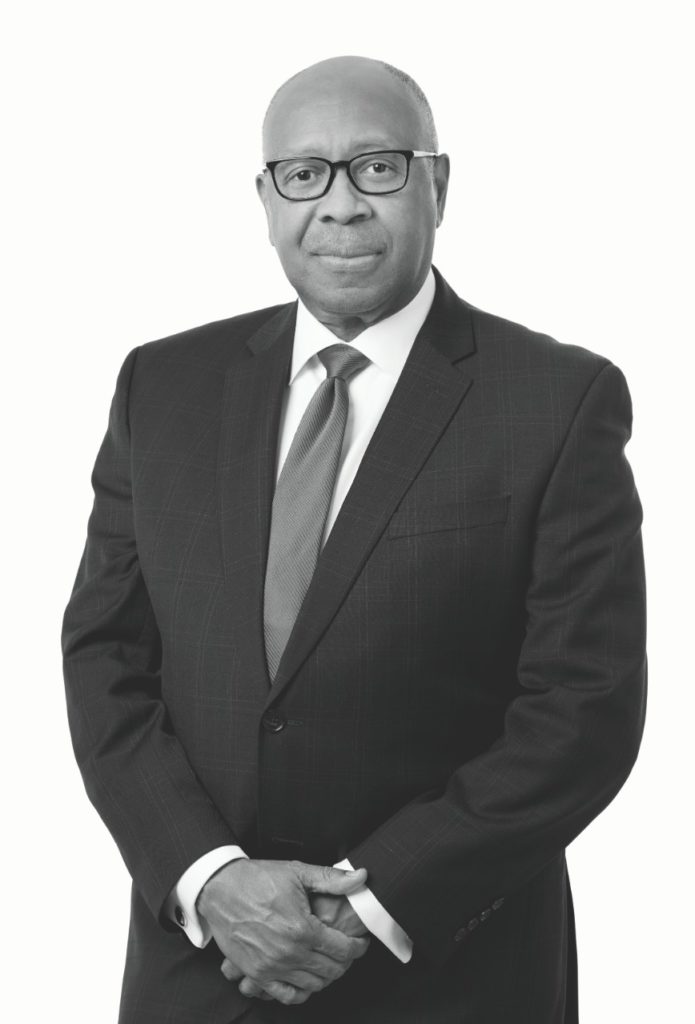
When Paul King wants to remember why he took the job, he doesn't open a dashboard. He walks down to the lobby of Lucile Packard Children's Hospital, finds a chair, and watches the families come through the door. He has told interviewers this is where he goes for "a jolt of mission." Fear, desperation, hope - he names all three. He pays attention to the last one.
Officially he is President and Chief Executive Officer of Stanford Medicine Children's Health, a 5,200-employee pediatric and obstetric network anchored on Welch Road in Palo Alto. Unofficially, in his own words, he is a "professional crap-cutter." He has used the phrase often enough that hospital reporters now use it back at him.
King took the corner office in January 2019 after the long-serving chief executive Chris Dawes stepped away on medical leave and Dennis Lund, MD, served as interim. King was running C.S. Mott Children's Hospital and Von Voigtlander Women's Hospital at the University of Michigan at the time. Before that he ran the Pediatric Management Group, a 550-physician academic practice tied to Children's Hospital Los Angeles. Before that, the Kerlan-Jobe Orthopedic Sports Medicine Clinic, the place that has stitched up roughly half the Lakers' roster over the decades. Before that, the Mayo Clinic - first in Rochester, Minnesota, then in Scottsdale, Arizona.
Forty years. Five institutions. A single industry. The resume reads like a man who picked a lane in his twenties and never lifted his foot off the accelerator.
Here is the curious part. The man steering one of the most-cited pediatric research hospitals in the country holds a bachelor's degree in business administration and economics from the University of Nebraska, and a master's in health care administration from the University of Iowa. He is a Big Ten executive in a Pac-12 town. He never went to medical school. He doesn't pretend he did. The job, as he describes it, isn't to know more medicine than the doctors. The job is to get out of their way.
That philosophy has a name in the management literature: servant leadership. King uses the phrase plainly. He pairs it with a second one - "culture of candor" - and explains why both matter in the same breath. "If someone on my team needs help, I can pick up the phone and help make things happen," he told Becker's Hospital Review. "But I can't fix what I don't know. I need transparency. I need vulnerability."
It sounds soft until you map it onto a $2.78 billion enterprise with thousands of clinicians, a few hundred researchers, and the kind of media exposure that comes with running a children's hospital next door to one of the most famous research universities on earth. Then it sounds like a survival skill.
King's industry colleagues elected him Chair of the Children's Hospital Association Board of Trustees in 2022. The job is part lobbyist, part diplomat, part coordinator of every major pediatric hospital in the country. It comes with no perks and no parking spot. He took it.
A small note about jackets
Becker's Hospital Review once ran a "Corner Office" feature on King under the headline "why he always remembers to take a jacket." The line is about San Francisco fog. It is also, plainly, about being prepared for the temperature to change. Pediatric medicine is a field where the temperature changes hourly. Insurance policy shifts in Washington land in Palo Alto by lunchtime. A child arrives by helicopter and the entire afternoon recalibrates. The man who runs the place keeps a jacket on the back of the door.
He talks about pediatric medicine as "an open-book test." It's a sentence that would sound flippant from someone in another field. From a children's-hospital CEO it is a statement of doctrine. "If we don't have the answer, someone else here will," he has said. "And if no one here does, then someone will in Seattle or Texas. We share. We've seen significant improvement in pediatric medicine because of that sharing." Children's hospitals collaborate where adult hospitals compete. King is on record arguing that the collaboration is the reason the field has moved as fast as it has.
A Nebraska kid in a Pac-12 town
The biographical arc has a tidy geographic shape: Nebraska (school), Minnesota (Mayo), Arizona (Mayo again), California (CHLA, Kerlan-Jobe), Michigan (Mott), California again (Stanford). Each move was upward. Each move was into pediatric or academic medicine. The trajectory is unflashy and methodical, which is, on reflection, exactly the trajectory you would want in the person running a children's hospital.
The board at Stanford Medicine Children's Health, chaired at the time of his appointment by Jeff Chambers, framed the hire bluntly. "With more than 35 years in health care, including 22 years in executive roles leading pediatric health care enterprises, Paul brings a wealth of experiences and leadership expertise." Translation: he has done this job before, at scale, and the references checked out.
King's own statement on the day was shorter. "I am thrilled to be joining Stanford Medicine Children's Health at a time of flourishing innovation in pediatric health care." He did not list initiatives. He did not announce a strategy. He showed up in January and went to work.
What the org actually does
Stanford Medicine Children's Health is the pediatric and obstetric arm of the broader Stanford Medicine system. The flagship is Lucile Packard Children's Hospital Stanford - a 311-bed facility named for the wife of one of the co-founders of Hewlett-Packard. The system runs roughly sixty locations across northern California, an air-and-ground transport service, a deep telehealth practice, and a research portfolio that touches everything from fetal heart surgery to pediatric mental health. It is one of the few hospitals in the United States that performs nearly every category of pediatric organ transplant. It has been ranked among the top children's hospitals in the country by U.S. News in every specialty surveyed.
None of that, King would tell you, was built by him. It was built by the clinicians and the researchers and a long line of executives who came before him. His job is to keep the lights on, the books balanced, the regulators satisfied, the donors engaged, and the leadership team unblocked. His job, in his own words, is to cut the crap.
The board outside the board
Beyond his own institution, King serves as Vice-Chair of the Board of Martin Luther King Jr. Community Hospital in Los Angeles - a safety-net hospital in Willowbrook that opened in 2015 to serve a community that had been without a full-service hospital for nearly a decade. It is a different kind of facility from Stanford. The patients are mostly uninsured or on Medi-Cal. The reimbursement math is brutal. King keeps a seat at that table. It is a quiet line on his resume that says more about him than the title at the top.
In the end
Paul King is not a celebrity CEO. He doesn't tweet. He doesn't keynote tech conferences. He gives the occasional podcast interview to Scott Becker and the occasional comment to the local press. The bulk of his public footprint is press releases written about him, not by him. That is by design. The hospital is the brand. The kids are the story. The man with the jacket on the back of the door is the operations.