Paul Keary was 11 when he discovered a flaw in his first business arrangement. He had worked on his uncle’s farm. The discussion about money came afterward. Asked years later what the job had taught him, he remembered hard work and the danger of leaving the price until the labour was finished. An uncle, apparently, can be a surprisingly effective procurement department.
It is an appealing beginning for someone who would eventually make a living advising chief executives. The lesson concerns timing, expectations and the small matter of agreeing what a job is worth. These subjects have followed Keary from County Galway into the offices of Teneo, the advisory company he helped found in 2011 and has led as CEO since June 2021.
His career offers an unusually practical way into a business often described through its famous connections. Keary has run a communications operation, worked on business integration and served as a chief operating officer. The recurring task is getting different people and specialties to work together. Advice can be elegantly phrased. Someone still has to organise its delivery.
“the folly of pay negotiation after the job was complete”
Paul Keary, on his first job · 2009
A transatlantic apprenticeship
Born in Loughrea, County Galway, Keary moved to the United States in 2004. His early career included leading communications for Xerox Europe. He later ran Financial Dynamics’ North American business, helping it expand through acquisitions and growth within the existing operation. That combination would become familiar: build the organisation, buy useful expertise, then make the pieces fit.
At FTI Consulting, his titles included senior managing director and director of business integration. He also served on its executive committee. Integration is a plain word for a fiddly assignment. A company can buy another company in a transaction; creating a working relationship between their teams requires considerably more attention than signing the documents.
By 2009, Keary had received recognition in Irish America’s Wall Street 50 and the Irish Echo’s Top 40 Under 40. His background was in marketing and communications, and his professional awards included recognition for financial and corporate communications. These were the credentials of someone working where a company’s finances and its public explanation of those finances meet.
His advice to younger people was similarly grounded. Understand your abilities. Build on the strengths. Find mentors willing to spend time helping you progress. There is something refreshingly unglamorous about that prescription. It asks for self-knowledge and other people’s attention, neither of which can be acquired by choosing a more impressive job title.
- 2004Moves to the
United States - 2011Co-founds Teneo;
serves as COO - 2021Becomes CEO
on June 29
Ten years inside, then the top job
Keary founded Teneo with Declan Kelly and Doug Band in 2011. As chief operating officer, he occupied the part of the business concerned with making the enterprise run. The company’s proposition was to assemble advice around the chief executive, whose problems rarely arrive neatly sorted into communications, finance, politics or personnel.
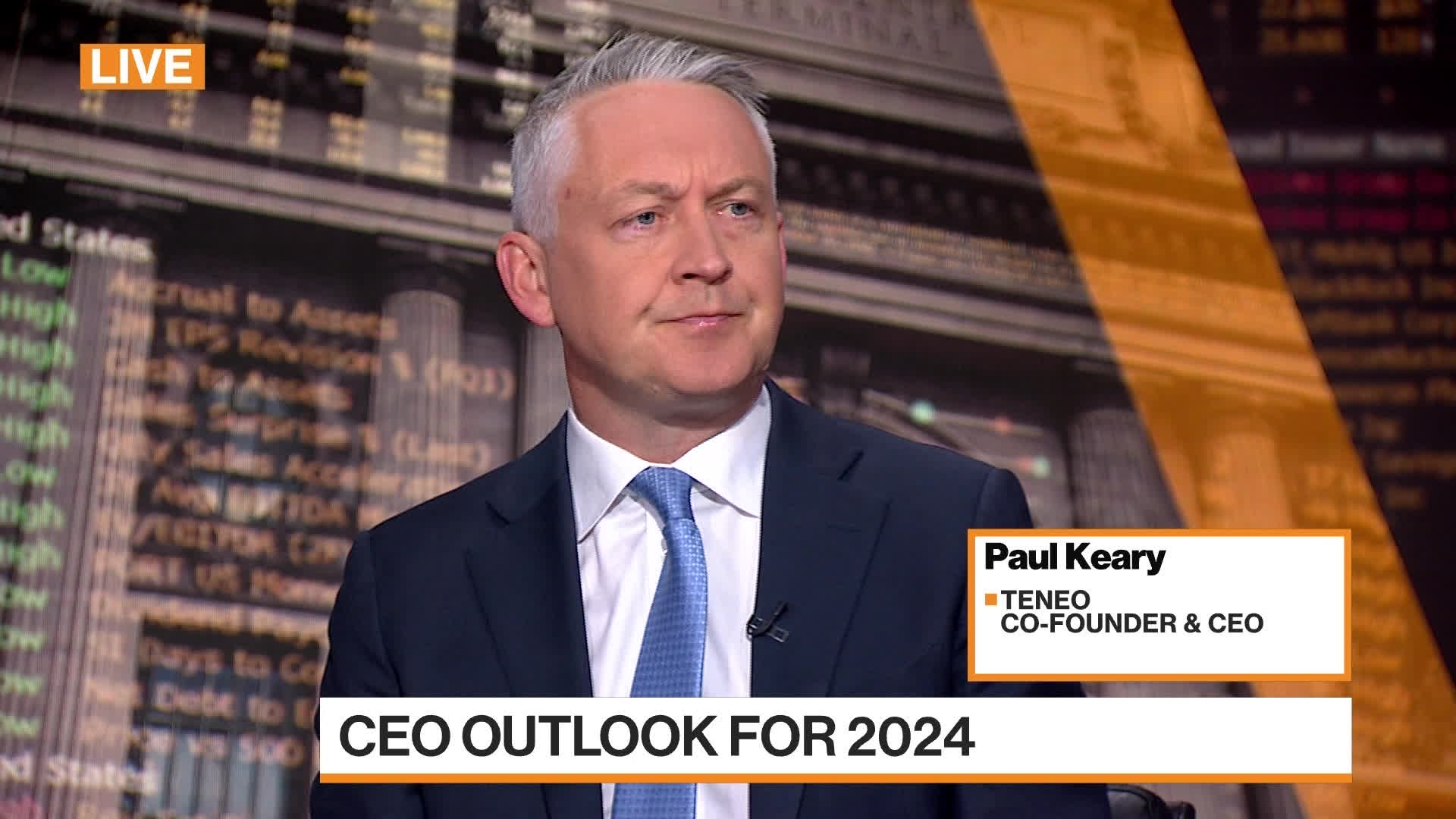
On June 29, 2021, the board announced Kelly’s resignation and appointed Keary CEO with immediate effect. It was a sudden change at the top of a company that advised other organisations on difficult moments. The announcement counted 1,250 employees and 33 offices. Keary was taking responsibility for a substantial firm he had already spent a decade helping operate.
Ursula Burns, the former Xerox CEO, became chairwoman the following month. Keary’s earlier Xerox role and Burns’s leadership of that company give the pairing a shared corporate reference point. At Teneo, their responsibilities now sit together at the top of a business whose work extends well beyond communications.
The distinction matters to understanding his tenure. Running an advisory firm involves advising clients and managing the advisers themselves: their incentives, their working relationships and their ability to deliver across borders. A growing collection of specialists needs an operating system in the everyday human sense. Otherwise, it is simply a directory with very expensive entries.
The people behind the introductions
Consider Geoff Morrell’s recruitment in 2023 as president of global strategy and communications. Morrell had worked in journalism, at the Pentagon and at BP and Disney. Keary singled out the breadth of that experience, saying Morrell “can’t be defined by a single industry.” The attraction was experience that could travel between very different institutions.
Keary’s connections also extend into organisations concerned with who gets opportunities at work. He is a founding member of the Billie Jean King Leadership Initiative and serves on the Billie Jean King Foundation board. The initiative began in 2014 with a focus on workplace equality and inclusion. At its launch, he discussed researching the barriers and establishing the commercial case for addressing them.
A quieter example comes from Read Ahead, which pairs volunteers with students for reading and mentoring. In May 2023, Keary accepted its gala award alongside Teneo mentors in New York. The firm’s partnership had begun in 2015, with volunteer participation growing from ten to more than forty. The work included weekly individual sessions during the school year.
Put beside his early advice about mentors, the connection is easy to understand. The business world prizes access to senior people. A child learning to read benefits from access to someone who keeps showing up. The settings differ enormously; both arrangements make another person’s time useful. A weekly appointment can carry more substance than a handsome declaration of support.
When the adviser takes the witness chair
A career built around access also carries obligations of public accountability. On February 6, 2024, Keary appeared before the US Senate’s Permanent Subcommittee on Investigations as it examined consultants’ work for Saudi Arabia’s Public Investment Fund. A January foreign-agent filing described his role providing advice on stakeholder communications connected to the fund’s sports investment strategy.
His written testimony said Teneo respected congressional oversight and intended to comply with the subpoena. He also described legal obstacles involving Saudi restrictions on disclosing information. The committee’s chairman had challenged the consultants’ responses to the inquiry. Those competing positions placed the firm between a client relationship, foreign legal constraints and an American legislative investigation.
It was a concrete demonstration of the complications inside global counsel. The person employed to help clients manage difficult relationships had to explain his own firm’s choices in public. The episode belongs alongside the acquisitions and appointments in Keary’s story: the reach of an advisory business creates questions about its responsibilities as well as opportunities for its services.
The next purchase is a capability
Expansion continued. In August 2025, LGT Capital Partners took a minority stake in Teneo in a transaction reported to value the firm at $2.3 billion, while CVC retained majority ownership. A January 2026 report put Teneo’s 2025 revenue above $750 million. These are figures for the company, with all its teams and shareholders, rather than a personal balance sheet for its CEO.
In January 2026, Teneo announced an agreement to acquire PwC New Zealand’s business restructuring services unit. The announcement covered 22 people, including partners John Fisk, Richard Nacey and Stephen White, and followed the Australian restructuring acquisition announced the previous July. Keary described continued investment in Asia-Pacific as part of the firm’s growth plans.
The shape of that expansion is revealing. Restructuring advisers deal with liquidity, creditors and businesses facing financial pressure. Their work puts an advisory company close to decisions that determine what can continue operating. Bringing those skills into a broader firm gives a client more than help explaining a decision after it has been made.
Teneo’s current public biography for Keary describes approximately 1,800 employees, more than 50 markets and over 2,000 clients. The company spans strategy and communications, financial advisory, management consulting, risk and people advisory. For its CEO, keeping those disciplines connected is an ongoing management assignment. Breadth only becomes useful when the right people can work together on the same problem.
Company figures in Keary’s current Teneo biography · October 2026
A boardroom conversation meets working software
The next addition took a different form. On March 16, 2026, Teneo and Thoughtworks announced an AI venture combining senior corporate advice with software engineering. Alex Pigliucci, Teneo’s global head of enterprise clients, was named to lead it. Thoughtworks brought a workforce of more than 10,000 engineers and experience in design, data and AI.
The venture’s stated ambition was to connect executive priorities with systems that could actually be built and run. That puts Keary’s familiar integration problem into a new setting. Advisers, product leaders and engineers must agree on what a business is trying to achieve, then carry that agreement through development. The briefing has to survive contact with the software.
There is a reason this matters to his clients. Teneo’s Vision 2026 survey found that 53 percent of investors expected returns from AI within six months or less. Only 16 percent of large-company CEOs believed they could deliver on that schedule. Those figures describe a difference in expectations, rather than a measured verdict on the technology’s performance.
They also describe a fairly demanding meeting. Investors want a return, executives need time, and engineers need a workable brief. The survey covered more than 350 public-company CEOs and 400 institutional investors. Keary’s firm is trying to sell help with the awkward space between what these groups expect and what an organisation can deliver.
Different groups, different expectations. Teneo’s Vision 2026 survey, conducted October-November 2025. Percentages show expectations, not realised returns.
By July 2026, Keary and Thoughtworks CEO Mike Sutcliff were arguing publicly for disciplined AI governance as a condition of lasting business value. The concern had moved beyond buying access to technology. It included the decisions and controls needed to use it economically. Even an ambitious investment eventually requires someone to examine the bill.
An agreement worth keeping
The farm anecdote remains a useful place to leave Keary, provided it is allowed to stay modest. A childhood job does not explain every decision in an international career. It does, however, supply a small, funny account of discovering that effort and reward need to be discussed in the right order.
His present business is full of larger versions of that discussion. What does the client need? Who can do it? How will the specialists work together? When should the result arrive? From reading mentors to restructuring teams to software engineers, the useful relationship depends on people committing their time to a task they understand.
Keary now leads a firm selling advice to people accustomed to receiving plenty of it. The practical test is whether the advice helps them accomplish something. On a Galway farm, the work was already finished when the negotiation began. In the boardroom, he has rather more reason to get the terms settled early.
Continue the conversation
Interviews, career details and the work discussed here.