The difficulty with an office lease is its confidence in the future. It expects a company to know how much room it will need years from now. Patrick Mesterton was dealing with businesses that could barely make that prediction for next spring. Ten people might become a hundred. An idea might become a different idea. The walls, meanwhile, would prefer everyone to stick to the agreement.
When he helped create Epicenter in Stockholm, Mesterton made room for the uncertainty. Small teams could take a few flexible seats. Growing businesses could occupy a studio or a private office. The arrangement followed the company’s changing size. Even the floor had a job: he explained in 2016 that the absence of carpet made it easier to rearrange the space.
There is something appealingly literal about this. Plenty of businesses announce that they welcome change, then require a facilities request before anyone moves a chair. Mesterton’s explanation reached down to the flooring. Events, dinners, discos and concerts could occupy the same area. An office could have an evening career.
“Everything is based on maximum flexibility.”
Patrick Mesterton, 2016
That attention to the everyday helps explain a career usually described in the larger language of innovation. Mesterton has been a consultancy CEO, an innovation-house founder, an advisor and a coach. His recurring concern is practical: give people a useful setting, introduce them to people they need, and allow the arrangement to evolve.
Choose the neighbours carefully
Before Epicenter, Mesterton led Result, an innovation consultancy. His work also included advising organisations such as Santander Consumer Bank, Grant Thornton and Egypt’s central bank on innovation and growth. These are institutions with procedures, customers and responsibilities. A clever idea entering such a place needs more than encouragement. It needs a route through the organisation.
Epicenter brought that problem into a shared building. Its beginnings go back to a rooftop conversation in Stockholm in 2014, involving Mesterton, fellow founder Ola Ahlvarsson and AMF Fastigheter. Their intention was to help Swedish entrepreneurial businesses grow internationally while keeping a local base. The Stockholm house opened in January 2015.
Mesterton’s reasoning about membership was refreshingly commercial. In 2017, he explained that a space occupied entirely by startups could contain plenty of ideas and too little money for the companies to help one another. Fill it entirely with established corporations and the problem could reverse. Selecting the mix was part of the work.
A young company might need a first substantial customer or an experienced partner. A corporate team might need contact with people building something outside its usual assumptions. Sharing an address made an encounter easier. Programmes, introductions and events gave that encounter somewhere to go. You could pay for a desk and discover that a useful part of the arrangement was sitting across the corridor.
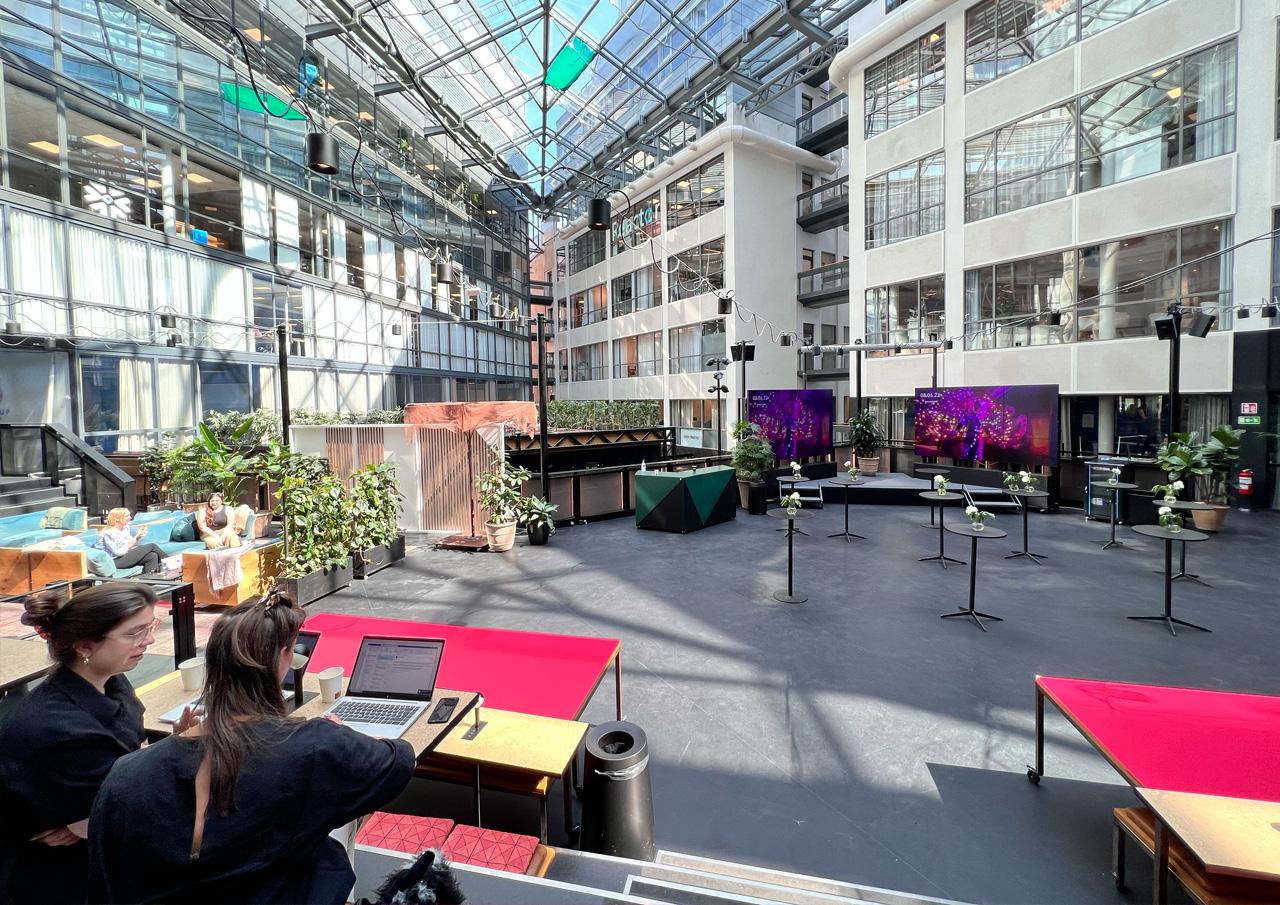
Keeping the house useful was an operating job. He was helping operate a business whose offer depended on other businesses finding reasons to return. A beautiful room might win the first visit. The second required something useful to happen. Community, in this setting, came with the ordinary obligations of a service business: attention, organisation and delivery.
A robot may attend your meeting
Mesterton could make the explanation entertaining. Discussing Epicenter Amsterdam in 2020, he offered event organisers a menu that included holograms, a robot dance lesson and a technology magician on the roof terrace. An opening speech is one way to begin an event. A robot at least gives the audience something to discuss before the coffee.
Underneath the theatrical inventory was a disciplined order of operations. He wanted organisers to begin with their ambition. Content should follow, then the building. Capacity was a later question. The first question concerned what the gathering should accomplish, which is a useful intervention in an industry capable of spending a morning debating chair covers.
He also described asking whether an Epicenter member could attend an outside company’s event, or whether a member could contribute to its programme. The gathering would add knowledge to the community; the community could add someone useful to the gathering. It was a small operational choice with a clear purpose: keep the house connected to the activity passing through it.
- 01AmbitionWhat should happen?
- 02ContentWho and what will help?
- 03The spaceWhere can it work?
The Amsterdam venture supplied a concrete example of the international ambition. Epicenter opened there in 2018, and the Swedish Chamber of Commerce moved in that September. The partnership aimed to help local and international businesses find knowledge and contacts. The introductions had acquired a different postcode.
The network’s geography changed over time. By April 2024, its operating cities were Stockholm, Oslo and Helsinki, with an expansion planned in central Helsinki. Keeping those dates attached matters: a founder’s career accumulates openings and partnerships, while a company’s present footprint keeps moving. Mesterton’s underlying subject remained the difficulty of growing beyond a familiar market.
The building becomes a bigger question
Elements Stockholm extended the partnership with Ahlvarsson and AMF Fastigheter. Announced in 2023 and opened the following year, it brought the collaborators to Jakobsbergsgatan in the MOOD district. Its stated purpose connected digitalisation and sustainable development, with companies and other participants meeting across disciplines. The ambition now reached into the way the city organised its working life.
The property partner’s involvement was substantial to the idea. AMF could develop buildings and the streets around them; the entrepreneurs brought experience of assembling people and programming their encounters. The project needed both. A collaboration space needs a place, but it also needs a reason for people with crowded calendars to travel there.
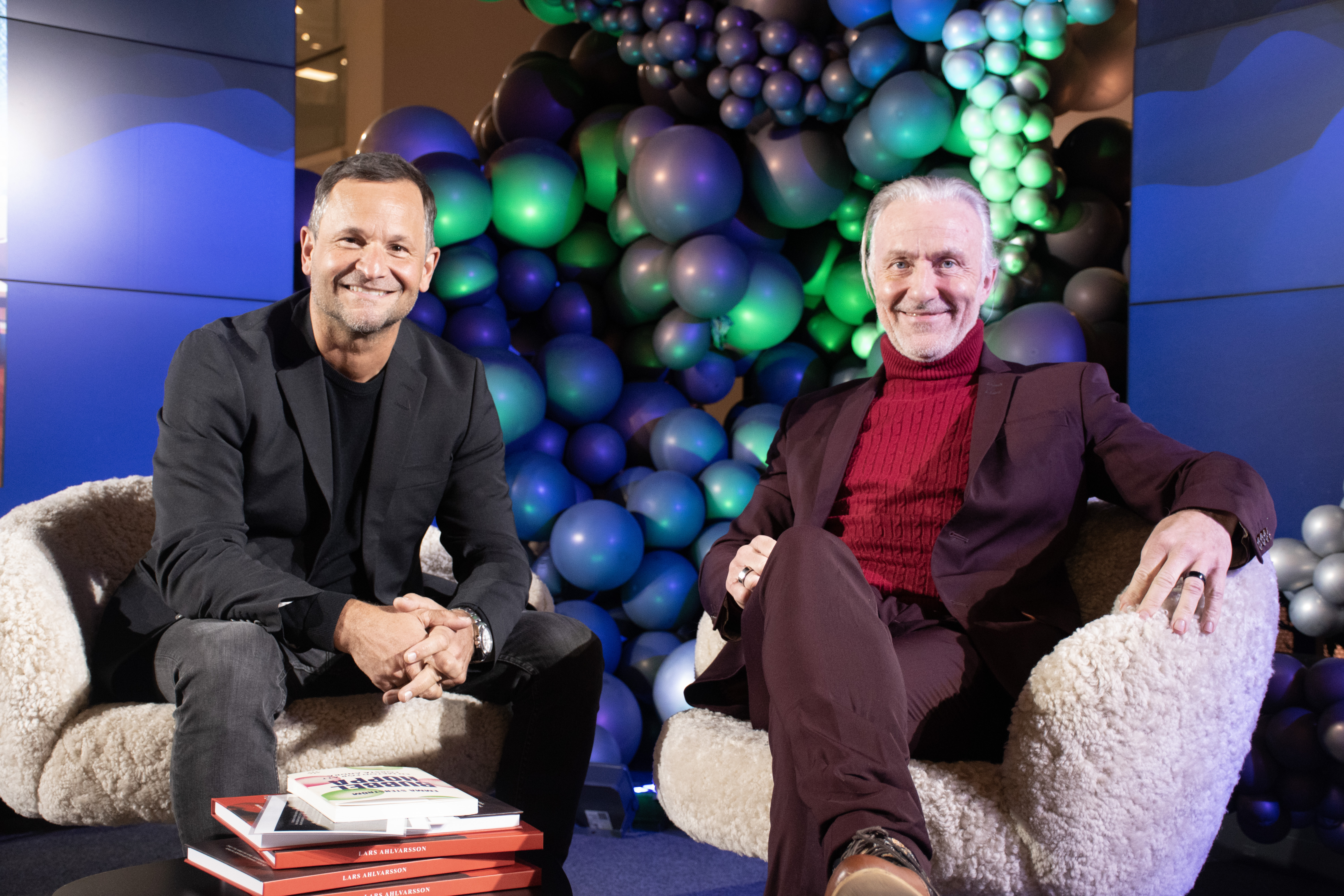
Elements describes its building as containing 13,500 square metres of workspace and 1,500 square metres for creative events. These are rooms in which its collaboration model has to operate. A mission can sound agreeable in a presentation. Keeping a programme useful across that much space requires repeated decisions about who comes in, what they discuss and what follows.
Mesterton’s coaching provides a closer view of that work. Epicenter’s Thailand acceleration programme listed him for individual and group sessions, specialising in Lean Startup methods for developing businesses. The programme combined business goals, growth strategies, introductions and organisational questions. Here the founder was working at the scale of a particular team trying to decide its next move.
His international activity also took him to Innovation City in Cape Town. A 2023 account of his appearance there discussed the local conditions that support entrepreneurship: public institutions, experienced founders willing to contribute, relevant content and collaboration between spaces. The conversation acknowledged the surrounding city. Moving a model abroad means meeting people whose circumstances differ from those at home.
The title and the person
There are some less predictable entries in Mesterton’s public biography. He served on the board of Sweden’s American football federation between 2016 and 2018. His professional profile lists German, Dutch and Danish alongside Swedish and English. In Italy’s official gazette of May 2019, his name appears among recipients of the rank of Commendatore in the Order of Merit of the Italian Republic.
The honour introduces a certain formality into a life spent around flexible desks and experimental events. It also supplies an unusually precise biographical detail: the list records his birthplace as Stockholm and his birth date as 30 September 1970. The consultancy leader and community operator had accumulated a title with rather more ceremony than co-founder.
People who worked with him offered a more personal set of descriptions when he announced his departure from the Epicenter CEO role. Fia Nordin recalled a leader who supported her while pushing her further. Another acquaintance, Björn Nordgren, remembered camping at 3,000 metres, where the tents had to fit between the cow dung. Even an innovation-house founder occasionally encounters a layout problem that furniture cannot solve.
Making room for the next person
As Epicenter approached its tenth anniversary, Mesterton said it was time for a new CEO. He wanted a successor to bring fresh thinking and energy to the next decade. Alongside that explanation was an admission: “It’s never easy to leave something you have poured your heart into.” The attachment was plain, even in an announcement about an orderly transition.
SEK. Figures Mesterton reported in his late-2024 retrospective; endpoints of his comparison, rather than an annual growth series.
He reported that revenue had grown from SEK 34 million to SEK 250 million with consistent profitability, and that the customer base had increased tenfold. Those were his own retrospective figures. He also said he intended to stay involved as a shareholder and management-team member to support the new CEO. The announcement treated succession as another part of building the company.
In April 2025, Mesterton met a Japanese research delegation visiting Stockholm. Now Epicenter’s former CEO, he discussed its contribution to the city’s development and said his focus was on building international relationships. The activity was familiar even though the executive title had changed.
His career offers a practical way to think about company building. A room needs enough flexibility to accommodate new people. A programme needs enough attention to remain useful. A founder eventually faces a related decision about his own place in the arrangement. Mesterton had spent years helping businesses make room for what came next. At Epicenter, that came to include the person who would take his chair.
Keep the conversation going
Visit Epicenter Stockholm and Elements, or follow Patrick on LinkedIn and X.
Further reading: his Amsterdam conversation, the 2025 Stockholm visit, and his CEO handover announcement.