An empty hospital shift is a small blank space with expensive consequences. Someone must find a qualified clinician, establish that they can work, agree a rate and get them onto the ward. A rota may look like a timetable. For the person filling its holes, it is closer to a negotiation conducted against a clock.
Patchwork Health has built its business around that negotiation. Founded in 2016 by NHS doctors Anas Nader and Jing Ouyang, the London company supplies software for scheduling permanent staff, booking temporary workers and managing agencies. Its ambition is to make the staffing decision earlier, with more information and a better chance of finding someone already connected to the hospital.
The attraction is easy to understand. Managers want dependable cover and control over expenditure. Clinicians want some say over when they work. Patchwork has to serve both groups, even when their immediate preferences collide. That makes the company more interesting than another app promising to tidy up an untidy spreadsheet.
The doctors on the wrong side of the rota
Nader’s account of the company’s origins begins with the personal arithmetic of medicine: a career he loved, long hours, missed occasions and mounting exhaustion. He and Ouyang recognised the frustration in each other. Their working lives gave them a close view of the problem they would eventually sell hospitals software to address.
Chelsea and Westminster Hospital NHS Foundation Trust became the proving ground. Nader joined on a clinical fellowship in 2016 and worked with workforce teams on what became Patchwork Bank. The setting mattered. The product emerged beside the people handling temporary staffing, where an inconvenient approval process could be observed rather than imagined in a product meeting.
The company’s expertise still reflects that beginning. Nader’s background includes clinical innovation and hospital transformation work; Ouyang previously led digital health at Alder Hey. The commercial proposition draws on familiarity with the mechanics of healthcare employment. Knowing what a ward needs is useful. Knowing why a shift cannot be booked is useful in a different way.
A bank with people in it
In NHS language, a staff bank is a pool of workers available for temporary shifts. Patchwork Bank lets a healthcare organisation advertise vacancies to approved workers, handle bookings and manage the associated records. Rate cards and electronic timesheets replace parts of the administrative chase. A bank becomes more useful when joining it and working through it are reasonably straightforward.
For a clinician, the route begins with registration and an application to a participating bank. The employer checks eligibility and activates the account. Only then can booking begin. Patchwork’s help centre is explicit about responsibility: the organisation conducts the compliance checks, and the organisation handles employment and payment queries. The app provides access; it does not confer permission to practise.
Collaborative Bank extends the arrangement across organisations. Approved clinicians can access participating hospitals through a shared staffing pool, with passporting intended to reduce repeated paperwork. Patchwork’s North West case study describes 24 trusts and more than 5,500 clinicians. It is an appealing answer to a familiar absurdity: nearby hospitals can need the same kinds of workers while maintaining separate administrative obstacles.
The regional arrangement requires agreement as well as software. Participating employers need workable approval processes, suitable rates and confidence in the shared pool. A larger list of names is not automatically a larger supply of available labour. The useful change comes when a qualified person can actually take a shift that would otherwise remain difficult to fill.
Before the agency gets the call
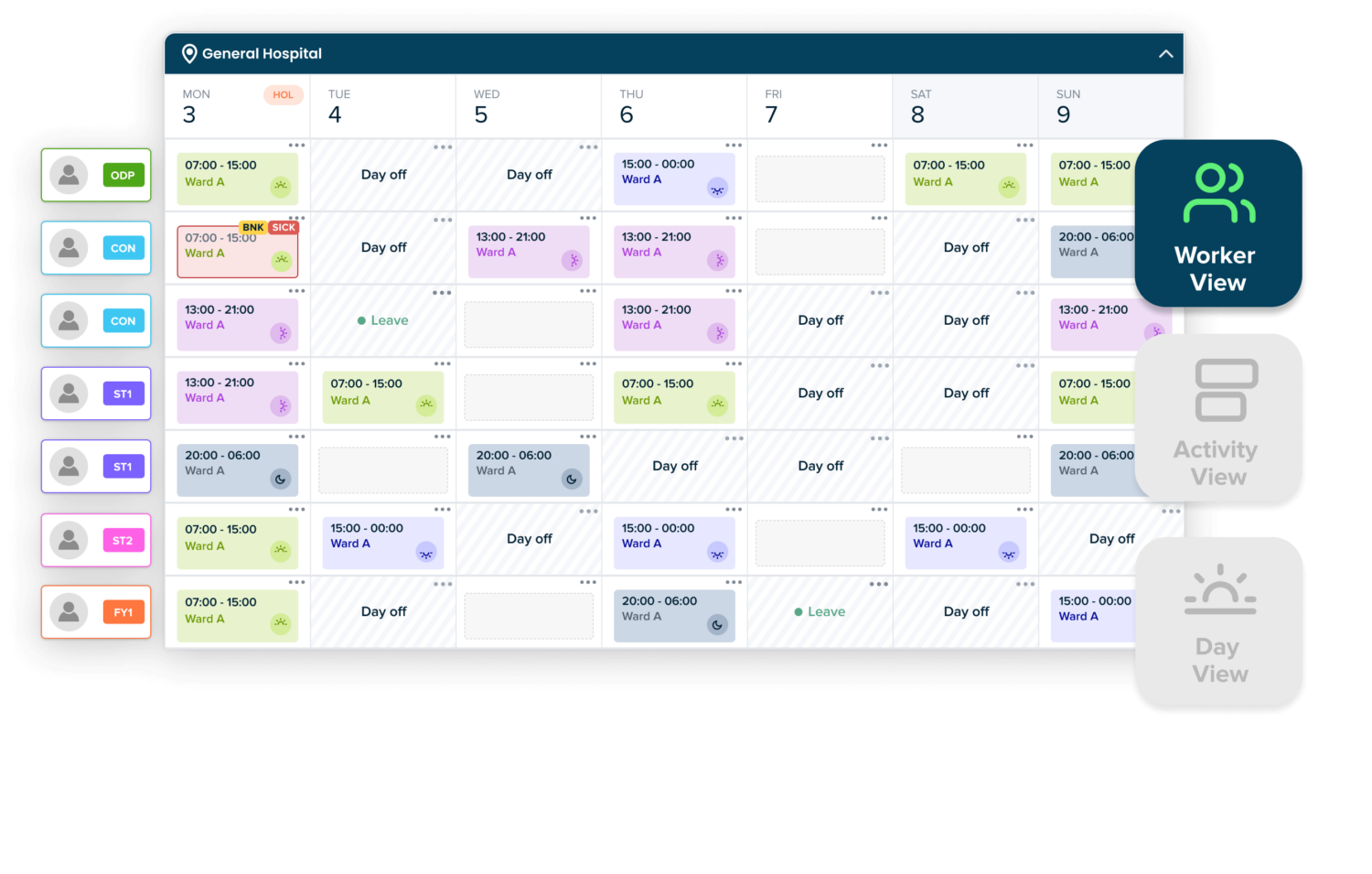
Patchwork Rota moves further upstream. It combines service planning, rota construction, leave and overtime management, including exception reporting. Clinicians can submit preferences and swap requests; managers can see permanent and temporary staffing together. A leave request captured early is operational information. Captured late, it becomes somebody’s urgent staffing problem.
Agency Manager handles the vacancies that still need outside cover. It supports approved agency tiers, configurable escalation and visibility into worker and agency charges. Agencies remain part of the picture. The product’s logic is to make the route to them deliberate and the resulting expenditure legible, while giving bank workers an opportunity to fill the gap.
The market already contains specialists including RLDatix/Allocate, Locum’s Nest, HealthRota, Rotamap and SARD across different workforce functions. Patchwork’s pitch rests on the connections between its products and the support around implementation. A buyer comparing systems should test those connections in the actual workflow: what happens when leave is approved, a vacancy opens and an agency proposes a worker?
The price of filling the gap
This is an employer-funded software business with transaction and subscription options. Patchwork’s June 2025 Bank price sheet lists medical and dental shift fees of £15, £12 or £10 for small, medium and large customers. The charge applies to a fulfilled shift. For Agenda for Change staff, the corresponding fees are £6, £5 and £4.
Implementation may be charged separately, with typical figures of £10,000, £25,000 and £50,000. The sheet excludes VAT and also offers an annual subscription. These are procurement reference prices, not a quote for every hospital. They do establish something useful: adoption has a financial cost before anyone starts counting the savings.
Agency Manager’s 2024 pricing document offers another choice: a transaction model charging up to 3.5% of throughput, or a fixed annual fee. Throughput includes worker pay and agency fees. Hosting, reporting and customer support are included in the stated models; implementation can add cost. The business benefits when employers purchase a dependable service around the software.
At Chelsea and Westminster, Patchwork reports £15.05 million in agency cost avoidance from 2016 to spring 2025, alongside agency shifts halving between April 2024 and April 2025. Cost avoidance compares spending with an alternative scenario. It should not be read as £15.05 million of software profit, or as a guarantee that a different trust would reproduce the result.
The algorithm needed to listen
A Mid Yorkshire case study gives a more revealing account of implementation. Early preference-based rostering needed adjustments to the weighting of time-off requests and local night-shift rules. The trust worked with Patchwork to calibrate the model. The December 2025 evaluation then reported monthly paediatric locum spending falling from £50,000 to £25,000.
The same account acknowledges denser shift patterns for some clinicians. Better accommodation of preferences can redistribute work rather than simply make it disappear. That trade-off deserves attention alongside the savings. These results describe a local deployment, not a controlled test proving what the system will achieve everywhere.
“This is the first time I have been treated like an adult.”
Paediatric registrar, quoted in Patchwork’s Mid Yorkshire case study
There is a practical lesson here for other software buyers: bring the exceptions into implementation early. Rules about nights, recovery and availability belong in the system’s working assumptions. A successful demonstration cannot substitute for checking how the product behaves when those requirements compete.
Buying the pieces around the rota
Patchwork’s expansion has followed the connections around staffing. In August 2022 it raised £20 million in a Series B led by Perwyn, with Praetura Ventures, KHP Ventures and angel investors participating. The stated uses included product development and strengthening customer-facing teams. Selling into hospitals requires people who can help the software survive contact with established practice.
The 2024 acquisition of L2P added job planning and medical appraisal capabilities. L2P had its own clinical founder, consultant anaesthetist Patrick Doyle. Strategically, the deal brings the plan for how clinical time should be used closer to the system that deploys it. Patchwork’s current materials describe combined reach exceeding 200 healthcare organisations and 100,000 clinicians, figures reported by the company.
That wider range does not make every module an automatic purchase. Royal Berkshire’s March 2025 public board papers record the ending of its Patchwork e-rostering contract effective February 8, while its Bank contract continued. The record establishes a distinct decision about two products. It gives no basis for inventing a technical explanation for the termination.
For buyers, that distinction is useful. The staff bank may solve one problem convincingly while the rota requires a different answer. A product suite earns its value through the individual jobs it performs and the connections that genuinely save work.
Flexibility has to survive Monday morning
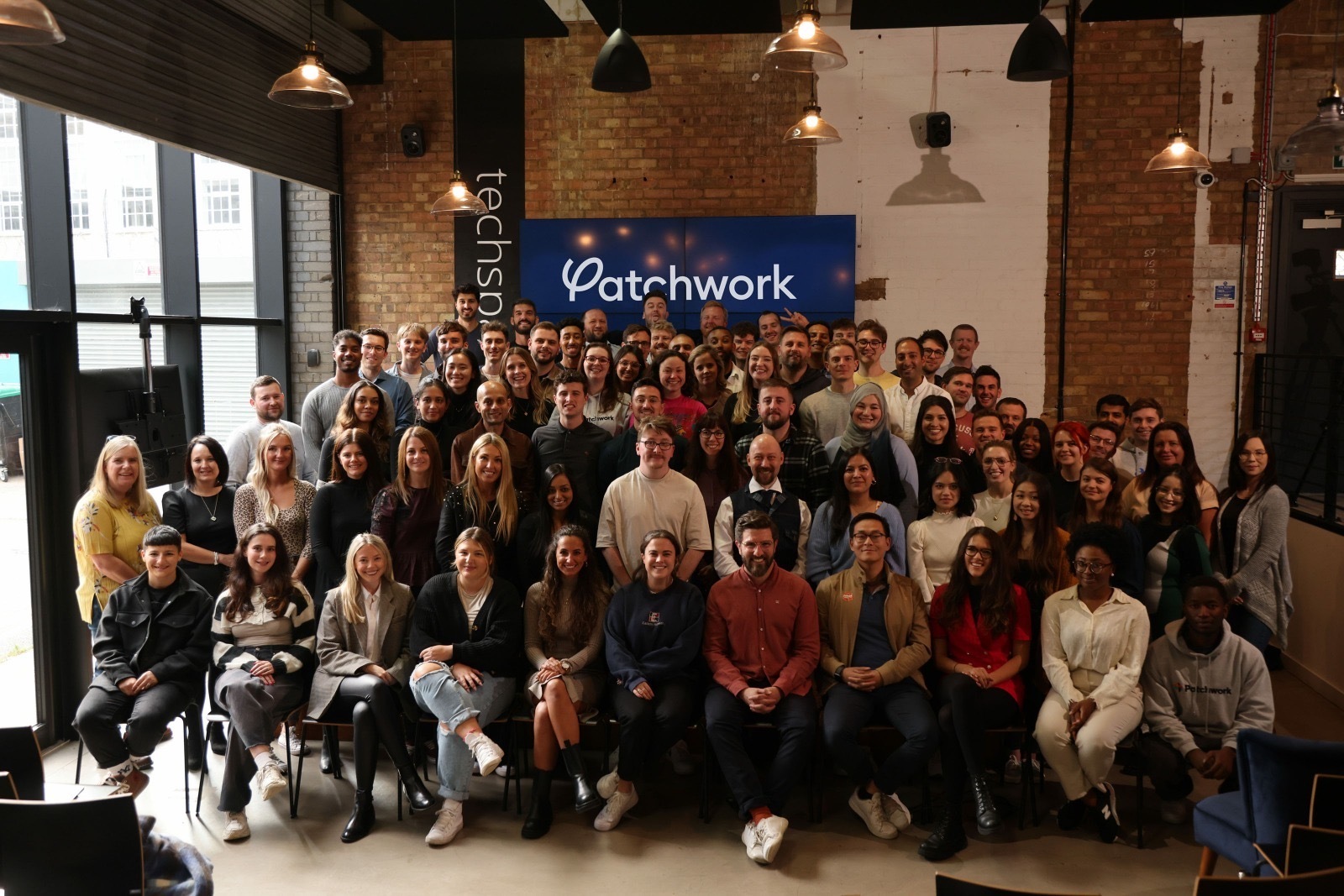
Patchwork’s employment proposition offers its own version of flexibility: remote-first working, a London hub and five weeks of working abroad each year. Its careers site also describes an annual Patchweek hackathon. These are the employer’s stated policies, but they give the culture a more concrete outline than the usual collection of cheerful adjectives.
The transferable idea in Patchwork’s story is to shorten the distance between an available worker and a real requirement. Start with the process people already use. Make approval and payment responsibilities clear. Measure fulfilled shifts and total costs. Expand into neighbouring workflows when the connection has practical value. Hospitals still need enough qualified people, and those people still need workable jobs. A better rota can help both sides see their options.