A five-thousand-dollar poll ought to be an easy thing to sell to someone accustomed to paying forty thousand. In politics, apparently, the discount requires an explanation. When Pat Reilly and Mike Greenfield launched Change Research in 2017, they had to persuade prospective customers that a smaller bill could still buy useful answers. They also had to explain why a company from Silicon Valley understood campaigns, and why an online survey deserved a place in a business accustomed to telephone calls.
It was a wonderfully inconvenient assignment for a communications professional: sell people on the value of listening. Reilly had spent years helping candidates and organizations make themselves heard. Now she was helping build a company around finding out what other people thought. The question underneath both jobs was familiar. Who gets an audience, and what does it cost to reach one?
That question gives her working life a shape more interesting than a sequence of titles. It runs from women seeking political office to a San Francisco mayoral campaign, through a communications agency and into political research. More recently it has taken her into gatherings about clean energy and election administration. The subjects change. The need to get people to pay attention remains stubbornly employed.
An education in who gets heard
Reilly’s political education included Washington communications work at the National Governors Association and the National Women’s Political Caucus. In 1992, the year widely remembered as the Year of the Woman in American politics, she was the caucus’s communications director. Her work concerned people trying to enter institutions where representation itself was part of the argument.
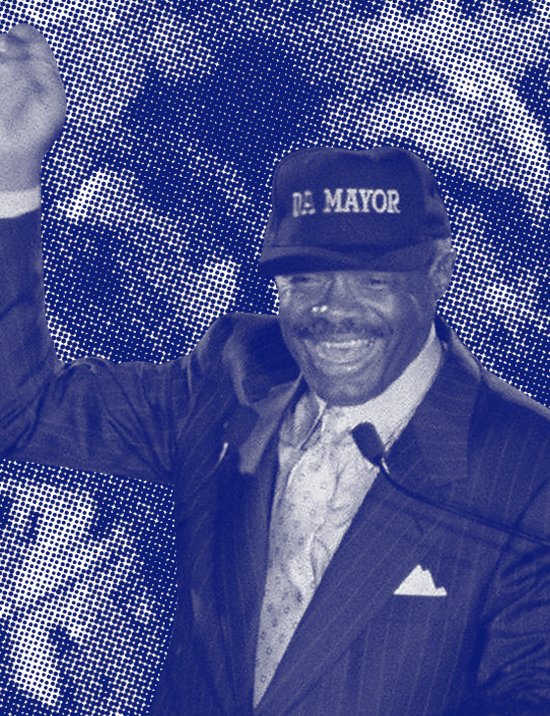
By 1995, she had moved west to work as campaign press secretary for Willie Brown’s successful San Francisco mayoral bid. It brought her into a different setting for political persuasion: a city campaign with an immediate electoral destination. A press secretary works where a candidate’s intentions meet a reporter’s questions. Neither side is obliged to find the other convenient.
She went on to establish PR & Company. For roughly two decades, the firm worked with foundations, nonprofits and technology businesses. Her experience crossed the borders that often separate political professionals from Silicon Valley: public institutions on one side, companies and the organizations around them on the other. Those connections later became relevant to a business that needed political customers to try technology.
The agency’s work also had a sustained education focus. When Fenton acquired it, the client list included the Stuart Foundation, EdSource, Teachers Pay Teachers and the Californians Dedicated to Education Foundation. These were organizations with different audiences and responsibilities. The shared communications task was to make their work intelligible to people beyond the immediate circle already invested in it.
Selling the firm, keeping the question
The acquisition was reported in October 2017. PR & Company’s clients and work became part of Fenton, its physical office was to close, and Reilly took a senior strategic consultant position. A company built around her initials had reached the point of becoming part of another firm. On paper, it was a closing chapter.
Meanwhile, another business was opening. Reilly co-founded Change Research with Greenfield, whose background included early data-science work at PayPal and LinkedIn. They launched in 2017, after an election that had made the mechanics of measuring public opinion a subject of unusually public concern. Their partnership put a political communications practitioner beside someone experienced in working with data.
There is an appealing symmetry to the move. Communications asks how to present an idea to an audience. Polling asks what the audience thinks before the presentation is perfected. A strategist moving between the two gets to see how easily a polished message can become an answer to a question nobody asked. That is an occupational hazard worth paying to avoid.
“When you’re selling something for $5,000 and they’re used to paying $40,000”
Mike Greenfield and Pat Reilly, writing together in 2017
The founders described their early challenge in practical terms. A low price could invite suspicion. A technology background could raise doubts about political experience. An online method meant asking customers to change established habits. The product needed a persuasive introduction before it could help anyone else decide what to say.
What a campaign can afford to know
By 2019, the budget argument had a concrete example. Lauren Underwood’s campaign, which won an Illinois congressional seat in 2018, used Change Research for three online polls in the last six weeks of the race. Her team had used traditional phone polling earlier. Late in the campaign, the cost of more telephone research would have competed with money needed for voter contact.
That detail brings the price discussion down from a startup pitch to a campaign office. Buying information is useful only if a campaign can still afford to act on it. Research, advertising and direct contact all make claims on a finite budget. A cheaper survey can change the tradeoff, particularly for a team without the resources of a national operation.
Two ways to price 35 questions
At the time, Change Research described recruiting participants through geographically targeted social-media advertising and weighting the responses. Its starting price for a thirty-five-question survey was $3,400; its estimate for a comparable telephone poll was around $30,000. Those figures belong to that period, rather than a current price list. They explain why campaigns with limited budgets might be willing to try a different method.
Lower cost does not settle every question about a poll. Who responds, how responses are adjusted and what a survey can reasonably tell a campaign still matter. Reilly’s venture operated inside that debate. Its commercial promise was about widening access to research; the research still had to justify the decisions people made with it.
A poll needs an audience, too
Reilly’s communications experience had another application: putting research into public conversation. In June 2019, she appeared on Pod Save America to discuss the first poll in Crooked Media and Change Research’s PollerCoaster 2020 series. A survey that might otherwise circulate among campaign professionals became material for a political podcast and its listeners.
The appearance placed a founder in the role of interpreter. Public polling comes with an extra communications problem: numbers look decisive even when they describe a moment that will pass. Talking about the findings means helping an audience understand the question being asked, rather than simply handing over a ranking and waiting for the cheering to start.
Her public commentary also addressed the relationship between technology companies and the people living around them. Discussing a KQED poll in 2019, she said, “Californians want to hit the reset button on their relationship with Big Tech.” The survey covered data privacy, gig work and attitudes toward major technology businesses. These were questions about the terms on which people wanted technology in their lives.
That subject sits comfortably beside her earlier agency work and later policy interests. Technology has customers, neighbors, voters and legislators, sometimes in the same person. A conversation that sounds straightforward inside a company can grow considerably more complicated outside it. Polling offers one way to hear the complications before they arrive as a surprise.
Change Research continued developing beyond its founding period. A 2021 leadership transition brought discussion of offering public-opinion data in forms useful to organizations without a conventional polling budget. The emphasis on following movement over time also put limits around the appetite for a single definitive number. Listening, inconveniently, is a recurring expense.
The next room
Reilly’s more recent work returns to assembling people. Her public focus includes climate innovation, political strategy and AI’s relationship with democratic institutions. Through her work around NosTerra and its Catalyst Series, the conversation extends to innovators, investors and policymakers. The practical challenge is familiar even when the subject is a power grid: different people control different parts of what has to happen.
In September 2025, she was listed among the organizers of Meeting the Moment: Clean Energy Strikes Back in California, a Menlo Park gathering. Its advertised panel included Jigar Shah, Arnab Pal, Phil Ting and Rebekah Saul Butler. The program moved from a panel into smaller discussions, giving the evening a purpose beyond listening to people who had been handed microphones.
A March 2026 briefing on election risks listed Reilly among its hosts alongside NosTerra and other collaborators. Moderated by KQED political reporter Marisa Lagos, the announced panel brought together David Becker, Stephen Richer and Gabriel Sterling. Its agenda concerned election administration, institutional responsibilities and the changing environment for the coming elections.
These are different rooms from a campaign press office. They still require invitations, translation and some reason for people to stay engaged after the meeting ends. In a public comment after a NosTerra gathering, Reilly invited people who felt powerless to join the work. The invitation was characteristic of the activity itself: involvement begins with people having somewhere to go.
Outside the professional descriptions, she identifies herself as a mother of two sons, a newspaper devotee, a samba dancer and a bird watcher. It is a pleasing assortment for someone whose career involves paying attention and persuading other people to do the same. The newspaper supplies questions. Bird watching, at least, offers an audience unlikely to request a messaging document.
From PR & Company to Change Research and the next gathering, Reilly has kept working on the conditions that let a conversation happen. Someone needs to hear the pitch. Someone needs to ask a better question. Someone has to make the room worth entering. Her career has given her repeated opportunities to attend to all three.
Keep the conversation going
- Pat Reilly’s website
- Twitter / X
- Career archive
- The Fenton acquisition
- The founders on launching Change Research
- Change Research: the company story
- Higher Ground Labs: meet the founders
- The campaign budget tradeoff
- KQED: Californians and Big Tech
- Listen: Pod Save America, June 2019
- Change Research’s 2021 transition
- NosTerra
- The September 2025 energy gathering
- The March 2026 election briefing