A blackberry comes with a small negotiation. You get the sweetness, the juice, the pleasure of eating something that stains your fingers. In return, you accept the hard bits lodged between your teeth. Pairwise looked at that bargain and saw a product brief. What if the berry kept its appeal and lost the nuisance?
- Pairwise edits crop traits and licenses the tools and genetics.
- A salad launch taught it to leave more commercialization to partners.
- Compact blackberries have reached consumers; seedless berries remain a separate development program.
The Durham company uses CRISPR to change plant DNA. Its ambitions include blackberries without hard seeds, cherries without pits, and crops that are easier to grow. Yet its most instructive experiment began with a less glamorous object: a bowl of mustard greens. The science worked. The business required another edit.
The salad was the easy part
Mustard greens have a wasabi-like kick. That is delightful if you want it and a barrier if you want an everyday salad. Pairwise reduced that pungency and launched Conscious Greens in 2023. The proposition was pleasantly concrete: keep the leafy vegetable, make the eating experience friendlier. Nobody needed to understand a molecular mechanism before deciding whether lunch tasted good.
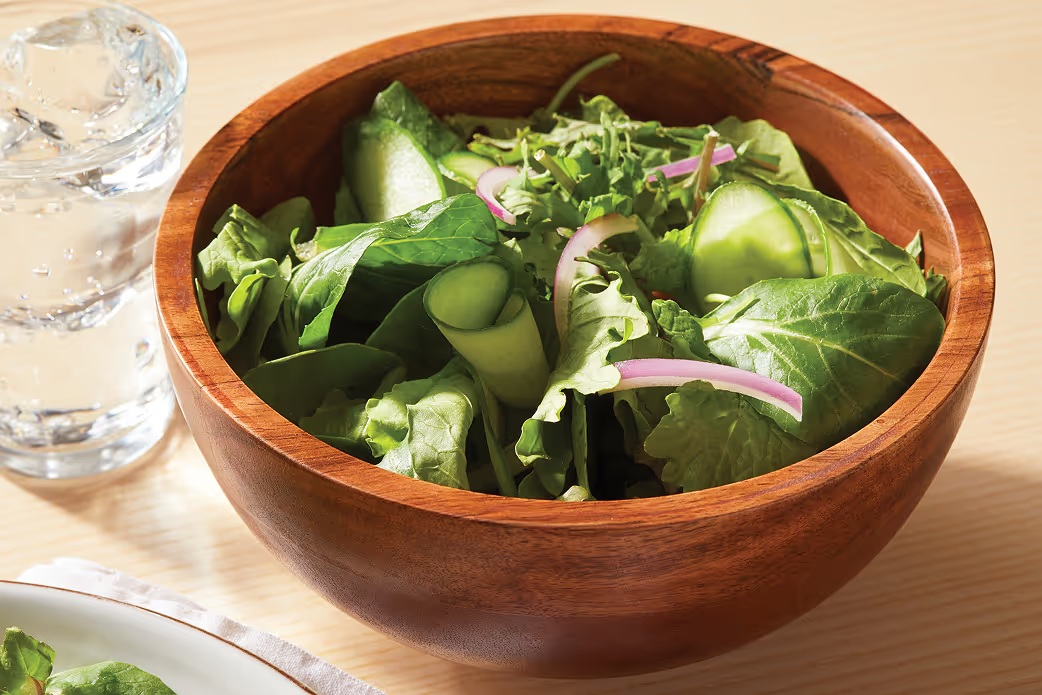
By February 2024, Pairwise had stopped marketing the brand. CEO Tom Adams told FoodNavigator that the company could not effectively fund both the marketing effort and continued product development. This was a constraint on the commercial model. His account described favorable consumer feedback, followed by a decision to find a partner already established in salads.
“Every dollar we spend on marketing is a dollar we don’t spend on producing the next interesting product.”
Tom Adams · FoodNavigator · February 2024
Pairwise subsequently licensed its edited greens to Bayer. The distinction matters to anyone building a technical company. Making something desirable does not automatically make you the right organization to advertise it, distribute it, or keep it on a supermarket shelf. The salad experiment revealed where the next dollar was most useful.
The company inside the clamshell
Founded in 2017, Pairwise brought together agricultural operators Tom Adams and Haven Baker with scientific co-founders David Liu, Feng Zhang, and J. Keith Joung. Adams arrived with experience leading biotechnology at Monsanto; Baker had helped develop Simplot’s plant-science business. This was a team assembled around both the editing tool and the long journey from a changed cell to a commercial crop.
Its Fulcrum platform packages tools, trait knowledge, and plant expertise for other organizations. SHARC is its proprietary CRISPR enzyme. Base editors change individual DNA letters; REDRAW supports rewriting short sequences. Multiplex editing allows several targets to be addressed together. A breeder can pursue a useful combination of traits instead of treating every improvement as an isolated project.
Three approaches available through Fulcrum. A useful edit still needs a useful crop.
The customers are seed companies, research institutions, crop developers, and commercial partners. The eater is further downstream. Pairwise’s careers material describes teams crossing plant biology, genomics, data science, and product development. That mix fits the task: knowing what to change, making the change, and checking whether the resulting plant performs outside a laboratory.
For a small research group, the attraction is access to capabilities it would otherwise have to assemble. For an established breeder, it is another way to work on familiar commercial problems. Licensing also gives Pairwise a route into crops it need not develop entirely itself. The company can contribute the editing machinery while a collaborator brings knowledge of the species, the growing system, and the customer. That is the economic promise behind the platform.
First, shrink the bush
On October 14, 2026, Pairwise introduced Fontana, a compact blackberry based on an existing Plant Sciences Genetics variety. The company describes plants roughly 3.5 to 5 feet tall, about half conventional height. A smaller bush makes room for more plants and easier access to fruit. The innovation is partly a redesign of the work surrounding the berry.
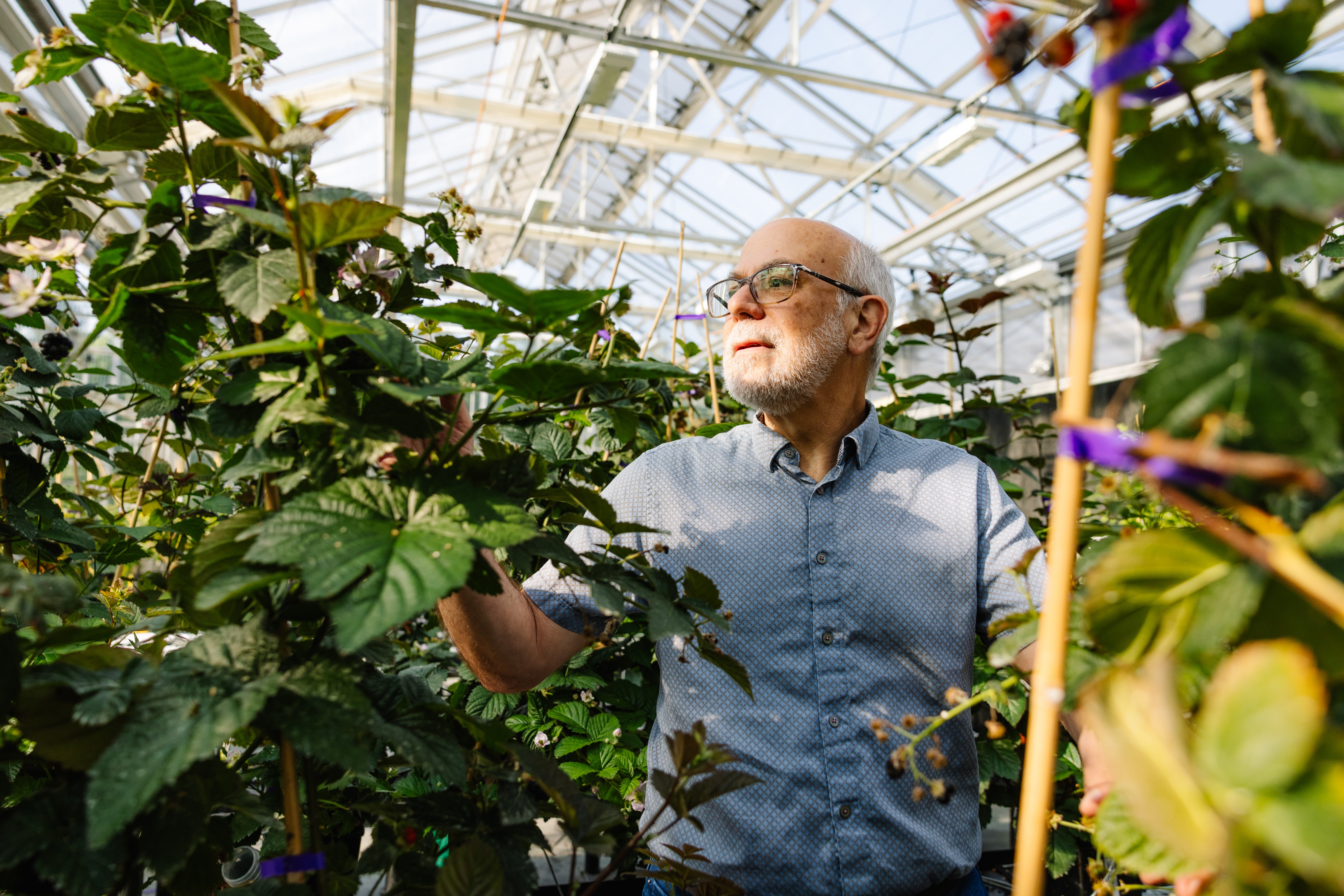
Fontana should not be confused with the seedless blackberry announced in June 2024. That separate work removes the hard pit structures, leaving small, soft seeds. “Seedless” describes the eating experience more usefully than an absolute absence of seeds. Pairwise also developed thornless and compact traits, offering potential advantages to the person harvesting the fruit as well as the person eating it.
Edited compact berries in Colombia, reported January 2026.
Fontana compact blackberry, October 2026.
Seedless blackberries and pitless cherries.
Its January 2026 update reported outdoor blackberry trials in the United States and Colombia, plus early commercial sales in Colombia. Packages used QR codes to explain the berries and their technology. Those sales establish a commercial foothold for edited berries. They do not establish widespread availability of the seedless version or settle how each variety will perform across growing regions.
Let the partner bring the market
The same division of labor runs through larger projects. An initial five-year Bayer collaboration delivered 27 novel traits into testing programs. A renewed agreement announced in 2023 focuses on gene-edited short-stature corn. In September 2025, Pairwise and Sun World formed a joint venture pursuing pitless cherries, with Sun World contributing fruit expertise, development investment, and an established licensing business.
Pairwise disclosed a $25 million Series A, a $90 million Series B, and a $40 million Series C, totaling $155 million through September 2024. Corteva participated in the last round and joined a five-year collaboration. Those figures describe financing raised. They do not tell us the cost of developing a seedless berry, the profitability of a license, or a grower’s eventual return.
Competition includes Inari, Cibus, conventional breeders, and internal programs at major seed companies. Pairwise’s distinctive offer combines its own editing tools with crop-development experience and licensing. Success still depends on field performance, workable production costs, regulatory access, and partners willing to commercialize the results. Faster editing cannot make an unsuitable variety economical.
There is a useful discipline in keeping those tests separate. A greenhouse result answers a biological question. A field trial asks how the plant behaves in a particular environment. A retailer tests whether shoppers want the fruit at the offered price. None guarantees the next answer. The compact berry gives Pairwise a way to learn across these stages while the more ambitious seedless and pitless projects continue. Agricultural innovation has several finish lines, and the laboratory owns only some of them.
The transferable lesson is specific: demonstrate a benefit people can recognize, then identify which organization can deliver it economically. Pairwise learned this with salad and is applying it to berries. A cherry without a pit remains a development ambition. A company that has learned where to spend its next dollar is already a more practical proposition.