The invoice is admirably precise. It can tell a health plan that a therapy session lasted an hour, that a provider billed for it, and that the bill was paid. It is much less forthcoming about whether the patient improved. For that, somebody has to read the treatment plan, the progress notes, perhaps an assessment from another clinic, and then remember what the plan’s clinical guidelines actually say. Onos Health has made a company out of the distance between those two kinds of knowledge.
- Onos sells clinical intelligence software to U.S. health plans, including Aetna.
- It brings claims and scattered clinical documents into a source-linked view of behavioral health care.
- It says deployments improved clinical review efficiency by 75% and reduced program costs by more than 6% within a year.
- Its $17 million Series A in August 2026 followed a $6.3 million seed round in 2025.
A billing code has a blind spot
Behavioral health is unusually rich in narrative: goals, setbacks, treatment changes, caregiver observations, discharge notes. It is also hard to reduce to a tidy row in a database. A claims system records services. It does not reliably say whether a person in substance use treatment is moving toward recovery, or whether a child’s autism therapy plan is producing the progress it promised.
Onos’s answer is a platform that ingests claims, utilization history, eligibility data, assessments, intake packets, clinical notes and treatment plans. Its models organize that material into a longitudinal member record, compare it with the health plan’s guidelines, and flag places where the care pathway appears to drift. The reviewer can open the underlying document. That last click is central to the pitch: a clinician needs evidence, not an oracle.
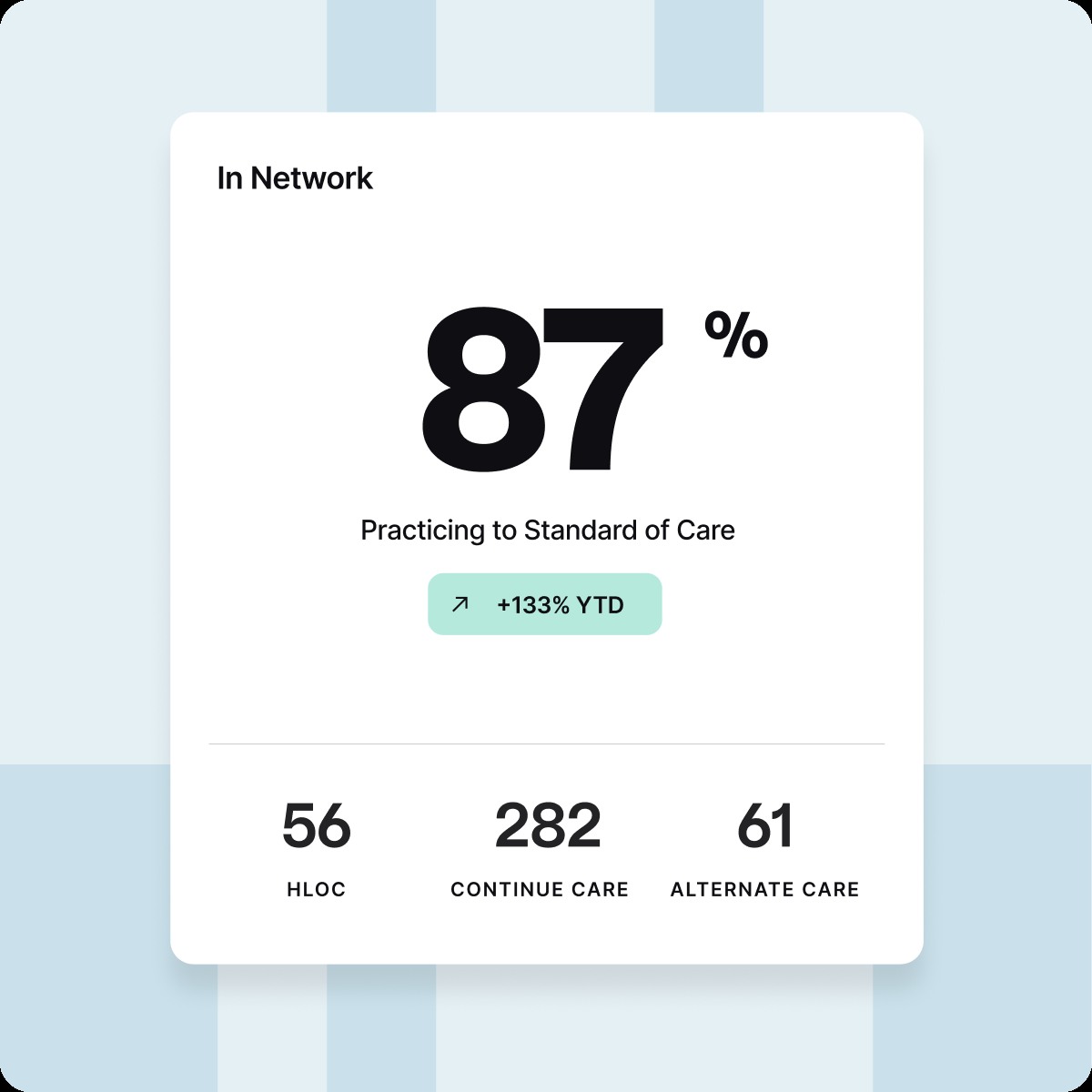
This is enterprise software, configured for a health plan’s data and workflow. Onos says it can connect by SFTP or API and write useful outputs back into systems staff already use. The product reaches quality teams, utilization management, program integrity and network managers. Its customers are payers; its work ultimately concerns members and the providers treating them. Public enterprise pricing is unavailable, so the clearest answer to “what did it cost?” is the capital required to build and sell it: Onos announced $6.3 million in seed funding in 2025, then $17 million in Series A funding in August 2026.
The chart review queue came first
The workflow Onos challenges is familiar: a plan sees an unusual pattern in claims, requests records, sends them to a clinical reviewer, and learns what happened after the fact. Prior authorization can catch a problem early, but its paperwork can also delay care and irritate clinicians. The company’s founders argue that manual, retrospective review leaves payers with a poor choice between late knowledge and heavy administration.
Onos does not describe a single failed pilot that changed its mind. Its public origin is more prosaic and more plausible: experienced payer and technology operators saw that care quality lived in documents conventional systems could not process at scale. Chief executive Akshay Agrawal had advised health plans at Bain & Company and worked in health technology. Chief product officer Josh Levitan spent years on payer and government health programs. Chief technology officer Suhaas Prasad brought enterprise AI and security experience. The mix matters: the task is part clinical interpretation, part integration into organizations that have reason to distrust a black box.

The scale is in the exceptions
Consider applied behavior analysis, or ABA, used in autism care. A payer may know the hours authorized and paid, yet still lack a population-wide view of treatment goals and progress. Onos says its platform can read treatment plans and session documents, surface stalled progress or inconsistent documentation, and help a clinician decide where to investigate. In serious mental illness, the same longitudinal view can connect a person’s movement among inpatient, residential and outpatient settings. In substance use care, it can help reviewers notice whether treatment and documented progress are moving together.
The distinction from a claims dashboard is the clinical document layer. The distinction from an automated denial engine is the claim that a person remains in control. Onos says its models are configured to each plan’s policies, every recommendation can be traced to a source record, and customer data is isolated rather than used to train models for other plans. It also says it holds SOC 2 Type 2 certification and keeps processing in the United States. Those are practical buying conditions for a national health plan, not decorative badges.
Figures reported by Onos for deployments in its August 2026 announcement; methods and customer-level baselines are not public.
A payer has to bring its own judgment
Onos says it is trusted by three of the six largest U.S. health plans and names Aetna as a user. Its 2026 round was led by Costanoa, joined by Flare Capital Partners and CVS Health Ventures. Those names suggest that large buyers see value in the proposition. They do not settle the harder questions: whether every flagged case produces better care, whether a provider welcomes the conversation, or how gains vary across populations. The company’s downloadable ABA case study, for example, explicitly labels its scenario fictional and representative. Its reported deployment metrics are the more relevant figures, though they remain company-reported.
A reader can copy the discipline even without copying the software. Start with a narrow clinical question. Gather the documents that actually answer it. Set a clear standard before scoring anyone. Give the reviewer a link to the original evidence. Measure whether review time falls and whether the care decision improves. If records are sparse, guidelines are contested, or clinicians cannot inspect the source, the mechanism loses much of its force. A faster answer to the wrong question is still wrong.
The cleverness of Onos Health is not that it can count a therapy session. The insurer could already do that. It is that the company has noticed where counting stops being understanding. In healthcare, that is often the moment someone opens the note.