The first surprise is the telephone. In Matthew Lawlor’s account of Online Resources, there is a photograph of a chunky desk phone with a little screen. The ScreenPhone belonged to an era when banking from home might involve buying another appliance. It looks wonderfully inconvenient now. Yet the problem underneath it would outlive the hardware: how do you let someone move money without visiting a branch?
- Online Resources supplied the banking and bill payment machinery behind other companies’ brands.
- By January 2013, it processed more than 245 million bill payments annually.
- ACI bought the company that March; its banking and payments lineage later took different paths.
A telephone with a banking habit
Lawlor co-founded Online Resources in 1989, after a career that included Chemical Bank. His background joined engineering to banking, two professions that have strong opinions about what happens when something fails. The company’s early approach joined a familiar household object to an unfamiliar activity: banking through a screen.
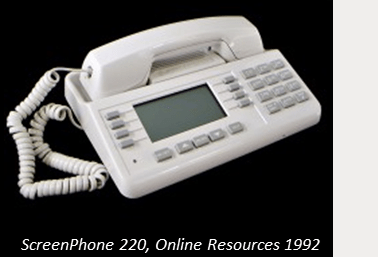
In 2007, Finovate founder Jim Bruene recalled seeing the company’s telephone-based banking service in 1992. Then the web arrived. Online Resources adapted to internet banking and electronic payments. The useful distinction is between the device and the job. The phone could become obsolete while the need to check a balance or pay a bill remained stubbornly current.
Your bank’s name. Someone else’s machinery.
Online Resources sold to banks, credit unions, billers and creditors. They offered its services under their own brands. A consumer could use the technology without developing the slightest affection for the name Online Resources. For a supplier of financial infrastructure, that arrangement has obvious appeal: the customer already has the account relationship.
The company’s expertise lay in connecting systems that had developed separately. Its proprietary gateway connected financial institutions to billers. In its 2010 annual report, it described more than 50 certified connections to ATM networks and core processors. Over 60 percent of its bank electronic transactions were then processed within its own network at little or no incremental cost, according to the company.
That network offered an economic argument alongside the convenience argument. Shared infrastructure let institutions buy access to connections and operating expertise they would otherwise have to assemble. CheckFree, later part of Fiserv, and Metavante, later part of FIS, competed in this market. Online Resources’ combination of banking software and biller connections gave it a place among those larger suppliers.
bill payment transactions per year
First American wanted room to change
Consider First American Bank, the Illinois institution that selected Online Resources’ Architect platform and bill payment services in November 2012. With 49 Chicago-area branches and $2.9 billion in assets at the time, it wanted a personalized digital experience and the ability to add features as customer needs changed.
Architect provided an extensible platform, with capabilities for online account opening, personal financial management and targeted marketing. The attraction was control over future changes as well as the initial installation. A February 2013 partnership with core processor COCC pursued a related ambition: tighter integration between digital banking and the systems running community banks and credit unions.
The commercial model matched that ongoing work. Clients paid recurring fees for hosting or application access, users, transactions, or a combination. Implementation and professional services added revenue. Banks generally offered the resulting services free to consumers; billers sometimes charged convenience fees. The institution bought the infrastructure and decided how its customers would pay for access.
The customer who would rather not call
Then there was Virtual Collection Agent, demonstrated at the first Finovate in 2007. This product addressed a different obstacle. Someone with an overdue bill might need a payment arrangement but dislike discussing it with a collector. Moving the conversation onto a website gave that person privacy and time.
“a payment resolution in a private, non-confrontational environment via the Internet.”
Janie West, ORCC chief marketing officer, 2013
The software could offer payment plans or settlements using eligibility rules set by the creditor. Its 2013 version added multiple accounts under one sign-in, language options and tools for tracking campaigns. The practical insight was to make an uncomfortable task easier to begin. A website cannot create money a borrower lacks, and automated offers remain constrained by the creditor’s rules. Privacy improves the setting; it does not settle every debt.

The connections came with a bill
Building the network required capital. In July 2006, Online Resources acquired Princeton eCom for $180 million in cash, plus a possible $10 million earn-out. Financing included $85 million of debt and $75 million of convertible preferred stock from Tennenbaum Capital Partners. The purchase expanded the payments business while adding obligations that transaction growth alone could not erase.
By 2009, integration had taken longer than expected, according to management’s proxy materials. Lower interest rates and client losses also hurt performance. Tennenbaum won a contested board election that May. A payment network could be useful to customers while its owners disagreed over the pace and rewards of growth.
The business outlasted the badge
ACI completed the acquisition on March 11, 2013, paying common shareholders $3.85 a share. The announced enterprise value was approximately $263 million, including preferred-stock redemption. In 2016, ACI announced a $200 million agreement to sell its Community Financial Services business to Fiserv, while concentrating on payments.
The lesson for builders is concrete: identify the repeated task, connect the parties needed to complete it, and make starting it easier. Online Resources applied that thinking to both ordinary bills and overdue ones. It depended on reliable integrations, institutional distribution and customers willing to use the service. A better button still needs a working bank behind it.