Payday has a peculiar authority. Work happens every day; wages arrive on a date chosen by somebody else. Rent, school fees and the electricity bill feel no obligation to respect that arrangement. Omair Ansari built Abhi around this small disagreement between the calendar and real life. Before he became its co-founder and chief executive, he spent years studying financial businesses in emerging markets. Eventually, he decided to put his own working life on the other side of the spreadsheet.
In 2021, he moved to Karachi to start the company with Ali Ladhubhai. His announcement thanked investors, colleagues, family and, specifically, his wife for supporting what he called a crazy dream. There was something refreshingly unpolished about the admission. Fifteen years in finance had given him experience. Starting a business still felt exciting and scary. A distinguished employer on a résumé does not come with a complimentary instruction manual for entrepreneurship.
The name supplied a compact promise: Abhi means “now” in Urdu. The first product let employees access wages they had already earned before the next payroll date. The ambition was bigger, but the opening question was admirably ordinary. Why should money earned on Tuesday remain inaccessible simply because the accounting department prefers Friday?
A career assembled across borders
Ansari’s background helps explain why he approached Pakistan with comparisons already in mind. He has described living across nine countries, and later counted more than ten. His career crossed established financial centres and markets where access to basic financial services remained uneven. Moving between countries gave him repeated opportunities to see that familiar banking habits were habits, rather than laws of nature.
He earned a Bachelor of Commerce at McMaster University in Canada. His professional experience includes Marshall Wace, Arqaam and Renaissance Capital, followed by portfolio management at Morgan Stanley’s consumer and financial technology funds. Those names describe more than a sequence of employers. They put him close to the decisions about which businesses receive capital, which customers appear attractive and which opportunities remain somebody else’s problem.
At Morgan Stanley, consumer finance and technology were subjects he could study through companies operating in other markets. He also advised VEF, the emerging-market fintech investor that would become an Abhi shareholder. He had seen credit businesses work in places outside the usual wealthy-country frame. Pakistan offered a gap he could recognise: workers and smaller businesses needed financial tools that fitted their actual circumstances.
The move into operating therefore had a particular tension. Ansari brought the vocabulary of an investor and the obligations of a founder. Investment experience could help him recognise a business model. It could hardly answer the next employee message, persuade an employer to integrate payroll or make a transfer arrive on time. Those were now his problems to solve.
“Financial inclusion is a basic human right.”
Omair Ansari, announcing Abhi in 2021
A flyer before a financial platform
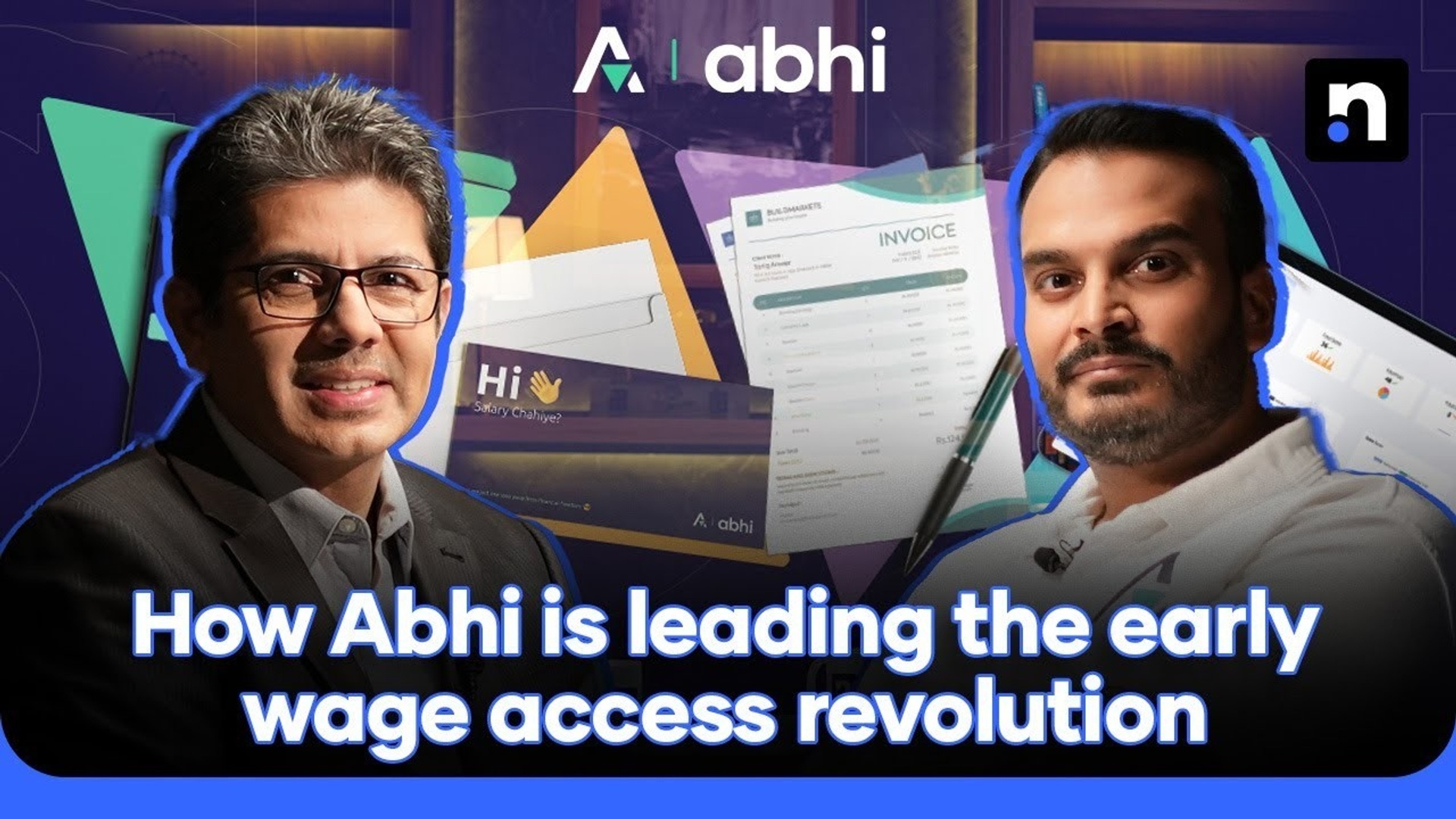
The early test was modest. Ansari and Ladhubhai put flyers inside a company with roughly 400 employees, inviting people to request salary advances through WhatsApp. Ansari later recalled that 30 to 40 percent of the workforce had transacted within two weeks. Before there was much of a platform to admire, there was a behaviour to observe. People were asking for access to money.
Ladhubhai became Abhi’s co-founder and chief operating officer. He brought banking experience and a previous venture, KarloCompare. The partnership paired Ansari’s investing background with someone who had already worked on building a financial business. Their different histories mattered because the job ahead involved both convincing capital providers and delivering a usable service to employers and employees.
The product depended on employer participation. An employee could request part of an accrued salary, receive funds into an account or wallet, and have the amount deducted through the next payroll. Abhi’s early published terms included a transaction fee. Speed made the service convenient; the fee made it a business. Both belong in any honest description of what the founders were building.
- 01Work accruesSalary is earned during the month.
- 02Access requestedAn eligible employee requests an advance.
- 03Money movesFunds reach an account or wallet.
- 04Payroll settlesThe advance is deducted at payday.
By 2025, Ansari described the initial problem as one of timing: people’s “income doesn’t match the timing of their expenses.” He said conversations with clients also exposed working-capital difficulties inside the companies employing them. Payroll financing, invoice factoring and payroll management followed. The recurring concern was access to money at the moment it was needed, whether the person asking wore a factory uniform or signed the factory’s invoices.
The raw material was cash
In April 2022, Abhi announced a $17 million Series A led by Speedinvest. Other backers included Global Ventures, VentureSouq, VEF and Sturgeon Capital. The company said its headcount had grown from 15 in November 2021 to 48. For Ansari, the financing helped turn a young operation into a company with more people to meet demand, build products and sell them.
It also brought him into a familiar conversation from an unfamiliar seat. He had spent years assessing financial businesses. Now other investors were assessing his. The list of backers was useful, but the important change was practical: Abhi had more capacity to do the work it had promised. Funding announcements are festive affairs. Employees still expect the transfer to arrive after the festivities.
In May 2023 came another financing route: a PKR 2 billion sukuk, an Islamic financing instrument. Abhi reported subscriptions at twice the anticipated amount. For a company advancing money to customers, access to capital was part of the product’s plumbing. A polished app could do little with an empty pool of funds behind it.
Ansari explained the logic in unusually plain terms. Cash was the business’s raw material. He wanted to show that Pakistan’s debt market could finance growth without the company continually relying on new equity. It was an investor’s concern brought inside an operating company: how to fund the next stage while thinking carefully about the cost and source of that funding.
April 2022
May 2023
A map with several blank spaces
Abhi’s ambitions soon crossed Pakistan’s borders. By December 2023, Ansari was discussing operations in Bangladesh and the UAE, and the support he had received from Dubai International Financial Centre and Abu Dhabi Global Market. The UAE gave him a different environment for building a company, including investors with longer histories and founders who had already started businesses before.
The expansion connected naturally with his earlier life, though recognising several markets and operating in them are different jobs. He had spent a career comparing financial systems. Abhi required local relationships, local execution and products that made sense in the country where they were offered. A useful idea could travel. Its implementation needed to unpack and stay awhile.
Recognition widened his network too. Endeavor selected Ansari and Ladhubhai as entrepreneurs in June 2023. Abhi’s selection as a UAE Future 100 company followed later that year, and Ansari received the award. These moments placed the founders among people building businesses across borders, where a conversation about regulation or funding could become as useful as another conversation about software.
At the Singapore FinTech Festival in 2024, Ansari gave a talk called “No Google Maps Here.” His themes included experimentation, resourcefulness and admitting weaknesses. The title suits an investor learning to operate. A map is reassuring because somebody else has already taken the wrong turn. In a new market, a founder sometimes has to make that contribution personally.
He described the need to build teams around gaps in a founder’s capabilities. There is a useful lack of romance in that advice. Entrepreneurship attracts stories of exceptional individuals. Payroll, credit and expansion require people who can handle the details an exceptional individual has overlooked.
The startup buys a bank
In January 2025, Abhi and TPL completed the acquisition of FINCA Microfinance Bank in Pakistan. The institution became ABHI Microfinance Bank. Ansari’s project now included an existing banking platform, alongside the technology and services the startup had developed. The change made his original ambition to build broader financial access considerably more tangible.
Bank ownership also changed the kind of business he was responsible for. Deposits, lending and an established customer base brought opportunities beyond salary advances. They also made the institution’s funding and operations central to the story. The founder who had begun with a question about payday was now involved in a bank with a history preceding his startup.
By September 2026, the bank was preparing for a Pakistan Stock Exchange listing. The proposed listing concerned the Pakistani microfinance bank, rather than ownership of every Abhi business abroad. Ansari said the bank accounted for roughly four-fifths of the group’s global lending, and almost 90 percent of the bank’s loan book was backed by gold.
Gold might seem an unexpected destination for a founder associated with instant digital access. Ansari’s explanation returned to his old concern: households could be “very asset rich but cash poor.” Gold-backed lending addressed wealth that already existed but was unavailable as spending money. The objects had changed from earned salaries to household assets. The question of access remained.
There is a saxophone somewhere in this story
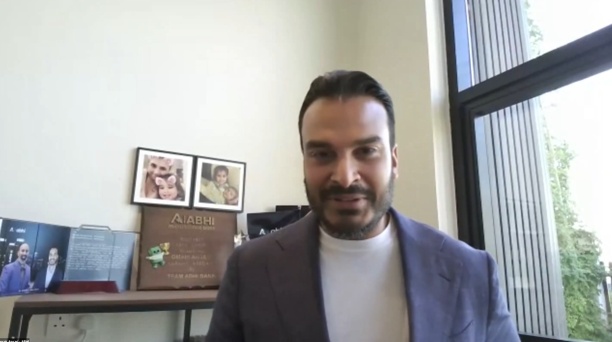
Ansari’s public introduction to fellow Endeavor entrepreneurs includes three details that rarely appear in financing announcements: he is a podcast addict, enjoys adventure sports and plays the saxophone. He also described himself as a first-time entrepreneur who had previously been on the investing side. The modest description is revealing. He could list the finance employers; he still acknowledged the newness of the job.
The saxophone supplies a welcome interruption to all the discussion of liquidity. A founder can spend a day talking about a loan book and remain a person with interests that fit badly inside a pitch deck. Those details make Ansari easier to picture without pretending that a hobby explains a company.
His June 2026 account of Abhi’s ambitions still centred on building a bank for underserved customers, starting with Pakistan and extending across markets. The products have multiplied, the financing has changed and the responsibilities have grown. The premise remains recognisable: useful financial access depends on when people can use their money. Payday may have tradition on its side. Ansari has chosen to argue with the calendar.