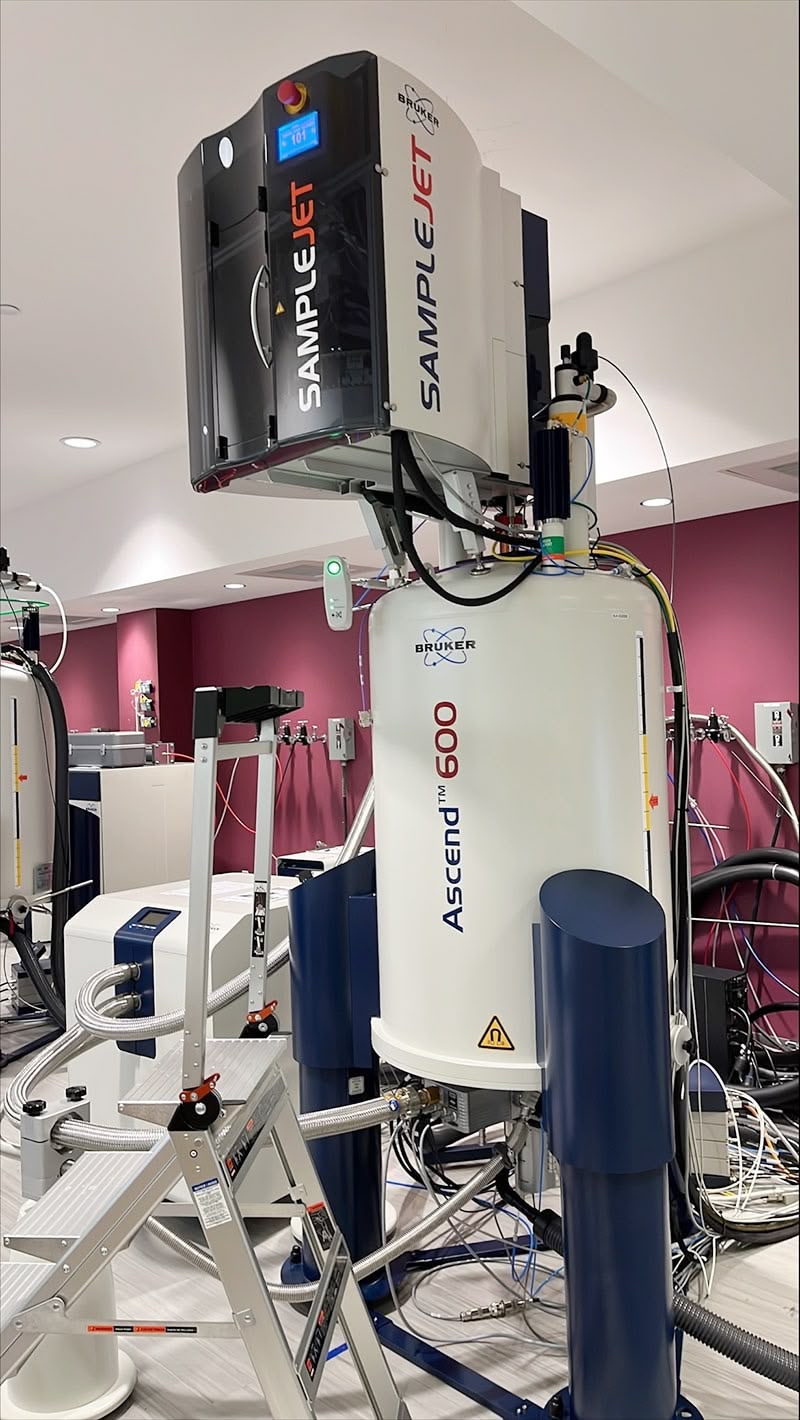
The object at the center of Olaris's business is not glamorous. It is a temperature-controlled cup of urine. A kidney-transplant recipient provides the sample; it travels to the company's Framingham laboratory; a nuclear magnetic resonance instrument reads the chemical traces inside it. Then software looks for a pattern across metabolites and returns a similarity score to a clinician. The stated turnaround is about three to five business days.
That plain workflow is the result of an unusually long translation. Elizabeth O'Day founded Olaris in 2014 after a Harvard PhD steeped in NMR, cancer biology and cellular metabolism. The original ambition was platform-sized: find metabolic signatures that could predict which patient would respond to which medicine. Early public work ranged across breast cancer, gastrointestinal stromal tumors and Parkinson's disease. The slogan was equally large - remove the guesswork from medicine.
A dozen years later, the most tangible proof is much narrower. myOLARIS-KTdx is a laboratory-developed test for surveillance of kidney-graft injury. It does not diagnose every illness, pick every drug or replace biopsy. It gives transplant teams another signal when routine monitoring leaves an uncomfortable blank. That is less cinematic than curing trial-and-error medicine. It is also how platform biotech becomes a product.
The awkward middle of transplant care
After a kidney transplant, clinicians manage a difficult balance. Too little immunosuppression can invite rejection. Too much can leave a patient vulnerable to infection. Serum creatinine is familiar and useful, but it can be a non-specific, lagging indicator. A surveillance biopsy can show what is happening inside the graft, but it is invasive. Blood-based molecular tests offer another view, often by measuring donor-derived cell-free DNA.
Olaris enters between those tools. KTdx uses urine-based NMR metabolite profiling, patient information, BK-virus quantification and serum creatinine. Its algorithm compares the resulting pattern with learned profiles and reports whether the immune response looks stable or trends toward under- or over-immunosuppression. The aim is not to hand a machine the clinical decision. It is to help a licensed clinician decide whether the picture warrants attention, intervention or a biopsy.
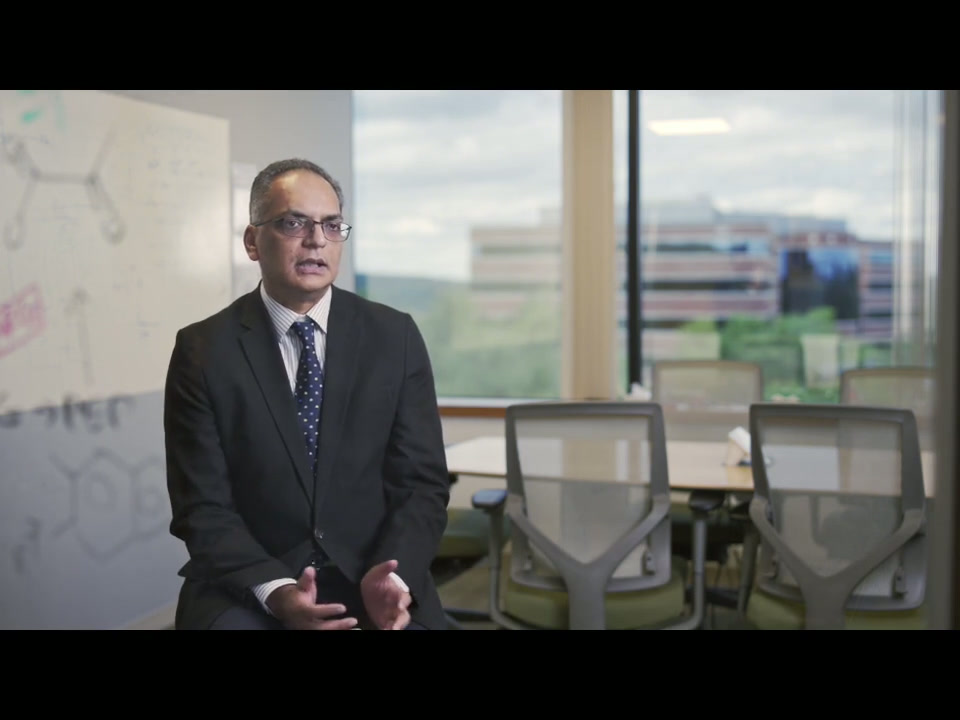
“The use of metabolomics to profile a transplanted kidney could reveal a lot about the detailed processes occurring within the kidney.”Anil Chandraker, UMass Chan Medical School
The machine learning is only one station
Many health startups describe a model as though prediction itself were the product. Olaris's more defensible claim is operational. It keeps metabolite profiling, quality control, machine learning and biological interpretation inside one process. Samples arrive under controlled conditions. NMR produces spectra. Scientists standardize the data and manage the noise. An algorithm recognizes patterns. Biology determines whether those patterns make sense. A laboratory report puts the result into a clinical frame.
That integration matters because metabolites are wonderfully current and annoyingly sensitive. They change with cellular activity, diet, medication, the microbiome and sample handling. The feature that makes them appealing - they reflect what a body is doing now - also creates noise. Olaris's published NMR and mass-spectrometry methods focus heavily on standardization and reproducibility. In this category, the dull words are the important ones.
What failed first: the idea that science sells itself
There is no public account of a spectacular technical collapse at Olaris. The more instructive failure was an assumption O'Day has described herself: strong science was not enough to make a product real or a business investable. Diagnostics historically offered investors a less obvious return than therapeutics. A clever signature still needed stakeholders, proof, workflow, reimbursement logic and distribution.
Her response was to become less purely academic. O'Day talked to policy makers, joined precision-medicine groups, learned to explain an economic case and built a team that mixed laboratory science with commercial skills. The company also concentrated. Its early oncology studies were promising but exploratory - one 2020 breast-cancer analysis included 26 patients and explicitly required larger validation. Kidney transplantation offered a clearer recurring workflow, an available specimen and a visible gap between biopsy and routine labs.
The change was not a repudiation of the platform. It was a choice about sequence. Prove the machine on one bounded clinical job; then use the same engine for adjacent products. Olaris now lists an MMF Drug Signature for directly detecting metabolites of a common immunosuppressant, a pediatric kidney-graft assay in development and a plasma signature for cardiovascular risk after liver transplant.
The cost nobody puts on the menu
Olaris does not publish a list price for KTdx, and its funding-round amounts are mostly undisclosed. The visible cost is the staircase a diagnostics company must climb before a test can become routine. Olaris needed a CLIA-certified laboratory, standardized instrumentation, peer-reviewed evidence, a code specific enough for billing conversations and a way into clinical ordering systems. The AMA's PLA code 0542U took effect in April 2025. It made the product legible to the machinery of American healthcare, but a code is not the same thing as universal payer coverage.
Two strategic investors arrived around that moment. Labcorp invested in April 2025. Bruker, a major NMR instrument maker, followed in May. Their value is almost diagrammatic: one understands national laboratory access; the other understands the machine at the heart of Olaris's method. In June 2026, Labcorp and Olaris announced a commercial collaboration intended to make KTdx available through Labcorp ordering and its network of more than 2,200 patient-service centers later in the year. Olaris will still perform the test.
That is the business model in miniature. Olaris earns from clinical laboratory testing and from biomarker collaborations with drugmakers, biotech companies, foundations and academic groups. It keeps the metabolomics engine and specialist interpretation. Larger partners can supply specimens, development programs, credibility or reach. Public revenue and pricing remain private, so the commercial result is not yet visible from the outside.
What a founder can copy
The Olaris sequence
- Start with a platform, but choose one clinical decision as the first paid job.
- Own the messy chain from specimen and instrument to model and report.
- Publish the method, not merely the exciting result.
- Give physicians, patients and caregivers a seat before the workflow hardens.
- Earn the code, then borrow distribution instead of building every channel yourself.
The patient-and-caregiver point is easy to miss. Olaris formed a Transplant Advisory Council and says recipient voices shape education and research priorities. That is not decorative community building. In a surveillance test, language can change behavior. The company now prefers “adherence” to “compliance” when discussing medication use, because the former acknowledges a recipient's agency and the care team's role. A technically accurate test can still fail if people experience it as monitoring from above.
The culture Olaris advertises follows the same pattern: accountable to science, always improving, open to the best idea, committed to impact. O'Day's sharper version is funnier. Biology, she has said, will eventually slap you in the face when you think you have figured it out. For a company measuring molecules that can change with breakfast, humility is less a poster value than a quality-control requirement.
Where this playbook does not travel
- It will not work where a metabolite signature cannot be reproduced across sites, populations and sample-handling conditions.
- It weakens if the score does not change clinical decisions or improve outcomes beyond existing tests.
- It stalls without payer coverage, hospital adoption or a workflow that clinicians can use without extra friction.
- It should not be copied as a substitute for a gold-standard procedure when the clinical question still requires tissue.
A narrow proof with a long runway
Olaris competes with entrenched habits as much as named companies. CareDx, Natera, Eurofins Transplant Genomics, Devyser and Oncocyte occupy parts of the molecular transplant-surveillance market. Hospital labs already run familiar chemistry. Biopsy answers questions a urine score cannot. The company's distinction is not that every alternative is wrong. It is that a urine metabolome may show a different layer of what is happening and classify more than a single rejection signal.
The next test is commercial, not conceptual. Can Labcorp's reach make ordering routine? Will payers cover it? Will published evidence expand beyond validation into clinical utility? Can the platform reproduce its first wedge in children, liver recipients and drug monitoring? The conditions are demanding, and appropriately so.
Still, Olaris has already supplied a useful answer to the question that traps many deep-tech founders: what exactly did you build? Not “an AI platform for precision medicine.” A urine test, processed in a certified lab, with a code, a report and a defined place beside existing tools. Twelve years is a long route to a narrow sentence. In diagnostics, that narrow sentence may be the achievement.