On March 23, 2020, the New York Stock Exchange performed an experiment it had spent years preparing never to need. It opened for business without its trading floor. The pandemic had made gathering people in one room dangerous. Computers could continue matching orders. A familiar picture of capitalism disappeared from the screen, while capitalism carried on.
- NYSE connects companies seeking public capital with markets where investors trade.
- Its flagship pairs electronic systems with designated market makers and floor brokers.
- The 2020 closure exposed the difference between keeping a market running and preserving every trading tool.
The obvious conclusion was tempting: perhaps the room had become unnecessary. Yet a stock exchange does more than keep a stream of transactions moving. It must help buyers and sellers agree on prices, especially when they arrive in uneven numbers. Removing the people changed the machinery in ways a television camera could never show.
The room disappeared. Some orders did, too.
NYSE explained the decision plainly: “the safety of our employees and Floor personnel is paramount.” Its electronic contingency arrangements were regularly tested. There was also regulatory preparation. Before the closure, the Securities and Exchange Commission enabled temporary changes to the rules governing electronic auctions, widening price parameters and removing certain volume restrictions.
Then something specific vanished: D Orders, a flexible order type available through floor brokers. In an April 2020 analysis, NYSE said those orders could comprise up to 40% of its closing auction. Traders could use alternatives, including market-on-close and limit-on-close orders, but they had to adjust their behavior.
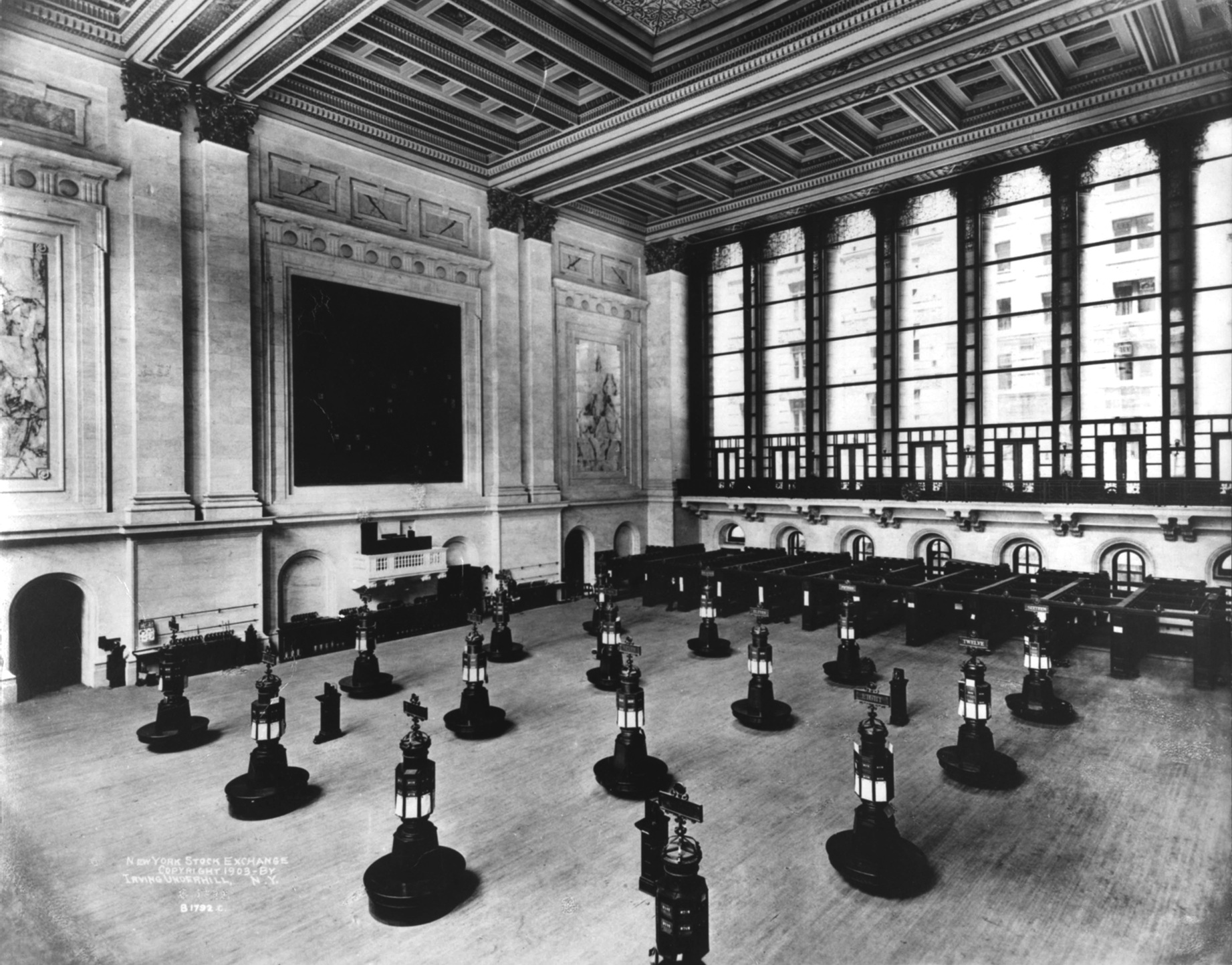
When the floor partially reopened on May 26, brokers returned under health restrictions. D Orders accounted for 19.1% of that day’s closing-auction volume, according to NYSE. The exchange reported improvements in auction pricing, too. Those are the operator’s findings, rather than proof that putting people back in a room explains every difference. But they identify what had been missing: a particular route for orders and liquidity.
D Orders in the closing auction
A price is a coordination problem
NYSE’s origins are less about speed than agreement. On May 17, 1792, 24 brokers signed the Buttonwood Agreement, setting commissions and giving one another preference in negotiations. The arrangement answered a financial panic with rules about whom to trust and how to trade. Its exclusivity would hardly qualify as a modern open-access ideal. Its practical insight was that a market needs organization.
Today, each NYSE-listed security has a designated market maker, or DMM, charged with maintaining a fair and orderly market. DMMs work electronically and manually, helping price discovery at openings, closings and moments of imbalance. Floor brokers have another role: they act for clients. The distinction matters. The person supporting an orderly market and the agent executing your order have different responsibilities.
Removing the people changed the machinery in ways a television camera could never show.
NYSE sells this hybrid arrangement in a competitive market. Nasdaq is an alternative for corporate listings; other exchanges compete for execution. A company’s shares can trade away from their primary listing venue. The NYSE badge therefore does not funnel every transaction through one building. The exchange must keep attracting orders.
The bill behind the bell
The customer list has several layers. Companies want a listing and access to public investors. Broker-dealers want execution and connectivity. Institutions, data distributors and researchers want prices, order-book information and historical records. Individual investors generally approach through brokers, including the app on their phone.
Each layer supports a business line: listing fees, trading charges, market data and access services. NYSE’s listings website describes a community of over 2,400 issuers. The service continues after the opening-day photograph, with governance requirements and issuer support. A listing is an ongoing relationship.
Initial common-stock listing fee documented in NYSE’s 2025 filing. Application and annual charges, plus legal, accounting and underwriting costs, require separate consideration.
There is a larger ownership story, too. Intercontinental Exchange completed its acquisition of NYSE Euronext in November 2013 for approximately $11 billion in stock and cash. That purchased the wider NYSE Euronext business, not just the familiar New York exchange. Treating the purchase price as NYSE’s current valuation would muddle both the date and the asset.
Seven markets, one technical language
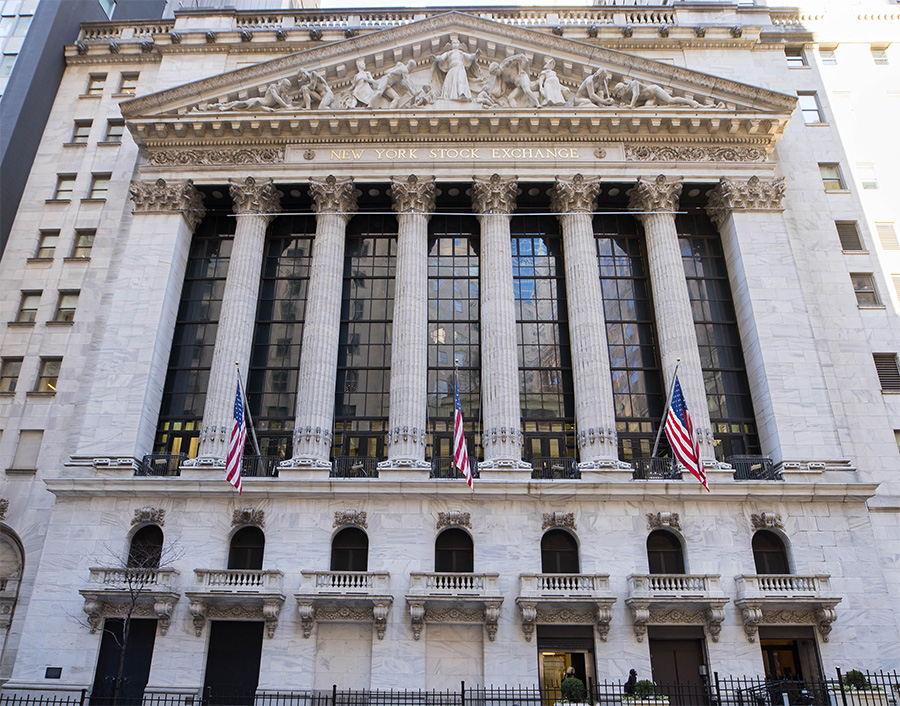
Behind the facade sits Pillar, the integrated technology platform spanning five NYSE equities markets and two options markets. Member firms connect through a standard protocol. The customer benefit is straightforward: fewer differences to manage across venues. The flagship’s floor is one component of this business, alongside electronic markets such as NYSE Arca and NYSE Texas.
Texas launched in 2025 as a fully electronic equities exchange based in Dallas. Its existence is a useful corrective to any sentimental explanation of NYSE’s floor. The group is comfortable operating without one. Different venues offer different arrangements for different participants.
Data is another product with several audiences. A trading firm might need live order-book depth; a researcher might want tick-by-tick history for testing a strategy. NYSE packages both. That expertise lies in making market activity usable beyond the instant a trade occurs. The resulting information business reaches customers who will never stand beside a trading post.
Keep the fallback. Measure the difference.
Continuity also has limits. In July 2015, a software rollout caused communication problems and a trading halt lasting nearly four hours, Reuters reported. NYSE-listed shares continued trading on other exchanges. The episode separates two questions often bundled together: can this venue operate, and can investors still trade its listed securities elsewhere?
The next experiment concerns settlement. In January 2026, NYSE announced development of a tokenized-securities platform designed for continuous trading, immediate settlement and dollar-sized orders. The announcement made regulatory approvals a condition. In September testimony, President Lynn Martin was still describing the platform as something NYSE was building.
For anyone designing a service, the 2020 episode offers a practical test: rehearse the fallback, then list the functions customers lose when it takes over. Electronic continuity worked. Some auction tools disappeared. Copying NYSE’s human layer makes sense only where people have defined obligations, useful information and a mechanism for contributing. Without those conditions, an extra person may simply add another step.