The trouble with a stolen gift card is that it behaves beautifully. It arrives instantly. It travels light. It can be sold again before the merchant discovers the original payment was fraudulent. Every quality that makes the product convenient also makes it convenient to steal.
Alex Zeltcer and Ziv Isaiah learned this while running their earlier gift-card business. In a published account, Zeltcer says 40% of sales were fraudulent during its first week. The shop had customers. It had transactions. It had a rather alarming problem with who was paying.
- Watch the sale: build fraud models around each merchant’s transaction data.
- Count the lost buyer: judge protection by approvals and profit as well as fraud.
- Change the stakes: combine payment decisions with protection for eligible chargebacks.
The first thing to break was the payment
The founders looked for outside protection. Their account describes tools that would reject 15% to 20% of shoppers they believed were legitimate. Safety had acquired an awkward price: turning away people who had already reached checkout. They built their own system, tested its machine-learning models against other providers, and eventually saw a business in the repair itself.
nSure.ai emerged in 2019, backed by Kamet, then AXA’s venture builder. Its chosen territory explains much of what followed: prepaid cards, gaming and crypto. These are markets where the purchase can become usable value immediately. A review queue is an uncomfortable companion to instant delivery.
The company announced a $6.8 million seed round in 2021 and an $18 million Series A led by MoreTech in March 2022. The founders described plans to expand their team and develop more industry-specific protection. The money was backing a proposition already tested inside a merchant: fraud prevention could be sold as a way to keep more business.
By April 2026, nSure.ai was reporting a commercial payoff: 180% annual recurring revenue growth in 2025, 130% net revenue retention and profitability. Its announcement also cited $80 billion in total processed volume, without defining the accumulation period. Those are company-reported results. They put some substance behind the wager that merchants would pay to recover business previously sacrificed to caution.
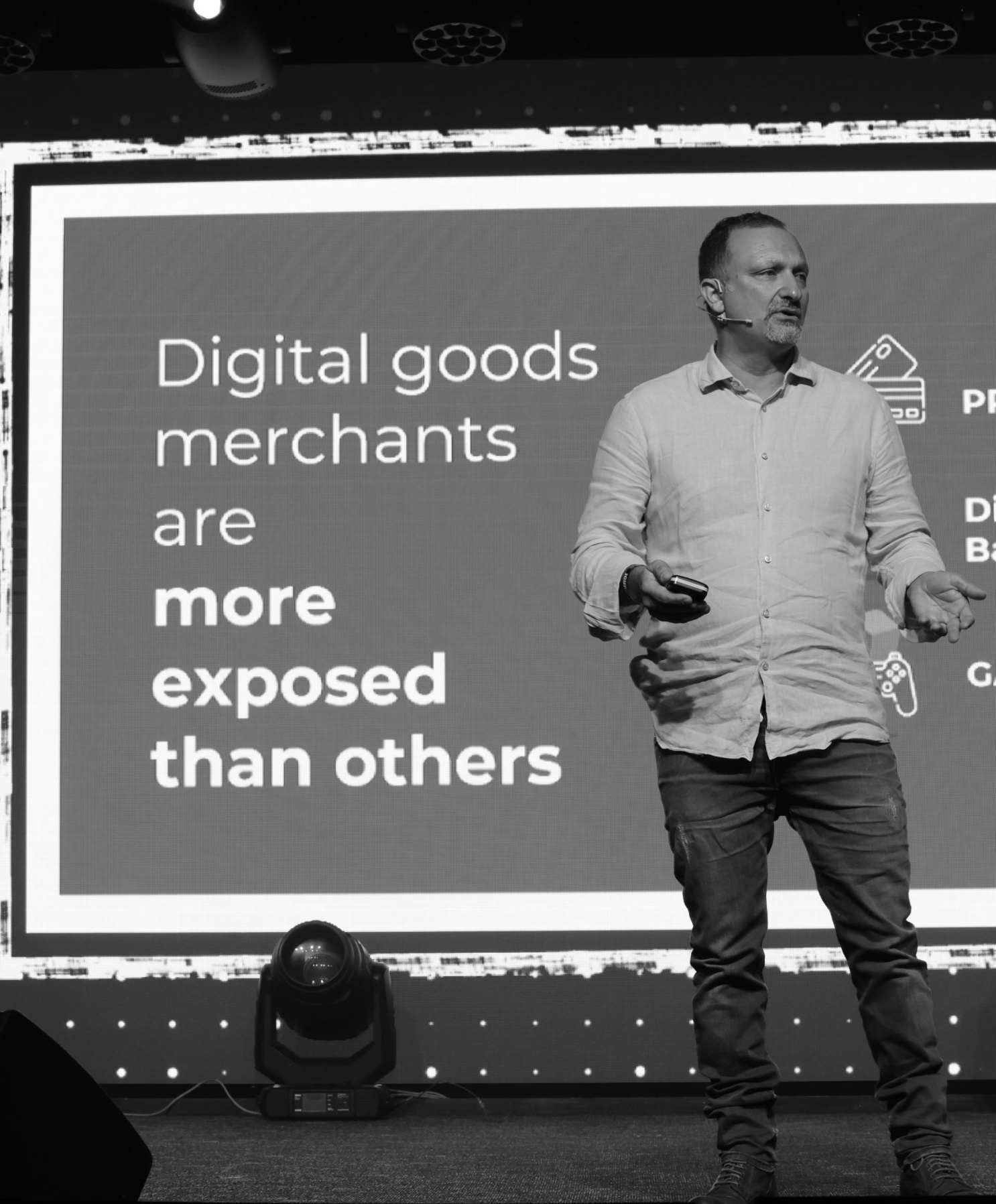
The customer who looks like trouble
A chargeback is visible. A good customer rejected at checkout is easier to overlook. Zeltcer’s writing attacks blanket geographical restrictions and compulsory waiting periods because they can punish honest buyers alongside criminals. The implication is uncomfortable: a fraud department can improve one number while quietly damaging another.
The company’s answer is a dedicated AI model trained on each merchant’s data. Behavior matters alongside the individual transaction. AtData’s 2023 partnership adds email intelligence to that picture; the partner reported increased US network coverage. Identity, activity and transaction context become material for a payment decision, rather than separate ornaments on a dashboard.
There is competition here. Riskified also offers chargeback guarantees, real-time decisions and digital-goods coverage. nSure.ai’s case therefore rests on its concentration on high-risk digital merchants, dedicated models and particular recovery and deterrence tools. A guarantee alone does not make a category of one.
Company-advertised figures. Merchant performance and agreed targets vary.
A second chance, then a worthless prize
SoftApproval gives selected flagged buyers a challenge tailored to their profile. Passing can release the product. It introduces a middle step between approval and rejection, useful when suspicion deserves another question rather than a closed door.
DynamicKYC addresses a related confusion. Know-your-customer checks serve anti-money-laundering requirements; they do not automatically answer whether a particular payment is fraudulent. nSure.ai argues for retaining required checks while removing needless verification friction. In crypto, that means examining the journey into the purchase as well as the purchase itself.
StingBack is the stranger invention. The patented protocol can make a fraudster believe a transaction succeeded, even delivering a zero-value key or download code. The payment is refunded so the cardholder is not billed for undelivered goods. The thief, meanwhile, has something disappointingly unsaleable. The intended effect is wasted effort and damaged credibility with downstream buyers.
- 01Apparent
success - 02Zero-value
code - 03Payment
refunded
Deterrence is the aim. This diagram illustrates the company’s described protocol.
Two clocks at the checkout
The named customers include InComm Payments, Paybis, Eneba, Eldorado and Coinflow. They occupy different corners of the same immediate-value economy. Their accounts are worth reading carefully, particularly when the numbers sound interchangeable.
Paybis founder Innokenty Isers reports average customer onboarding of one minute and eighteen seconds, including KYC. That is the buyer’s clock. Coinflow co-founder Daniel Lev describes technical integration taking less than two weeks and total onboarding taking 85 days. That is the merchant’s clock. Confuse them and a sales promise becomes a scheduling surprise.
“we’ve lifted our US sales by more than 10%”
Karl Denzer, InComm Payments, in nSure.ai’s published customer testimonial
Denzer attributes that improvement to six months with the service, alongside eliminating manual review. These are customer reports published by the vendor, rather than controlled experiments. They suggest where to investigate: recovered transactions, review costs and the work required to get live.

The guarantee has an accounting department
nSure.ai sells a managed subscription service through API and SDK integration. Its September 2026 terms put fees in the client’s order form and ordinarily invoice monthly in arrears. The economic question for a merchant is straightforward: do recovered margin, avoided losses and reduced review work exceed those fees and implementation costs?
Consider a merchant selling a thin-margin gift card. An extra approval brings revenue, but only its margin pays for protection. That is why a rise in approved transactions cannot, by itself, settle the purchasing decision. The company’s own buying checklist asks about integration resources, model training, manual review and additional revenue. Read together, those questions describe a business calculation rather than a security shopping list.
The contract gives the guarantee sharper edges. Protection concerns approved transactions and eligible chargebacks. Reimbursement requires final losses and supporting information; the published mechanism uses credit invoices. Even approval rate has a defined denominator, excluding attempted retries. The headline percentage needs its small print to become a useful buying criterion.
There is a practical lesson to copy: measure protection against retained profit, then separate technical setup, buyer verification and reimbursement into their own decisions. That approach is less useful when the merchant cannot supply reliable transaction data or when the losses fall outside the agreed protection. nSure.ai’s original insight remains pleasingly merchant-minded: a customer who leaves empty-handed can cost money too.
Follow the transaction
Explore nSure.ai’s products and customer accounts, its founders’ story, and the commercial terms. Read the AtData partnership announcement, Series A announcement, 2025 performance announcement, and merchant buying checklist.
Watch: recovering revenue without rejecting legitimate customers and Alex and Ziv discuss digital-goods protection.