A car has a curious way of speaking to its owner. It can illuminate a tiny engine on the dashboard, but the explanation usually arrives later, across a service counter, attached to a bill. Nonda's business begins in that interval. A small device goes into the diagnostic port; a phone translates what the car says. The proposition is modest and ambitious at once: drivers should know a little more before they pay someone else to know everything.
In a minute
- Nonda makes ZUS devices that add app-based features to cars people already own.
- Its first car product was a charger that also tried to find your parking spot; early reviews liked the charging more than the finding.
- Today the sharper pitch is car expense: read codes, log miles, watch tires and batteries, and find repair guidance.
This was not where the company started. In 2015, Nonda took a USB-C hub called Hub+ to Kickstarter. The campaign asked for $35,000 and received $883,460 from 8,019 backers. That is an emphatic vote for a practical object: a port that returns the ports a new laptop took away. It also established a habit. Find the inconvenient omission in a popular machine, make a handsome accessory, and ask users to fund the first run.
A car presented a much larger collection of omissions. Nonda's line, “Today's Technology for Yesterday's Car,” is effective because it avoids promising a new car. Millions of owners already have a perfectly good one. What they lack is a simple way to reach the data inside it, or the features that newer models put on a screen. The team, founded in 2014 with Jia Li identified in public company profiles as founder and president, moved into that gap with ZUS.
The charger was a door handle
The ZUS Smart Car Charger launched after beta testing and an Indiegogo campaign in November 2015. It charged two devices from a familiar dashboard socket. Illuminated, reversible USB ports made the small irritations of charging in a dark car less irritating. The companion app added a parking location, a timer, and later mileage and battery features. Here was the clever commercial thought: a charger is easy to understand and easy to install, but the app gives the buyer a reason to return.
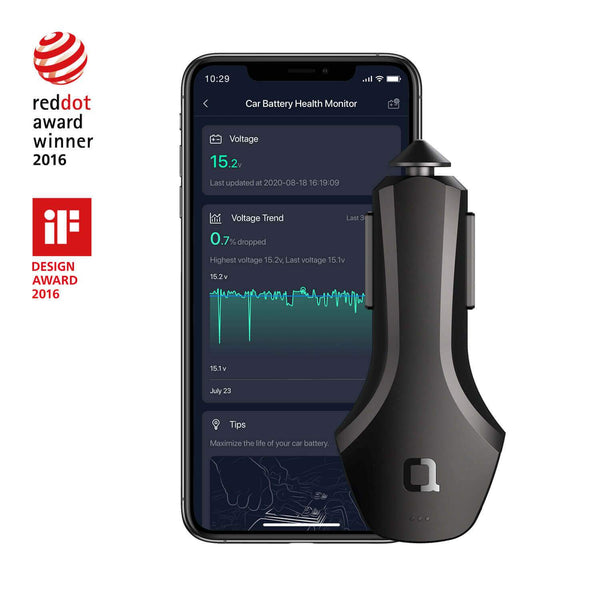
The first public test also exposed the difference between a gadget feature and a dependable service. In a January 2016 review, Digital Reviews found the charger handsome and capable but said the car-location aid needed work. The reviewer's directions were unreliable enough to blunt the very benefit the app was meant to provide. Another early review tested the charging against a generic adapter and found ZUS faster. Hardware had cleared one bar; software had another to clear.
“Today's Technology for Yesterday's Car.”Nonda's company tagline
There is no public account of a boardroom epiphany after those reviews. The visible product sequence tells the safer story. Nonda did not stop at a smarter charger. By CES 2017 it was showing a six-device connected-car family tied to one app. A tire monitor followed that June. Backup cameras, a dash cam, key finding, and a health monitor expanded the kit. The company was learning how many separate anxieties fit inside one daily drive.
The expensive part comes after the light
The current ZUS Smart Vehicle Health Monitor Mini is a Bluetooth OBD-II reader. It plugs into the standard diagnostic socket found on most modern cars and passes engine trouble codes to a phone. Nonda's product page lists code reading and clearing, issue explanations, DIY repair videos, driving analysis, and mileage records. The Gen 4 reader was listed at $19.99 when checked for this profile; its crossed-out price was $59.99. Offers change, and the reader is useful only if a particular vehicle is compatible.
The distinction matters. A code is evidence, not a repair. A loose fuel cap and a more serious engine fault may both begin with a warning light; neither is cured by clearing the display. Nonda's more interesting promise is the material around the code: a diagnosis, a likely next check, perhaps a video that makes a manageable fix less mysterious. Its site says the app offers thousands of repair videos. A driver may still need a mechanic, but can arrive with a better question.
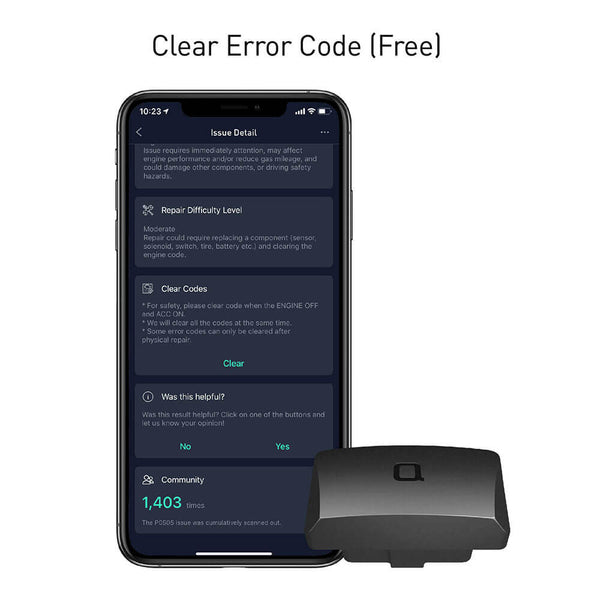
Insert the monitor into a compatible OBD-II port.
The app explains the warning and stores vehicle data.
Use guidance, a repair video, or a professional diagnosis.
Tires show the same logic in a more visible way. Nonda's 2017 Smart Tire Safety Monitor used valve-cap sensors to report pressure and temperature to a phone, with alerts for low pressure and slow leaks. The company sold it as a retrofit for cars without detailed tire readouts; its launch preorder began at $97, while the stated retail price was $119.99. Installation required fastening sensors to four valves and pairing them with the app, rather than replacing the car's dashboard. It was a narrow solution to a specific, potentially costly surprise.
From clever objects to a cost-of-driving desk
The ZUS app now carries more than device controls. It can log trips for business mileage, classify a journey as business or personal, and export a report. The Google Play listing describes a free allowance for the first 60 drives each month and paid unlimited mileage logging. Nonda also promotes an auto-saving center with parts, service and insurance offers, plus a cheaper-insurance tracker. Those additions make the business model legible: affordable hardware brings a driver into the app; subscriptions and related offers can keep a relationship alive after the device sale.
The site says 1.2 million people use the ZUS app and reports millions of engine codes cleared. These are Nonda's figures, not an independently audited user count or proof of a particular amount saved. The distinction is worth holding onto when the marketing promises large repair or insurance savings. A cleared code can be free, while the underlying repair may still cost money. A mileage report can help with records, while tax treatment depends on the driver and the rules that apply to them.
For customers, the alternative is familiar: a standalone code reader, a separate mileage app, an ordinary charger, or factory-connected features in a newer vehicle. Nonda's difference is the bundle. Its hardware is deliberately small and self-installed; its app tries to give the scattered readings a shared home. That is convenient for an owner with several ZUS devices. It also means the value of the kit depends on phone compatibility, app support, clear instructions and reliable data. Early parking-finder criticism was a reminder that convenience has to survive the parking lot.
Nonda's own account of its culture says its teams test, learn and iterate quickly. The product history gives that phrase a concrete shape: a crowdfunded laptop accessory, a car charger, then a growing catalog of vehicle sensors and app services. The company has drawn iF and Red Dot design recognition, and its products appeared in retail coverage including Best Buy Canada's 2018 review. Its present offer is less glamorous than the fantasy of a self-driving car, and perhaps more useful. Yesterday's car will still need an oil change. It can, however, tell its owner a little more before the appointment.
The practical copyable idea is to begin with an easy-to-install tool that solves an obvious daily annoyance, then add software only where it makes the next decision easier. It works best when the car, phone and driver all cooperate - and when the reading leads to a real action rather than merely another notification.