Dongyi Liao’s car broke down. Art Agrawal helped him take it to a shop. The estimate came back at about $600, and the errand consumed roughly half a workweek. In Agrawal’s telling, that combination of uncertain price and wasted time supplied the founding question for YourMechanic: why couldn’t the mechanic come to the car?
In the driveway
- YourMechanic books screened mobile mechanics for repairs, maintenance and diagnostics at a home or workplace.
- Drivers see a quote, a mechanic’s credentials and reviews before the appointment; fleets use a separate service program.
- The company won TechCrunch Disrupt in 2012, raised venture capital and was acquired by Wrench in 2022.
There is a funny detail in the origin story. The first plan did not involve a mechanic making house calls. The founders wanted trust and upfront prices, and assumed meaningful repairs required a conventional shop. Conversations with mechanics changed that assumption. Technicians explained which jobs could travel, and why the shop’s hourly bill did not necessarily reach the person holding the wrench. The idea became a marketplace with two dissatisfied customers: the driver who could not read the invoice and the mechanic who had little control over the workday.
The founders had no instant parade of believers. Agrawal recalled that investors rejected the idea for its first ten months. He said he was living on borrowed money when Y Combinator gave the company a way forward. In September 2012 it raised a $1.8 million seed round and won TechCrunch Disrupt’s Startup Battlefield. The prize was $50,000. A startup selling car repairs had walked into a technology contest and left with the cup.
The receipt arrives before the wrench
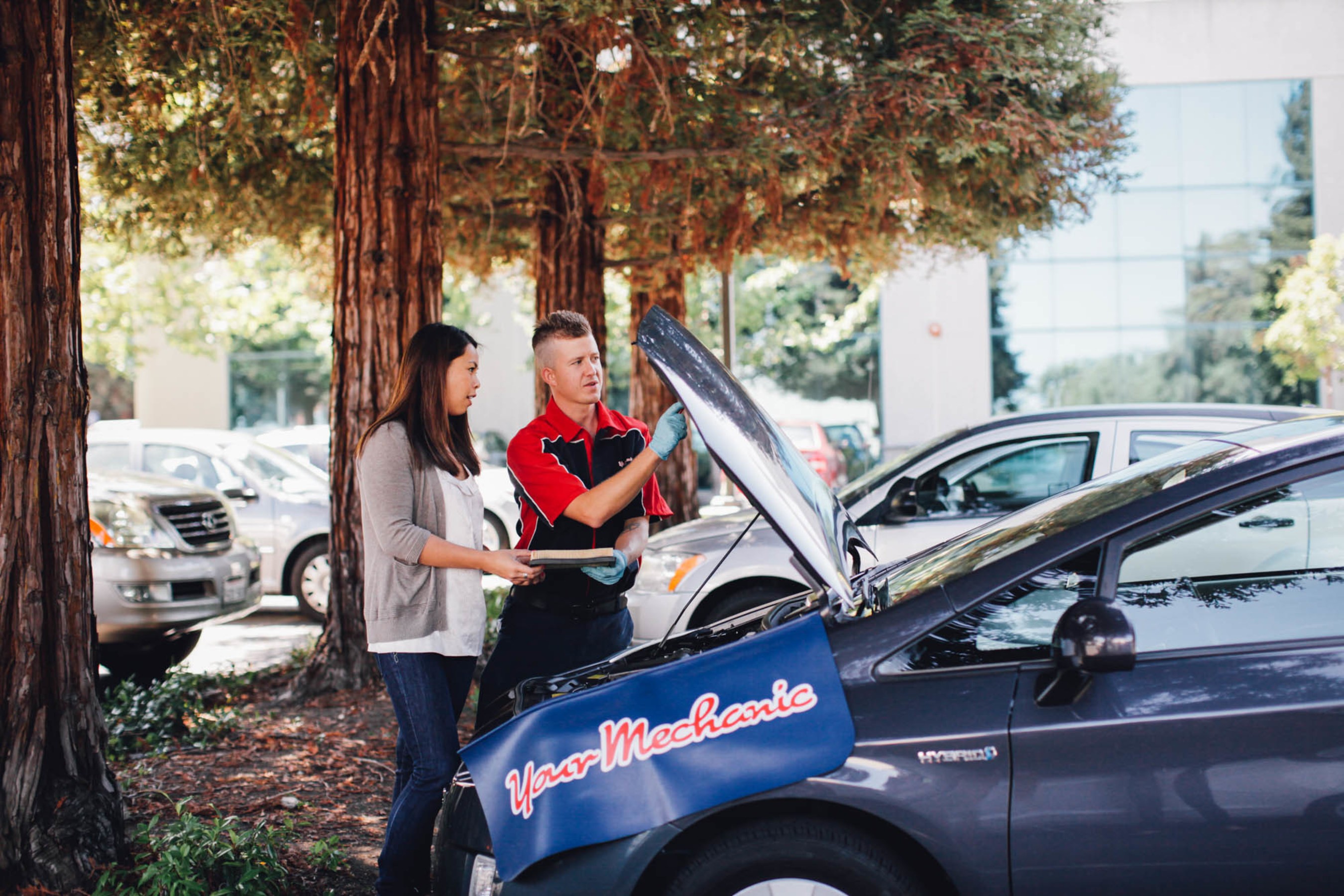
The practical sequence is plain. A driver enters the car’s year, make and model, location and the service needed. The website returns a quote in most cases, with labor and parts broken out. The driver can examine a mechanic’s experience, certifications and customer reviews, pick an appointment, then receive a digital report and receipt after the job. A card is required to book, but the company says it bills after the work is done. If the problem is unclear, a diagnostic visit can start the process instead.
The menu is wider than the familiar oil change. YourMechanic currently lists more than 500 services, from brakes and batteries to alternators, timing belts, no-start inspections and pre-purchase checks. It does not offer collision repairs or original-equipment warranty work. Nor is any parking spot a suitable repair bay. The company requires permission to work at the site, a hard and level surface, space away from traffic and a cool engine. Those details matter: the driveway is useful only when it can safely be a workshop.
Pricing is less magical than the old startup pitch might suggest. A shop carries rent, reception and inventory; a mobile mechanic carries travel. YourMechanic says it buys parts through national vendors and avoids much of a garage’s overhead. It also says a small job, such as an oil change, may cost a little more than a local shop because a technician must travel for it. Its FAQ lists diagnostic visits from $130, varying by market. The final price depends on the car, job and place. The honest comparison is the whole afternoon, not only the line at the bottom of an invoice.
“Wouldn’t it be great if the mechanic came to you?”Art Agrawal, recalling the founding question
The mechanic is part of the product
A repair marketplace lives or dies on work it cannot perform with code. YourMechanic says independent mechanics face skills, background and reference checks, and that customer ratings follow every job. Profiles display qualifications and previous reviews. Most mechanics, its FAQ says, have ASE certification, similar credentials or dealer training; the company does not claim that every mechanic has the same certificate. A qualifying booked service carries a limited 12-month or 12,000-mile warranty, whichever comes first. The agreement is with YourMechanic rather than the individual technician.
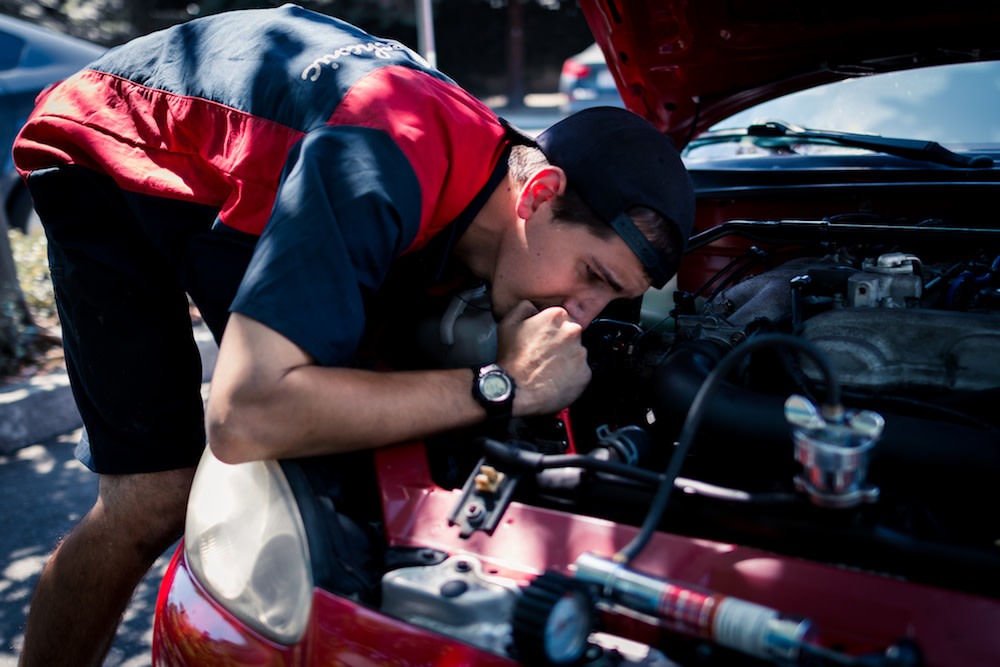
This explains both the appeal and the cost of the model. A customer sees the person doing the work instead of relaying symptoms through a service adviser. The technician can choose work and hours. But every city needs enough qualified mechanics, parts delivery, support and appointment density to make that promise credible. YourMechanic said it spent roughly two years refining booking and its back-end system before expanding beyond the Bay Area. What looked like an app was also a dispatch operation.
One driveway became a fleet lot
The company’s second act moved from a single driver’s calendar to a fleet manager’s spreadsheet. It launched a fleet product in 2017 for rental, rideshare, corporate and government vehicles. For a fleet, a shop visit is not merely irritating; it takes an earning asset out of service. The fleet portal handles requests, upfront pricing, authorization and maintenance records. The company also offers fixed-site technician staffing for larger operations. Merchants Fleet, Motus and LeasePlan USA were among partners named for mobile maintenance programs.
Money followed the broader ambition. YourMechanic announced $24 million in funding in 2016, when it said it operated in 700 U.S. cities and had grown annual revenue 400 percent in 2015. In 2018 it announced $10.1 million more for fleet capabilities and international expansion, including Toronto. A five-year Castrol agreement made the oil brand its exclusive supplier beginning in 2017. Those numbers and deals belong to their announcement dates; they are milestones, not a live dashboard.
In June 2022, Wrench acquired YourMechanic on undisclosed terms. Wrench said the acquired network then included more than 350 technicians in 30 states and had served more than 290,000 customers. Together, the businesses expected to reach more than 35,000 ZIP codes. Today the YourMechanic website still sells the simple premise: mechanics make house calls in more than 2,000 U.S. cities. The site identifies its operator as Wrench, Inc. doing business as YourMechanic.
The copyable part is the sequence: state the price before booking, show who will do the work, define which jobs fit the location, and leave a record afterward. The hard part is assembling enough qualified technicians and appointments close enough together that travel does not eat the margin.
There is a small irony in a company named for a person. YourMechanic’s most useful invention may be the paperwork around that person: a readable estimate, a known technician, a scheduled arrival, a record of the repair and someone responsible when the result disappoints. The mechanic still turns the wrench. The business makes the rest of the encounter less mysterious.