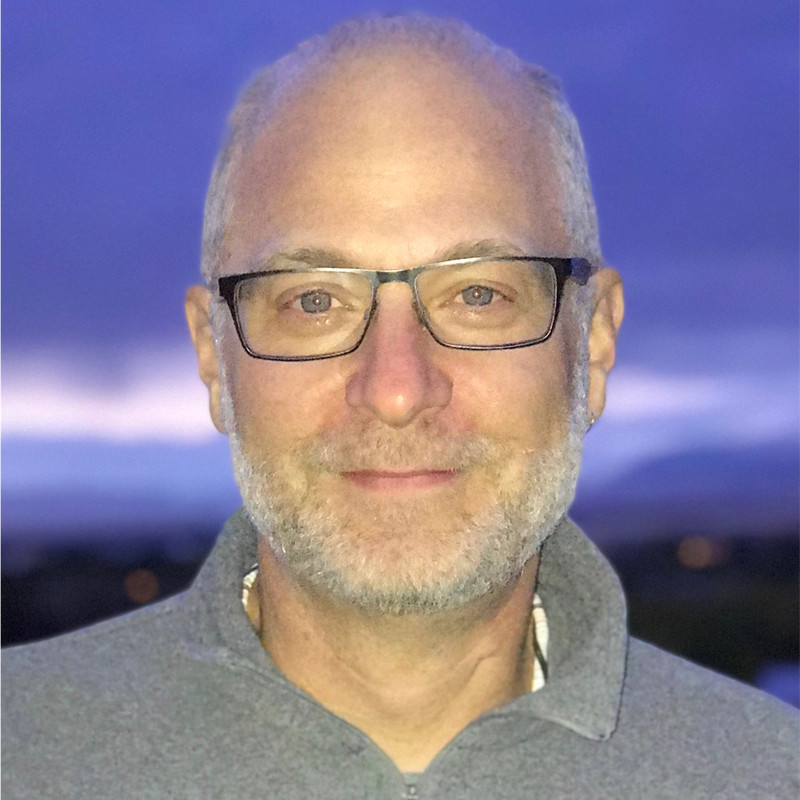
Noah Schwartz spent a decade at The John Stewart Company without his name on the front door. He ran the back office. Property management accounting. Corporate accounting. IS/IT. HR. Payroll. Training. The unglamorous machinery that decides whether 30,000 California households get their rent statements on time. In January 2024, the company's board handed him the title that matched the work he had already been doing.
He is now President and Chief Executive Officer of JSCo, the largest manager of affordable housing in California, and a developer of it. His predecessor, Jack Gardner, stayed on as chair of the board. The founder, John Stewart, had passed the company to Gardner in 2002. The line of succession in affordable housing is patient. So is Schwartz.
The story you'd expect is the operator's story: a manager promoted because the next person up was due. Schwartz's story is less tidy. He spent fifteen years before JSCo running the kinds of organizations that don't appear on org charts in glossy magazines. The Monticello Area Community Action Agency. The Charlottesville Redevelopment and Housing Authority. Community Services of Arizona, then one of that state's largest tax-credit housing operators, headquartered in Chandler. These are jobs measured in audit reports and HUD compliance, not in valuations.
JSCo brought him in as Chief Operating Officer in 2013. He stayed in the role ten years, which is roughly two startup lifecycles. In 2023 the company added “President of Property Management” to his card. Six months later, he was running the company. Promotion as ratification.
The portfolio of duties he describes is dry on purpose. Online invoice processing. Third-party payment processing. A cloud-based HRIS system. The consolidation of property-management accounting across what had been a sprawl of separate ledgers. None of these projects produce ribbon-cutting photographs. All of them produce fewer late nights at the controller's desk and fewer surprises at the audit. In affordable housing, where margins are slim and regulators are thick on the ground, the controller's late nights are where the company gets eaten.
He is, by training, an anthropologist. He earned a Bachelor of Arts in Anthropology from the University of Connecticut in 1989 and stayed for a Master of Arts in History in 1991. Then he went to work on people's housing. There is something fitting about a historian running a property manager: both jobs require accepting that the building you inherited was built by someone else, with constraints you may not understand, and that your job is to keep it standing for the next generation. JSCo manages buildings dating back generations. Schwartz manages a workforce of 1,500 that turned over its leadership a generation ago.
Affordable housing in California is not a quiet business. The state has more people on subsidy waitlists than most states have people. Property managers in this category are responsible not only for the physical asset but for resident services, supportive housing programs, regulatory filings to HUD and to the state, public-private partnership agreements, tax-credit compliance, and the slow, expensive work of historic-property rehabilitation. JSCo's book of business touches all of it. The company describes itself as the largest manager of affordable housing in California, full stop.
The headquarters at 1388 Sutter Street is, as commercial real estate goes, modest. There is no glass tower. The company has been at that address through multiple market cycles. The leadership transition followed the pattern of the address: a long ramp, then a quiet handover.
If the JSCo bench is what kept Schwartz in the building for ten years, the city probably helped. He runs the Embarcadero, which is the four-mile sidewalk between the Ferry Building and Fisherman's Wharf, the closest thing San Francisco has to a public running track. He goes to concerts with his brother. He has been married to his wife for thirty-five years and supports her advocacy for plant-based living. He has a granddaughter, mentioned in his speaker bio as the second-most-important thing about him.
The first-most-important thing, in the same bio: he roots for UConn basketball, Manchester United (“even during dark days!” the parenthetical reads), and the Boston Celtics. UConn comes first. Schwartz spent four years there for his undergraduate degree and two more for his graduate one. The basketball loyalty is a long-term position.
This is the kind of detail that, in a profile, can be made to mean too much. The truth is simpler. Schwartz has a hometown team, a sport-of-record team, and a basketball team, in that order, and one of them is overseas. He is exactly as complicated about his fandom as a normal person is.
His public quotes are scarce. There is no Twitter feed, no Substack, no manifesto. The closest thing JSCo has to a public Schwartz is the staff page on jsco.net and his speaker biography for the company's 2025 annual conference. Both read like documents written by someone who would prefer the company be the story. This is consistent with how he led as COO. It is consistent, on early evidence, with how he is leading as CEO.
The transition itself was a sign of institutional health. JSCo was founded by John Stewart, a former Bay Area civil-rights and housing activist. Jack Gardner took over in 2002 and ran the firm for more than two decades. Gardner moved to the board chair role rather than disappearing. Schwartz did not arrive from outside. The succession was the kind that companies print in their annual reports when they want to send a signal of continuity.
Continuity matters in California right now. The state's affordable-housing landscape is in active reform. Bond measures are pending. The 9% and 4% tax-credit programs are competitive enough that even experienced sponsors lose rounds. Some of JSCo's newer projects, including the Alice Griffith development in the Bayview, have been reported on for construction issues that the company is working to resolve. A manager handed a 30,000-unit portfolio in this environment does not have the luxury of a learning curve. Schwartz is using the curve he already climbed.
He still holds a California Real Estate Sales license. He served years ago on community boards in Charlottesville, including the Partnership for Children, the Jefferson School Task Force, the Charlottesville/Albemarle Commission on Children and Families, and Charlottesville Area Dental Access. None of those organizations were the kind a future CEO joins to pad a resume. He joined because Charlottesville was where he lived, and because they needed members.
That is the through-line. Schwartz has spent his career in the unglamorous parts of the housing business, and the work has compounded. Ten years at JSCo as COO is not a holding pattern. It is the time it takes for an operator to learn a 1,500-person company well enough to be handed the title.
What happens next is, in some ways, what was already happening. The Operations Team he led is still the team. The accounting consolidation is in production. The HRIS is running. The third-party payment processor is doing its job. The new CEO can spend more time on the parts of the business he was once a step removed from: development pipeline, public agency liaison, supportive housing programming, the political work of being JSCo in Sacramento and at HUD.
The promotion was, in the most literal sense, internal. Schwartz did not have to learn the company. He had to take the title.