Meridith Cass was training for marathons when heat and humidity began turning long runs into unusually slow ones. She had the familiar advice available to every runner: drink before you are thirsty, weigh yourself, learn your routine. What she lacked was an answer during the run. How much fluid was she losing, in those conditions, on that day? Cass, a former venture investor and Harvard Business School entrepreneur in residence, treated the problem as a company-sized question. She founded Nix Biosensors in 2015.
- Nix sells a reusable pod and single-use sweat patch that estimate fluid and electrolyte loss while someone exercises.
- Nix Solo guides one athlete; Nix Pro lets a coach or supervisor see many people at once.
- A starter kit currently lists at $189 with four patches; refills begin at $25.
- After a $10 million Series A in September 2026, Nix is developing hydration software that may work without its sensor.
This is a peculiarly good business problem because the usual rules are so tidy and actual bodies are so untidy. Two people can ride the same road in the same weather and lose different amounts of water and salt. Even one person’s sweat profile changes with intensity and conditions. The bottle label cannot know who is holding it. Nix’s proposition is to give the person - or the person responsible for a team - a better number before the session ends.
The small green laboratory
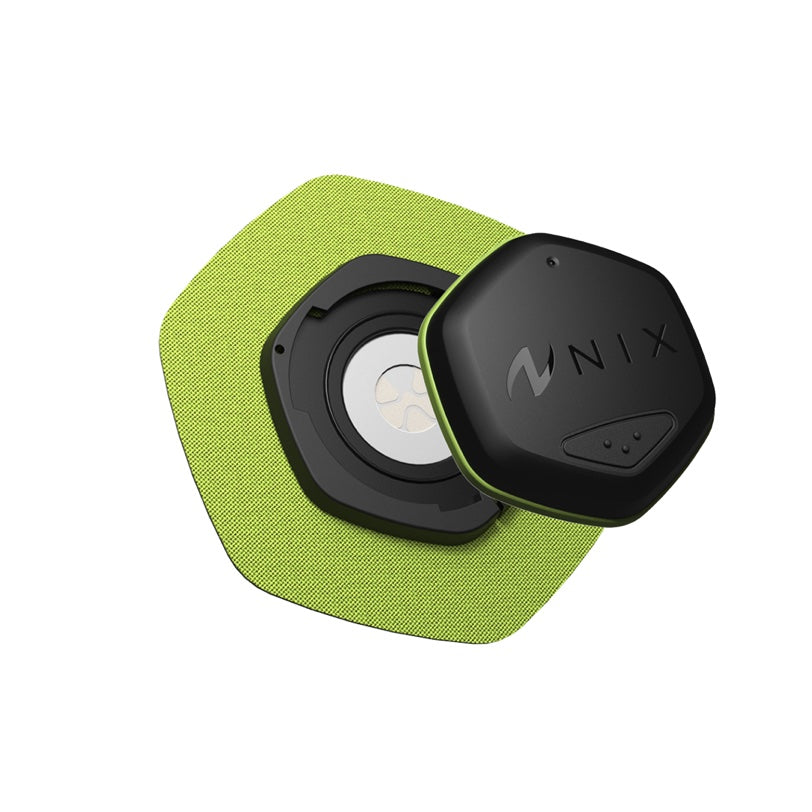
The apparatus is easy to miss: a bright green adhesive patch on the bicep and a black electronic pod snapped on top. Sweat enters a tiny flow channel; electrodes read its conductivity and the system tracks flow. The pod transmits readings to a phone. Nix’s algorithms then extrapolate from the local reading and the wearer’s profile to estimate whole-body fluid and electrolyte losses. The result is a prompt about when and how much to drink, delivered to a phone, watch or bike computer.
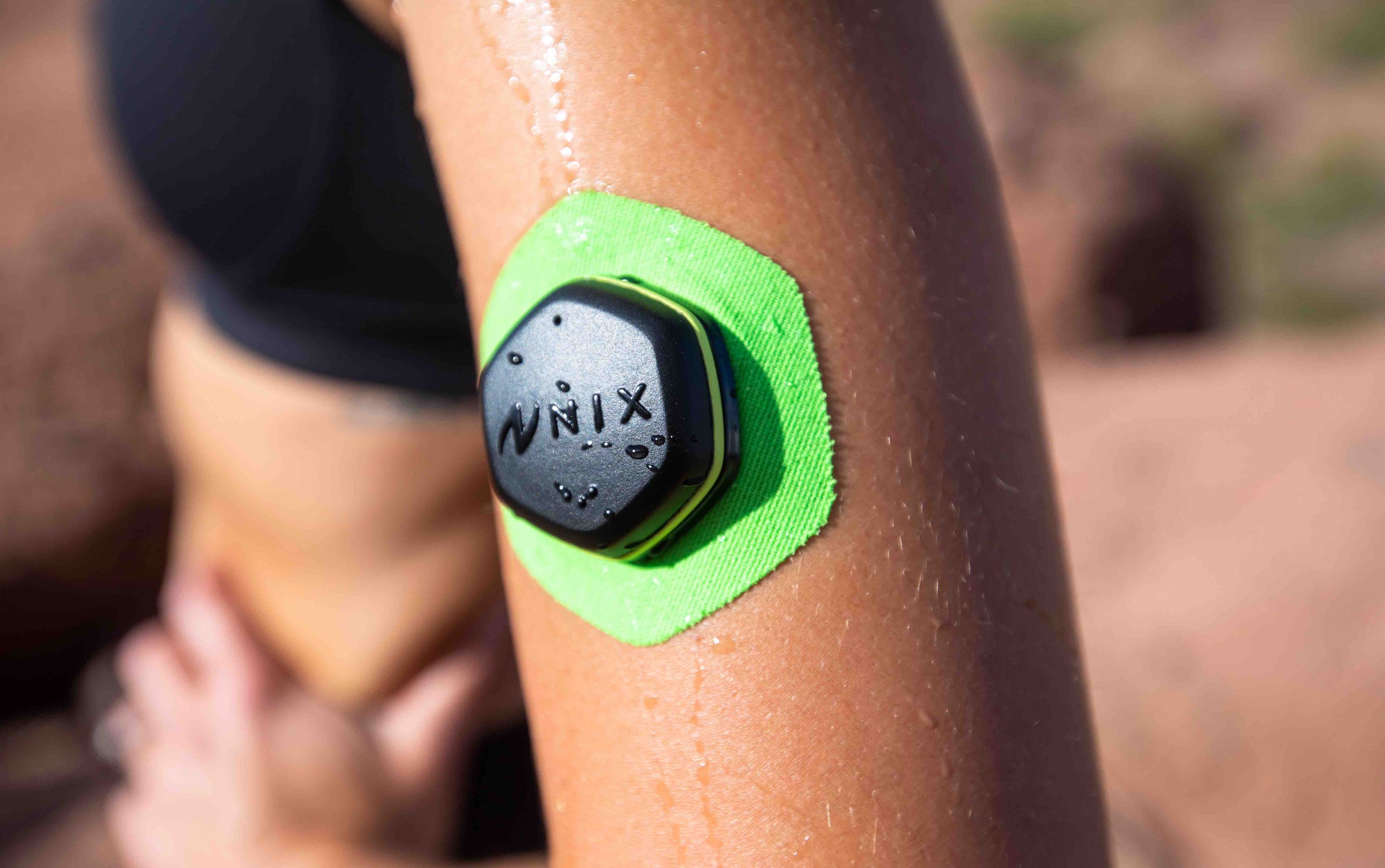
The distinction between measurement and estimate matters. Nix samples sweat at one place, not from the entire body. The patch must sit correctly on the bicep, and it needs actual sweat; Nix says it may take 10 to 15 minutes to gather the first usable reading. For a 45-minute run or a long ride, that can be useful. For a short, cool walk, it is a poor fit. The company recommends the device for workouts of 45 minutes or longer.
A consumer buys the pod once and uses a fresh patch for each session. The current starter kit includes four patches, charging case and cord for $189. Refill packs start at $25, and Nix offers bundles and subscriptions. It is a sensible recurring model for the company and a real recurring cost for the athlete. Nix runs a free TerraCycle recycling program for used patches, an acknowledgement that disposability is part of the product’s bargain.
One athlete changed the team’s mind
The more revealing sales story happened at US Speedskating. Sports dietitian Dr. Jen Day first noticed Nix because speed skaters do much of their off-ice work on bikes. In a pilot, her staff used the data to change the hydration strategy of one athlete who had been struggling. Day said the athlete improved on the ice and recovered and slept better. The organization expanded Nix to national-team monitoring for the 2024-25 season. It is a narrow account, as performance anecdotes should be, but it shows the buying logic: a practitioner sees a specific problem, tests a tool and then widens its use.
“We did an initial pilot during which Nix’s technology helped us completely overhaul the hydration strategy for one particular athlete.”Dr. Jen Day / US Speedskating
Nix Pro, launched in 2024, turns that logic into a product. Instead of asking every athlete to interpret an alert alone, it puts a whole squad’s fluid and electrolyte data in one view for coaches, dietitians and safety supervisors. The company names EF Pro Cycling, Chicago Fire FC, Legacy Motor Club, LSU Football and others among its users. Baylor Athletics has announced a department-wide partnership covering 19 Division I programs and roughly 450 student-athletes each year. The same dashboard idea extends to military units and workers in heat, though public detail about the scale of those deployments is thinner.
This also explains where Nix sits in the market. A post-workout weigh-in can reveal total fluid loss, and a lab test can reveal sweat composition. Both arrive after the moment in which a coach might change a drink plan. Rival products from FlowBio, hDrop and Epicore take other routes through the same problem. Nix’s pitch is the pairing of live sensing with personal history and a group view. Its weakness is just as concrete: a fresh patch per use, correct placement and enough sweat for the sensor to read. More data is worthwhile when someone can act on it; a number with no decision attached is merely a souvenir.
The patch’s most valuable residue
By 2026, Nix had built something that did not fit in the box with the pod: a collection of real-world sweat sessions across sports and conditions. Its Nix Pro Risk Assessment Dashboard now translates hydration readings into modeled injury, cognitive and performance risks. A newer conversational feature lets practitioners ask about an individual or a roster and receive recommendations grounded in their own session history. The company has called its dataset one of the largest of its kind; its exact size is not public.
September’s $10 million Series A, which Nix says brought total funding to $17 million, makes the next turn plain. The money backs Nix Health, a set of hydration algorithms being developed for licensing to existing fitness and consumer health platforms. The planned product would not require a Nix patch on every user. That is an ambitious move: data learned from instrumented athletes might help a far larger audience through software they already open every day. It also raises the central test for the company. Guidance without a live sweat reading will have to prove useful across people and settings far beyond its original training population.
Cass began with a very physical complaint: humid miles felt wrong, and the standard advice was vague. The product that followed stuck to the skin. The company now wants the recommendation to circulate independently of that skin contact. If it succeeds, the humble green patch will have served two purposes. It helped an athlete decide what to drink today. It taught a company how to make a useful guess tomorrow.