Niwin Santhosh began a New York business trip in a kitchen. He had been told that his company was too quiet in the commerce community, so he arranged a cooking night. The guests were founders and operators. The setting was Red Inside in Greenwich Village. Henry Johnson and the NYC Commerce Club helped put it together; chef Ivan Beacco would lead the cooking. Santhosh offered a small reassurance about the menu: the chef’s involvement ought to protect dinner from his own.
It is a useful place to meet the co-founder and CEO of Superfans.io. His business makes mobile experiences for merchants. Yet his recent working life has taken him into the places where an app’s users become actual company: a kitchen, a driving range, the pavement outside a shop. There is something agreeably practical about this itinerary. A discussion about customer relationships becomes easier to picture when somebody has to pass the ingredients.
A phone was the first workshop
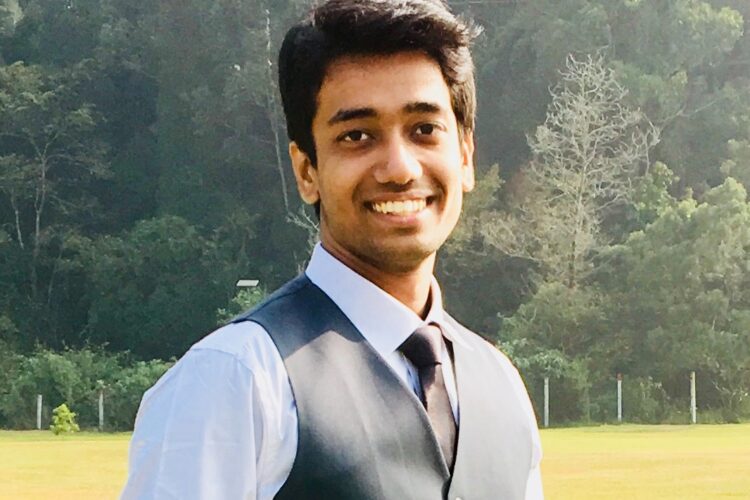
Santhosh was born in Pudukkottai and grew up in Trichy. He studied computer science engineering at SRM Valliammai Engineering College in Chennai, graduating in 2014. Before the degree was finished, he was already developing mobile applications. His early work included apps for Windows phones, including one that let users access Flipkart. There were downloads, advertising receipts, and the experience of putting something into other people’s hands.
One attraction of that beginning is its directness. A student writes software; a stranger chooses to use it. The feedback arrives outside the classroom. Santhosh’s early account credits Microsoft with helping spark his interest in building a startup, and describes Baskar Agneeswaran, his brother-in-law and a chartered accountant, as a partner in the venture. Technical work and commercial work were sharing a table well before the New York dinners.
The useful detour
The route into mobile commerce included Prizap, a price-comparison venture. The team eventually moved toward the work it knew how to do: developing mobile apps. Agneeswaran, Santhosh, and fellow co-founder Raghuraman Ramamurthy became the founding team behind Vajro’s commerce business. Its Shopify launch came in 2018. Rather than ask every merchant to assemble a development operation, they offered a way to turn an existing online store into a mobile app.
For Santhosh, that change gave his technical experience a specific buyer. A retailer already had products, customers, and a store to run. Software was another responsibility competing for attention. Drag-and-drop tools and an app-building service offered a shorter route to getting the shop onto a phone. The founder who had once made individual apps was now helping other businesses make their own.
By May 2022, Vajro had 2,500 active paying clients across 100 countries. Santhosh was co-founder and chief operating officer. That combination of a technical beginning and an operating role matters: the work had expanded from making an application function to helping a company serve merchants in many markets. The product could be downloaded; the business behind it still had to answer questions, support users, and keep working.
The funding came with a product argument
In January 2022, Vajro announced an $8.5 million Series A investment from Five Elms Capital. The company planned to add capabilities and broaden its reach. Santhosh’s explanation of the product was fairly concrete: it used technologies native to Android and iOS, and merchants could make changes without requiring an app update every time. Those are concerns a shopkeeper can understand without being introduced to a fashionable theory of software.
A mobile shop has to change when the merchant changes it. Products arrive, campaigns end, and an offer that looked right yesterday needs replacing. Santhosh was talking about the mechanics of that ordinary work. Funding made the company a larger financial story, but his contribution to the announcement kept the reader close to the app itself. The interesting question was what the merchant could actually do with it.
A new name, with the paint still wet
Vajro later became Superfans. Santhosh announced the change before all the branding was finished. The new logo, website, and polished visual presentation were still being worked on. He had already shared the direction with close customers and partners. There is a familiar corporate temptation to keep everyone waiting until the stationery agrees. Santhosh let the explanation go first.
“We’re rebranding before we’re fully ready.”Niwin Santhosh, announcing Superfans
The explanation centered on the customers who repeatedly buy, follow launches, and recommend a brand to others. He described a dedicated mobile experience as a place for those people to feel recognized. Early access and closer connection were part of the proposition. The name Superfans made the intended relationship unusually explicit: the app was meant to serve customers who already cared enough to return.
His announcement also included early commercial figures for the new platform, including beta recurring revenue. But the more revealing choice was the order of events. The platform and its argument were ready to discuss before the full brand treatment. For a founder whose background is building apps, that is an intelligible sequence. There would be time to finish the sign while people were already using the shop.
- A brand’s regularsCustomers who already return
- A dedicated appEarly access and personal experiences
- Another reason to visitLaunches, interaction, recognition
Taking the conversation off the screen
The kitchen invitation followed a piece of feedback Santhosh took seriously: the company needed to be more visible among the businesses and partners around it. He planned meetings, dinners, and customer encounters in New York. The cooking night gave a small group something to do together. Even the invitation had a welcome absence of ceremony.
“Starting my NYC trip in a kitchen. For reals.”Niwin Santhosh, inviting commerce operators to cook
His colleague Pratik Pandya described the gathering as an Italian cooking experience where people could move around, eat, and get acquainted. The pair also attended commerce events and met brands and partners. Their accounts put considerable weight on conversations outside formal sessions. That is an appealing detail in a software business: the people selling another channel of communication were making time for the oldest one.
Santhosh later described a golf gathering at Chelsea Piers, with Pandya, food, drinks, and the Hudson in view. His assessment of his own golf suggested that the CEO position was safe. The joke fits the hosting: an invitation becomes easier to accept when it comes without a claim to excellence at every available activity.
The work still needs an instruction manual
There is another, quieter way to encounter Santhosh’s work. A Superfans Help Center article dated March 23, 2026 carries his byline. Its subject is changing content in the design editor. It explains how to add widgets, change images, arrange links, and use the available settings. There are options for duplicating, hiding, scheduling, and deleting a layout.
Read beside the company announcements, the document gives the story a useful change of scale. A chief executive talks about customer loyalty; an app user needs to know which control changes an image. Both belong to the same business. The help article does not require a grand interpretation. Its value is the small courtesy of making the next action clear.
That practical layer also puts limits around the romance of app building. A merchant has to maintain what customers see. A homepage needs editing after launch. Someone has to connect the right banner to the right collection. Santhosh’s name appears on instructions for exactly that work, where the promise of simplicity meets the person trying to finish a task.
Giving the operators a microphone
His podcast, Drop Culture, brings another part of commerce into view. Santhosh introduced it after meeting operators and marketers at Commerce Roundtable in San Diego. He wanted more of the work discussed in private conversations to be heard publicly. The focus was product drops, launches, customer experience, and the people responsible for making those occasions run.
The first announced guest was Andrew Weaver, whose work included ecommerce and merchandising at Soccer90 and FC Dallas. Santhosh highlighted a conversation about readiness for a Messi jersey launch and the details of customer service. The choice of guest makes sense alongside Superfans: sports retail offers a particularly visible meeting of merchandise, timing, and attachment.
Hosting changes the founder’s position for a while. He supplies the questions; another operator gets room to describe the decisions. That is a useful extension of the dinners, with a recording that can travel farther than the guest list. It also gives an audience something more specific than a general instruction to care about customers.
A reason to show up
The current Superfans proposition extends beyond the moment someone buys. Its website describes games, streaks, and opportunities to interact as reasons to revisit a brand’s app. That ambition raises a plain question: what would make opening this particular shop’s app worthwhile today? A brand gets no automatic answer merely because it has secured a spot on a phone.
Santhosh’s public work keeps returning to the circumstances around that question. The product needs useful controls. The merchant needs a working relationship. Operators need preparation before a launch. Customers need an occasion they care about. Each requires attention at a different scale, from the arrangement of a homepage to the arrangement of a dinner.
For the student who began by making apps, the job has grown to include making introductions. He is still in the mobile business, with all its buttons and settings. His recent itinerary adds a chair at the table. In Greenwich Village, at least, there was also somebody qualified to take charge of dinner.