The Dispatch
Watch, don't ask.
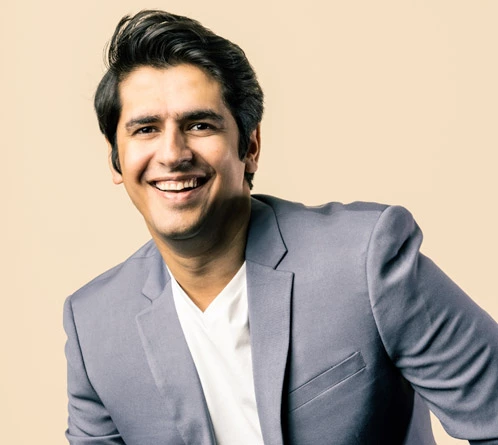
Nihal Advani runs QualSights, a Chicago insights platform that lets a brand in a boardroom watch a shopper in her kitchen, halfway across the world, live. A parent films a five-year-old's honest verdict on a new cereal. A shampoo user narrates her scalp at 7am. The camera catches what the survey never could, and the world's biggest companies pay to see it.
That is the whole thesis. Most market research asks people to remember and explain themselves, and people are terrible at both. Advani built a company on the opposite bet: give consumers a phone, a task, and a moment, then capture the behavior as it actually happens. QualSights blends live video, mobile ethnography, screen recording, audio diaries, sensors, and a layer of AI that reads the messy footage back into something a Fortune 100 product team can act on. Depth of qualitative. Speed of quantitative. One platform.
The most telling human insights happen when we least expect them.
Nihal Advani
The proof is unglamorous and specific. A Fortune 100 anti-dandruff brand assumed its customers were one crowd. QualSights footage showed that heavy and light sufferers lived in different emotional universes and wanted different things - so the brand rebuilt its product line and its messaging around the split. That is the pitch: not a prettier dashboard, but a truer picture of the person holding the bottle.
Origin
Before the boardroom, the baseline.
Advani grew up in India and spent his teens as an internationally ranked junior tennis player. A full scholarship carried him to the United States and Stony Brook University in New York, where he kept a racket in one hand and, improbably, a Google internship in the other. The internship won. He graduated near the top of his class with a marketing degree and later added a master's in engineering management from Northwestern.
Then came five years at Microsoft - Search on the Bing side, Display, and a stint as program manager for the Microsoft Media Network. Good title, big data, steady paycheck. He would later tell his younger self one thing about those years: start faster.
Pick something you're passionate about. If you don't, you're not going to survive 10 years.
On the first of his three P's
The Pivot
A travel startup that refused to make money.
In 2012 Advani quit Microsoft to build Georama, a travel-planning startup, moonlighting at first and funding it with saved bonuses before raising $250K from friends and family. People loved planning trips on it. Then they booked on Expedia. The product had traction and no revenue model, which is a beautiful way to go broke slowly.
So he pivoted inside the pivot. Georama became a live-streaming platform - real local guides beaming real destinations to your screen, interactive and mobile, years before Periscope or Facebook Live made that ordinary. In 2015 it won the Shark Tank competition at the Illinois Governor's Conference on Travel & Tourism. The client list got wonderfully strange: the states of Illinois and Michigan, hotels running remote site inspections, museums, a wind farm in Australia, and NASA running virtual field trips. Impressive. Still unfocused.
Then an advisor said something that reframed everything: the technology you built to stream a vacation could stream a consumer's real life to a research team. In 2018, Georama became QualSights. The travel company quietly died so an insights company could live.
Your ability to learn, adapt to the market, sometimes even cannibalize yourself, is going to be very important to stay ahead of the game.
On the third P: pivot
The rebrand landed. QualSights climbed to #22 on the Inc. 5000, posted roughly 20x revenue growth over two years, was named the fastest growing company in Illinois, and pulled in Fortune 100, 500, and 1000 clients. In late 2022 it raised a $7.7M Series A. The remarkable part is the denominator: Advani built the whole thing on roughly $3.5M raised over a decade. In an era of nine-figure rounds, he treated capital efficiency like a competitive sport.
The Method
The outsider's advantage.
Advani entered market research with no research pedigree, which he counts as a feature. He wasn't carrying the industry's assumptions, so he didn't feel obligated to preserve them. Ask him how a tennis-playing engineer disrupted a decades-old discipline and the answer is disarmingly small.
I'm just a good listener.
Nihal Advani
It shows up in how the company runs. QualSights ships product updates about twice a week, driven by what customers actually do inside the tool rather than by what competitors announce. Early at Georama, when he suspected an outsourced dev shop was quietly underdelivering, he hired someone in-house to audit them, found the cracks, and moved to a fully in-house engineering team within three months. He treats his advisors as active players - crediting Kellogg's Mohanbir Sawhney with a nudge or two that mattered - and he reaches for AI where it saves time without pretending to have invented it from scratch.
His whole operating philosophy compresses into three words he repeats like a metronome.
Passion
Care enough to survive ten years of near-misses.
Persistence
Down to the last few thousand in the bank, more than once. Keep going.
Pivot
Learn, adapt, and cannibalize yourself before the market does.
The Horizon
Getting paid for your own behavior.
Ask Advani what he's actually chasing and the money moves to the back seat. The goal, he says, is to build a product that makes a real impact - help companies become better innovators, so people get better products, and let the financial upside for founders and investors arrive as a byproduct instead of the point.
He talks about a future where consumer data gets richer and more granular while consumers finally get paid fairly for it - the inverse of the social-media bargain, where behavior is harvested and the person is the product. That is a big idea for a company that started as a way to plan better vacations. But that has always been the pattern with Advani: the specific, slightly odd thing in front of him keeps opening into something larger. A racket became a scholarship. A scholarship became a career. A failed travel app became one of America's fastest growing research companies.
Build a product that truly makes an impact in this world.
Nihal Advani · on what actually matters
He would still tell his younger self to start faster. The rest of us get to watch what happens when a good listener refuses to stop pivoting.