The trouble with doing someone a favor is that, if you become good at it, people start recommending you. At Stanford Business School, Nicholas “Nicky” Hinrichsen and Christopher Coleman helped classmates sell their cars. Graduation was approaching. People were moving. A car that had been useful yesterday was now one more item to dispose of before the next life began.
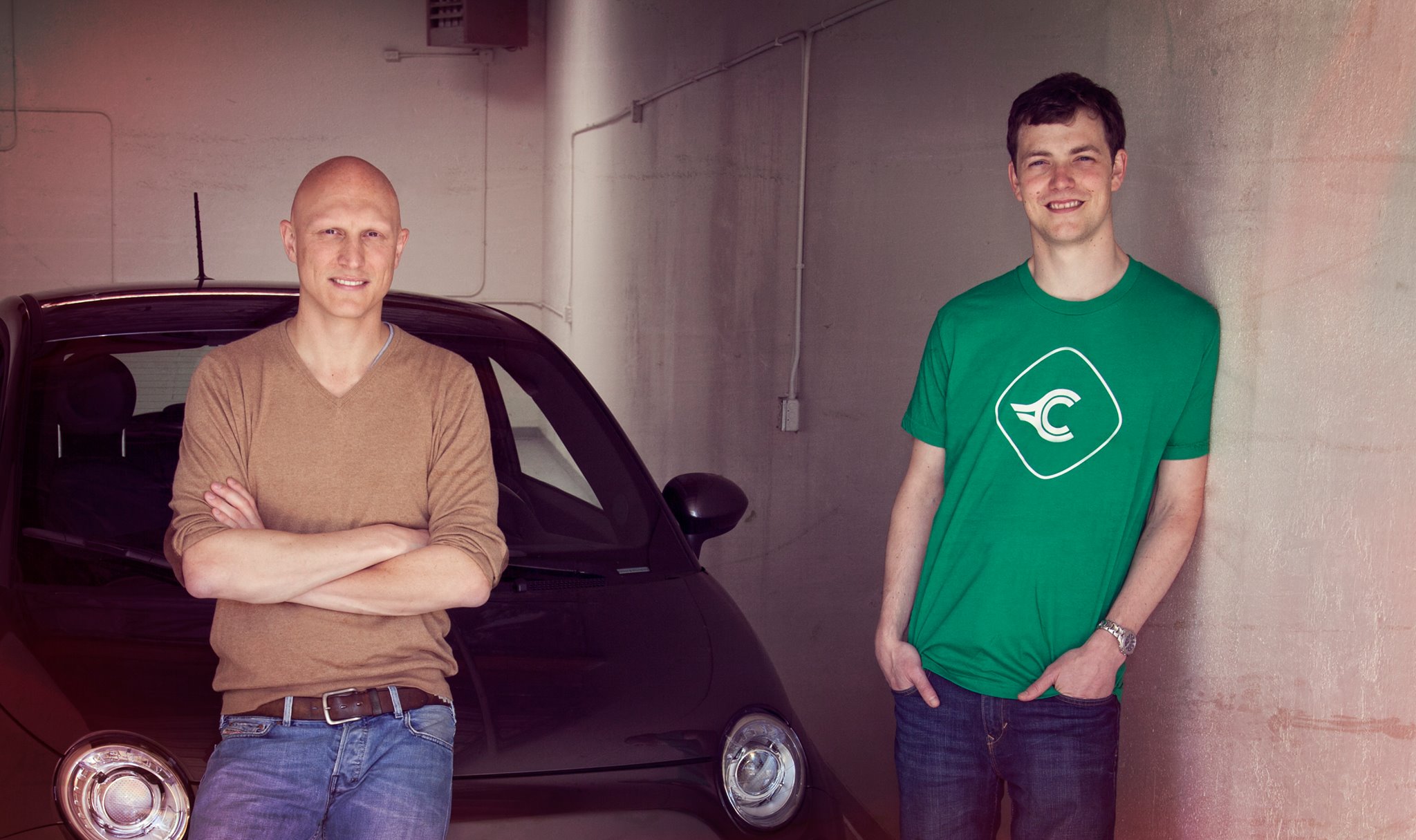
Coleman was the car enthusiast. His first car had been a DeLorean, which is quite a commitment to making an entrance. Hinrichsen brought a willingness to work through the transaction. Between them, the favor acquired a routine: prepare the vehicle, advertise it, deal with prospective buyers and get the sale finished. Hinrichsen later estimated they sold 60 to 70 cars before business school ended.
The pair founded Carlypso in 2013. Carvana acquired it in 2017. They spent the next three years working there, then left to start Clutch together. Read as a résumé, the sequence looks tidy. Read as a series of problems, it becomes more interesting. Every time they made one transaction easier, another awkward piece of it came into view.
The golfer who chose a different course
Hinrichsen’s first public arena had very little to do with used cars. He was born in Munich, grew up in Germany and played on the German national golf team. His founder biography puts that experience at four years. Competitive golf offers a particularly direct form of feedback: the ball has gone where it has gone, however persuasive your explanation.
He eventually studied finance and computer science across Germany, Chile and Australia. His education included European Business School, Universidad Adolfo Ibáñez and the University of Sydney. That range matters to the biography without supplying a convenient theory of destiny. He had interests in both financial decisions and the systems used to carry them out.
Before Stanford, he worked in renewable-energy project finance. At ecolutions, his responsibilities included evaluating transactions in China and India, alongside financing, investment and controlling work. The job put him around capital-intensive projects well before he entered another business in which physical assets and financial arrangements had to cooperate.
In 2011, he moved to the United States for an MBA at Stanford. There he met Coleman. Their working relationship would survive an accelerator, changes of business model, an acquisition and a second startup. The continuity is one of the few simple things in a story otherwise full of revisions. They kept changing what they built while continuing to build together.
When the inventory changed
Carlypso joined Y Combinator’s summer 2014 batch. Its early proposition addressed the unpleasant work surrounding a used-car sale: finding a buyer, coordinating meetings and managing a process in which everyone has a different opinion of the vehicle’s value. A seller’s fondness for a car is understandable. It does complicate the price.
The company shifted toward a managed marketplace using institutional inventory. Leasing and rental businesses supplied vehicles that would otherwise pass through wholesale channels. Carlypso gave consumers a route into that supply. The change altered both the stock available and the relationships the founders had to manage.
Its technical work became increasingly important. By the acquisition announcement, Carlypso had developed tools to organize vehicle information and analyze more than 200,000 cars a day. Data from different places had to describe the same object consistently enough to support a price. A photograph can make a car look appealing. Comparable information helps make it tradable.
The operating problems were substantial enough to become a Stanford teaching case in 2016. They included attracting sellers, reducing the time spent meeting buyers, improving efficiency and deciding how to increase monthly sales. There is something pleasingly circular about business-school graduates returning to the classroom as a problem for other students to solve.
For the founders, those questions arrived as work. Inspection and delivery still had to happen. Access to inventory did not remove the need for financing. A business could present itself online and still require a considerable amount of activity in the physical world. The website was the front door; everything behind it had to function too.
The acquisition was a beginning
Carvana announced the acquisition on August 8, 2017. Coleman took responsibility for vehicle data acquisition and normalization; Hinrichsen ran wholesale and trade technology. Both contributed to inventory acquisition and instant valuation offers. The transaction brought the founders into an organization already working on the large, interdependent requirements of online car retail.
The division of work followed a useful distinction. Understanding a vehicle’s details and understanding how to buy it from a consumer are connected problems, but each deserves attention. Hinrichsen’s work developed into Sell to Carvana, the business through which owners could sell their vehicles to the company.
He started with a small team and used Zapier to automate document and data tasks. In his account, a task that had taken more than 20 minutes per purchased car fell to seconds. Colleagues compared his workflows to Rube Goldberg machines. The comparison has charm: a series of connected actions can look extravagant even when its purpose is to spare everyone more work.
“Iterating toward product market fit is the phase of a company we enjoy most.”
Nicholas Hinrichsen, 2020
The operational lesson travels well. Engineers could concentrate on vehicle pricing and valuation while other work moved between existing systems. Ownership documents still mattered. Information still needed checking. The team had found a way to keep those necessities from consuming the same amount of human time on every purchase.
Inside an acquired company, a founder has to make the work useful at a different scale. The prototype must earn resources. The process must fit other processes. Hinrichsen’s Carvana chapter supplied that experience between his two startups. He was able to take the questions he had encountered in a small company and see them inside a much larger operation.
Following the loan
In 2020, Hinrichsen and Coleman left Carvana and founded Clutch. Their attention had moved to the loan accompanying the car. An owner might have improved their credit since buying a vehicle while continuing to make payments under an older financing arrangement. Refinancing offered a way to revisit that arrangement. Getting people through it was a separate challenge.
Hinrichsen has described the shopping sequence as part of the problem. Customers typically go looking for a car, then arrange the money to pay for it. The financial decision arrives inside another purchase. By the time someone is considering a loan, there is already a particular vehicle in mind and a transaction waiting to be completed.
Clutch initially approached refinancing directly for consumers. Work with credit unions changed the opportunity. Those institutions could supply lending, while the founders supplied software to improve the digital experience. The product could carry a credit union’s identity, allowing members to interact with their institution through technology built by Clutch.
The distinction between lending and building software mattered. In Arizona, the founders tested ideas through a regulatory sandbox. Hinrichsen later described the experience as helping them decide where they were useful in the value chain. Existing lenders were better equipped to lend; Clutch could concentrate on the technology connecting the institution and its customers.
How the work moved
A second company, with room to revise
By October 2021, Clutch’s story had already grown beyond its launch. An interview that month described a team of 21 and $16 million in venture funding, with an annualized $500 million in refinance applications. Applications measure activity entering a process. They are distinct from loans ultimately made, a distinction worth preserving when a startup’s numbers start to look impressive.
The broader product developed around digital origination: the steps involved in applying for loans or opening deposit accounts. Clutch’s offering expanded beyond auto refinancing. It was working on an institution’s ability to receive information, move an application forward and give a member a usable experience.
In January 2025, Clutch announced a $65 million Series B led by Alkeon Capital Management, with Andreessen Horowitz, TruStage Ventures and Peterson Partners participating. Coverage at the time reported that the platform served more than 135 US credit unions. The financing supported further work on the platform and AI.
Company financing for the next stage of the platform.
For Hinrichsen, the second company also sits within a wider circle of relationships. Coleman remains the co-founder. Investors and credit union leaders supply a different set of perspectives on the work. The daily challenge has shifted from selling vehicles to making software useful inside institutions with their own practices, priorities and members.
The people at the end of the process
In February 2026, Hinrichsen discussed Clutch’s AI collections agent, Emma. His account included both automation and the need for human involvement in complex situations. That boundary fits the practical subject running through his career. A process can be repetitive while the person passing through it has circumstances that deserve individual attention.
Later that year, a July webinar announcement described Clutch’s work on automation-first lending, following two years of building and conversations with credit union leaders. It placed Hinrichsen back in a familiar position: explaining what the company had learned while trying to make a transaction work.
There are less procedural glimpses of him too. He speaks German, English and Spanish. In 2020, he described a playlist moving between house music, reggaeton and Brazilian music, and a fondness for watching magician Shin Lim on his phone. The founder interested in reducing friction also enjoys a performance that leaves its audience wondering how the trick was done.
His career is easier to follow when the milestones stay attached to their ordinary beginnings. Classmates wanted to sell cars. Consumers wanted someone to buy them. Borrowers wanted a better arrangement. Credit unions needed technology to help carry those requests through. Hinrichsen and Coleman kept working on the next piece. The small favor proved unusually difficult to finish.