A reader’s reputation can come down to a fraction. On NetGalley, the suggested feedback ratio is 80%: respond to eight of every ten titles you receive. The number measures something modest and useful. When someone offers you an early book, do you come back and say what you thought?
- Readers join free. Publishers and authors pay to distribute and promote review copies.
- Publishers control access; a listing buys an opportunity to earn reviews.
- Booktrovert takes the same delivery expertise to consumer giveaways and retail campaigns.
That little fraction points to the problem NetGalley solves. A publisher can produce a book, price it and put it on sale. Finding people willing to read it before everybody else, then recommend it to somebody else, is a separate undertaking. NetGalley organizes that uncertain interval between a finished manuscript and a public conversation.
Eight out of ten
The company connects publishers and authors with reviewers, librarians, booksellers, educators, journalists and other book-trade professionals. Publishers upload digital review copies or audiobooks. Members discover titles and request access. The publisher can inspect a profile and decide, or invite readers directly. Approved members read or listen, then submit feedback.
A useful profile explains where a reader recommends books and which categories interest them. NetGalley adds activity history and badges. Association membership can help identify a librarian or bookseller. None of this tells a publisher whether the next review will be glowing. It helps answer an earlier question: is this a sensible person to send this particular book?
Tell us what you thought.
Suggested feedback ratio. An illustration, not a measured review rate. Feedback can include a private note or opinion.
The 80% recommendation is easy to misunderstand. Feedback is broader than a public review; an opinion or note to the publisher can count. Nor does reaching the number guarantee another approval. It is a signal of follow-through in a system where everybody’s reading time is limited.
The idea nearly ran out of runway
NetGalley launched through Rosetta Solutions in 2008. By December, Firebrand Technologies and Rosetta had formed a joint venture led by Firebrand’s Fran Toolan. The concept had arrived before the business underneath it was secure.
“Rosetta Solutions was not generating any revenue”
Fran Toolan, speaking in 2009
Toolan said the downturn had also hurt Rosetta’s investors. Keeping the product and pilots alive required a buyer or partner who could move quickly. What failed first was commercial support for the idea.
Former president Susan Ruszala later described the Firebrand period as a restart involving different pricing, a replacement platform and revised expectations. The lesson is fairly practical: making a useful digital service does not settle who will fund it. NetGalley’s durable arrangement places the bill with publishers seeking attention and removes the membership charge for readers supplying it.

The price of a first impression
The public US pay-per-title offer is $575 for a six-month digital review-copy listing. A one-week Featured Title promotion costs another $150 when purchased with it. Publishers with larger lists can arrange subscriptions. Optional newsletter and on-site promotions add another layer to the business.
The checkout language makes the transaction unusually clear. Publishers supply the files and manage their settings. Readers are encouraged to give feedback, but reviews are optional. NetGalley promises neither a positive reception nor sales. Authors buying a listing should budget for distribution and campaign work, with room for an outcome that disappoints.
Six months on NetGalley
Optional Featured Title: +$150 for one week when ordered together.
Its expertise combines file delivery with the awkward human work surrounding it: access decisions, invitations, reader support, reporting and publisher training. A practical starting point is a finished file, an accurate description and a clear target audience. Sending more copies cannot compensate for choosing readers who have little interest in the subject.
Let them listen, too
In July 2020, NetGalley introduced audiobook review copies and the Shelf app. Launch participants included Macmillan, Simon & Schuster, HarperCollins and Hachette. Shelf brought reading and listening to iOS and Android, extending the service beyond its web-based discovery tools.
The change answered a persistent request for an app and gave audiobook publishers access to the early-feedback process. A listener can assess a narrator’s performance as well as the writing. That distinction matters when the same title reaches readers in several formats.
A second door for readers
Publishers also wanted to use NetGalley’s delivery tools with ordinary consumers. Booktrovert, publicly launched on June 23, 2025, provided a separate destination for giveaways, sweepstakes and retail promotions. Clients build campaigns through their NetGalley accounts; the consumer experience lives elsewhere.
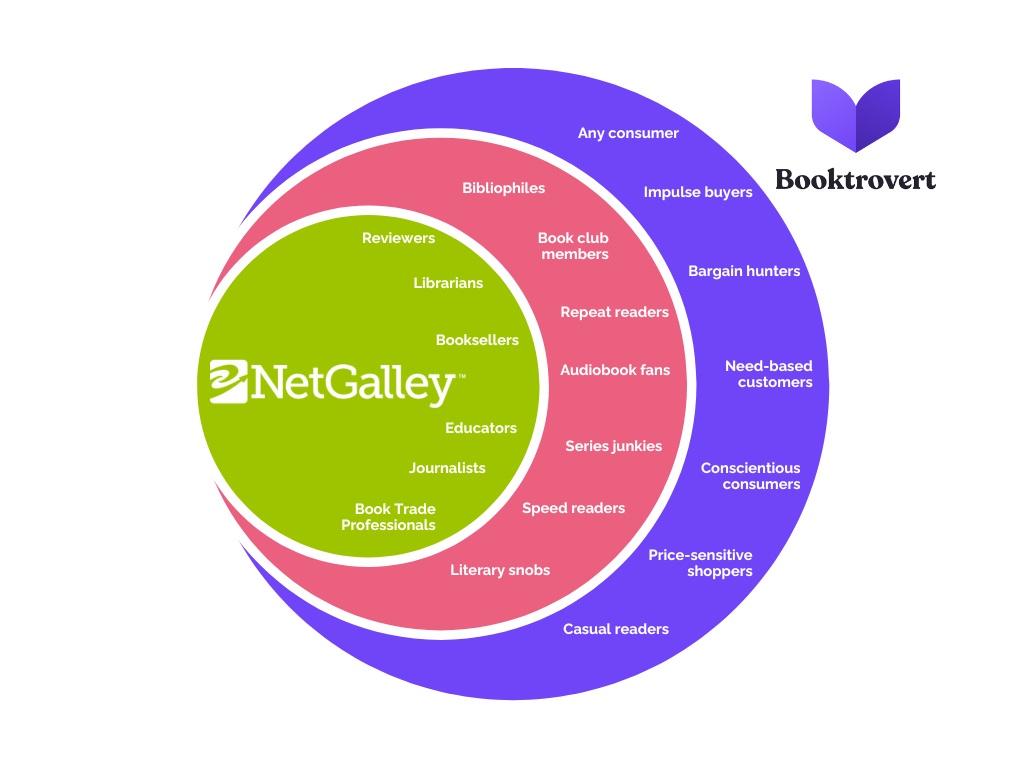
Buy and preorder campaigns start at $200 per book; giveaways and sweepstakes at $300. Those are campaign charges for NetGalley clients, with optional extras. At its first anniversary, Booktrovert reported nearly 70,000 registered users, more than 58,000 ebooks claimed and over 380 booked campaigns. Those figures describe participation, rather than purchases attributable to it.
For a publisher, the useful distinction is purpose. A review-copy campaign recruits people who might evaluate and recommend a title. A consumer giveaway gives interested readers an immediate way to engage. Choose the action you want before choosing the promotion.
The rivals under one roof
On October 6, 2026, Valsoft announced its acquisition of NetGalley, Firebrand Technologies and Supadu from Media Do International. Valsoft already owned Above the Treeline, the developer of Edelweiss. Two familiar alternatives for digital review copies now share an owner, while continuing as separate businesses.
The market still offers different routes. Edelweiss combines review copies with digital catalogs. BookSirens targets author ARC promotion; Ingram’s Covered serves trade discovery. NetGalley’s appeal rests on its established book-advocacy community and publisher marketing tools. The sensible choice depends on whom a publisher needs to reach. A download starts the relationship. Someone still has to open the book.