A dealership owner can know yesterday’s sales, this month’s expenses and the number of cars on the lot, yet remain uncertain about a more interesting question: could this business be run better? Looking at the same store for long enough makes its peculiarities feel inevitable. Another operator may look at the same numbers and see a perfectly fixable habit.
- The offer: peer groups, financial benchmarks, consulting, training and dealership reporting software.
- The mechanism: compare similar businesses in noncompeting markets, then ask how the better results were achieved.
- The buyer: dealers, departmental managers, dealer groups and manufacturers.
- The useful lesson: borrow a process, assign responsibility and return with a measured result.
NCM Associates has made that second opinion into a business. Its signature service, the 20 Group, puts operators together with a moderator and financial comparisons. The company also sells the tools around the conversation: Benchmark reports, Axcessa software, management education and visits from consultants. The attraction is practical. A manager gets a way to investigate performance without having to discover every workable process alone.
01 An old idea with excellent manners
The origin precedes the software by decades. In 1945, successful Ford dealers formed the Dealer Analysis Bureau to discuss operations and share practices. They hired Central Services, a Kansas City management company, to provide monthly information. By 1947, other dealers wanted in. C.V. Nichols, Maynard Campbell and Bob Morrow expanded the offering; their surnames supplied NCM’s initials.
The detail that matters is the relationship between the meeting and the numbers. These operators wanted to learn from one another, and useful comparisons gave the conversation substance. NCM’s later history follows that relationship: a computerized composite using punch cards in 1966, a dedicated education division in 2010, and Axcessa in 2012. The delivery changed as the questions became easier to put on a screen.
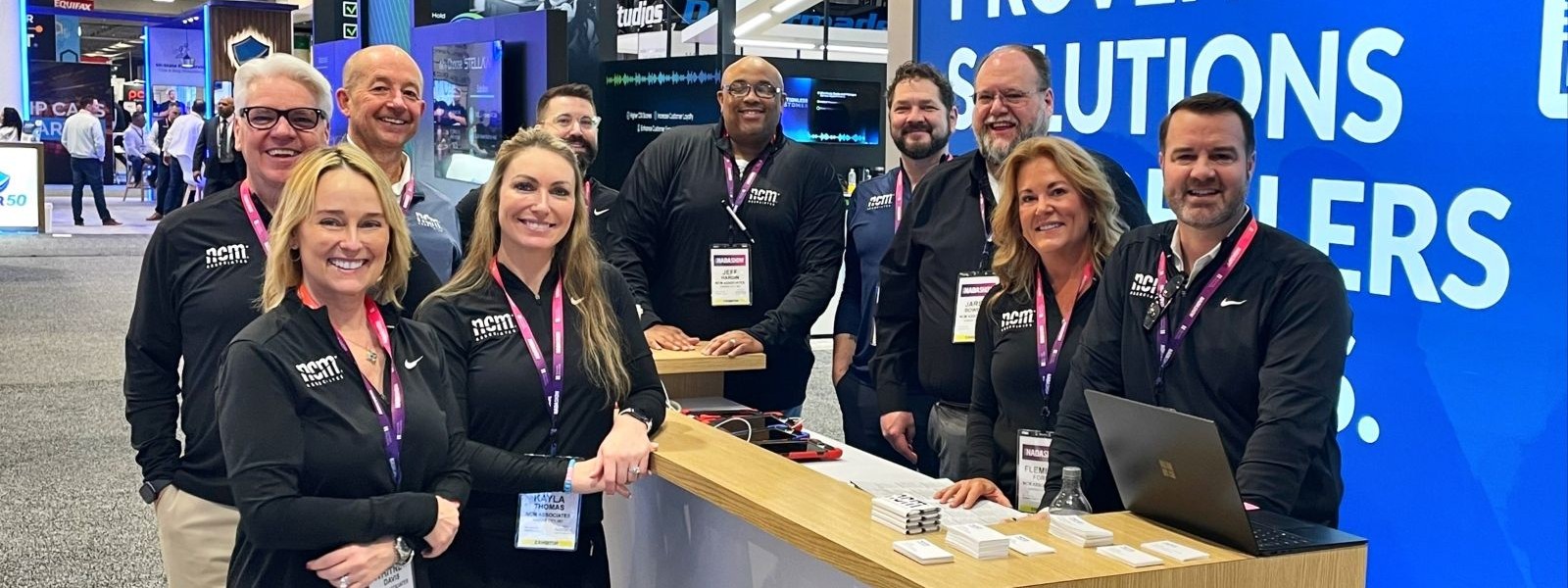
A modern group is self-governed. Members choose its agenda, locations and meeting cadence, generally gathering several times a year. A professional moderator helps make the comparisons useful, while communication tools keep the discussion going between meetings. A distant peer can be unusually candid: the two businesses need enough in common to understand each other, with enough distance to avoid competing for the same customers.
“The best part is the interaction of the dealers and sharing ideas.”
Brett Hedrick, Hedricks Chevrolet
NCM-published client testimonial
02 The awkward pleasure of a better comparison
Consider what happens when everyone in a business agrees that a disappointing result is normal. An internal report may faithfully reproduce that agreement every month. A peer comparison introduces an objection. Someone operating a similar business is getting a different result. The next question is how.
NCM’s published Benchmark method calculates an average of the top half of performers among reporting clients for a particular franchise. Its composites include a Reality Check covering more than 50 key items. That makes the reference point more demanding than a simple average of everyone. Franchise-specific comparisons also help managers avoid treating unlike businesses as interchangeable.
- 01MeasureComparable financial data
- 02ComparePeers and benchmarks
- 03QuestionWhat explains the gap?
- 04ApplyA change to review
An explanation of the operating logic, not a forecast of financial returns.
NCM manages and processes Benchmark data in-house. It offers group composites, single-dealer trend reports and comparisons across a dealer group’s locations. For the buyer, the useful distinction is between seeing a discrepancy and understanding its cause. A benchmark can identify the topic for a conversation; the operating process still needs examination.
03 A bigger building, the same service problem
First Texas Honda supplies a concrete example. In NCM’s 2019 account, the Austin dealership’s service performance declined after a move into a larger facility in 2012. Poor customer-service measures persisted from 2014 through 2017. A new general manager in 2016 did not resolve the departmental problem.
The subsequent reset reached into technology, communication, staffing and training. Department-specific peer groups helped supply ideas, including a group-texting tool for a spread-out team. Higher standards initially brought turnover. New service advisors received 16 weeks of paid training, and the store increased compensation expectations alongside performance expectations.
“The process wasn’t quick, but we changed almost everything,” service director Cody Penna said. The case describes stronger results in 2018, including Honda President’s Award Elite recognition. It is a company-published customer account involving many changes, so it cannot isolate NCM’s contribution. Its useful lesson is the commitment behind the advice: learning a better process also meant paying for people to learn it.
04 The dashboard gets a job
Axcessa works on a different timescale. It extracts and aggregates data from a dealership management system, or DMS, into online reports and dashboards. NCM says the application updates eight times daily. Managers can examine sales, finance, inventory, service and parts without assembling every report by hand. Integrations include major DMS providers such as Reynolds and Reynolds, CDK and Dealertrack.

The product makes particular questions easier to ask: which contracts remain in transit, what repair orders are still open, or how individual departments are performing. Faster reporting creates room for follow-up. Someone must still investigate the exception, decide whether it matters and change the work that produced it.
That is where NCM’s wider offering fits. Its consulting page describes professionals with more than ten years of retail automotive experience before joining the firm, many of them former owners or executives. They examine numbers and processes with managers and develop action plans. The NCM Institute teaches dealership management; Digital Performance Solutions addresses internet leads, business development centers and digital communication. Customers can buy different entry points into the same operating questions.
05 Advice has a price. So does applying it.
NCM earns money from memberships, software and reporting, training and consulting. The published annual training subscription costs $1,045 USD per month per store, with an initial twelve-month term. That is $12,540 over twelve months. It covers more than 25 courses and excludes the General Management Executive Program. A store deciding whether to subscribe needs a calendar as much as a budget: who will attend, and what will they be expected to change afterward?
- Annual training subscription
- $1,045per month per store; initial 12-month term
- Digital in-dealership training
- $4,500per day, plus instructor travel and meeting costs
- Digital mystery shop
- $75per shop
Separate services, not a bundled total. Confirm scope and terms before purchase.
Peer-group membership is priced by the type of group and its membership. NCM’s FAQ describes quarterly advance billing, plus the member’s travel and an allocation of group meal, room and guest-speaker expenses. The no-contract feature advertised for 20 Groups should not be confused with the training subscription’s annual commitment. Time away from the dealership also belongs in the calculation.
NADA offers its own 20 Groups, composites and consulting; NIADA has groups for independent dealers. NCM therefore competes in an established market. Its proposition is the combination of its benchmarking operation, peer network, dealership expertise, training and reporting tools. An operator choosing among providers should examine the actual peer group and moderator, alongside the service menu.
06 More industries, the same difficult question
NCM has widened its expertise through acquisitions. Spader Business Management and A World of Training joined in 2022, extending its non-automotive reach. Kain Automotive followed in 2024 after a fifteen-year partnership, bringing internet-sales, BDC and digital-marketing training closer to the rest of the business. NCM serves automotive dealers and businesses in markets including RV, marine, powersports and farm equipment.
The 2026 NATDA partnership extends the approach to trailer dealers. It includes trailer-focused groups and a hybrid Express format intended to reduce travel costs for smaller dealerships. Meanwhile, the 2025 Blue Flag agreement expands access to CORE and ECHO performance platforms across Asia-Pacific, and a RockED partnership adds mobile microlearning. These developments change how customers can participate and how often learning can reach them.
NCM also applies an ownership idea internally: the company has been wholly employee-owned since 1988. Its careers page advertises hybrid work, professional development and paid community-service time. Those are concrete arrangements in a business whose product depends heavily on the people interpreting the numbers.
The discipline is portable. Choose a comparable peer, define the measure consistently, investigate one gap and test a specific change. Bring the result back. It will be less useful when accounts are inconsistent, peers face substantially different economics, or managers have no authority or time to act. Copying another store’s target without its staffing, workload or process can produce a very elegant misunderstanding.
For a willing operator, NCM offers repeated opportunities to correct that misunderstanding. The report starts the conversation. The next meeting gives the decision a deadline.
Continue the conversation
Explore the programs, watch the people at work, or follow the next discussion.