Before Nathan Imperiale had an agency with offices across continents, he had a grandfather who went to see his clients. Luis Lopez traveled the world, spent time with people and learned about their lives. Imperiale credits him with more than thirty years of business lessons. The one that stayed was hospitality: give a relationship enough attention and it can become something worth keeping.
The lesson leaves room for an ordinary business activity: sitting down with someone and listening. In a city where meetings acquire titles, acronyms and occasionally their own working groups, there is some charm in keeping the purpose that simple.
Today Imperiale is co-founder and co-CEO of NJI, the creative agency he built with Josh Shultz. Its subject is public affairs, where a complicated idea must survive contact with somebody who has other things to do. His career joins two concerns that are often filed separately: how good the work looks, and how people feel while getting it made.
The lesson that came before the agency
The grandfather’s example helps explain a small detail in Imperiale’s working life. He made a personalized playlist for a film crew. NJI uses the anecdote to explain its nickname for him, “The Magician.” It is an unusually useful detail in a founder’s biography. A playlist takes time, requires some thought about the listeners and offers little opportunity for self-congratulation once the music starts.
It also reaches beyond the client. The crew’s experience matters. The people making a film are part of the occasion, with preferences and an atmosphere of their own. The gesture makes his interest in hospitality more concrete than a promise to provide excellent service.
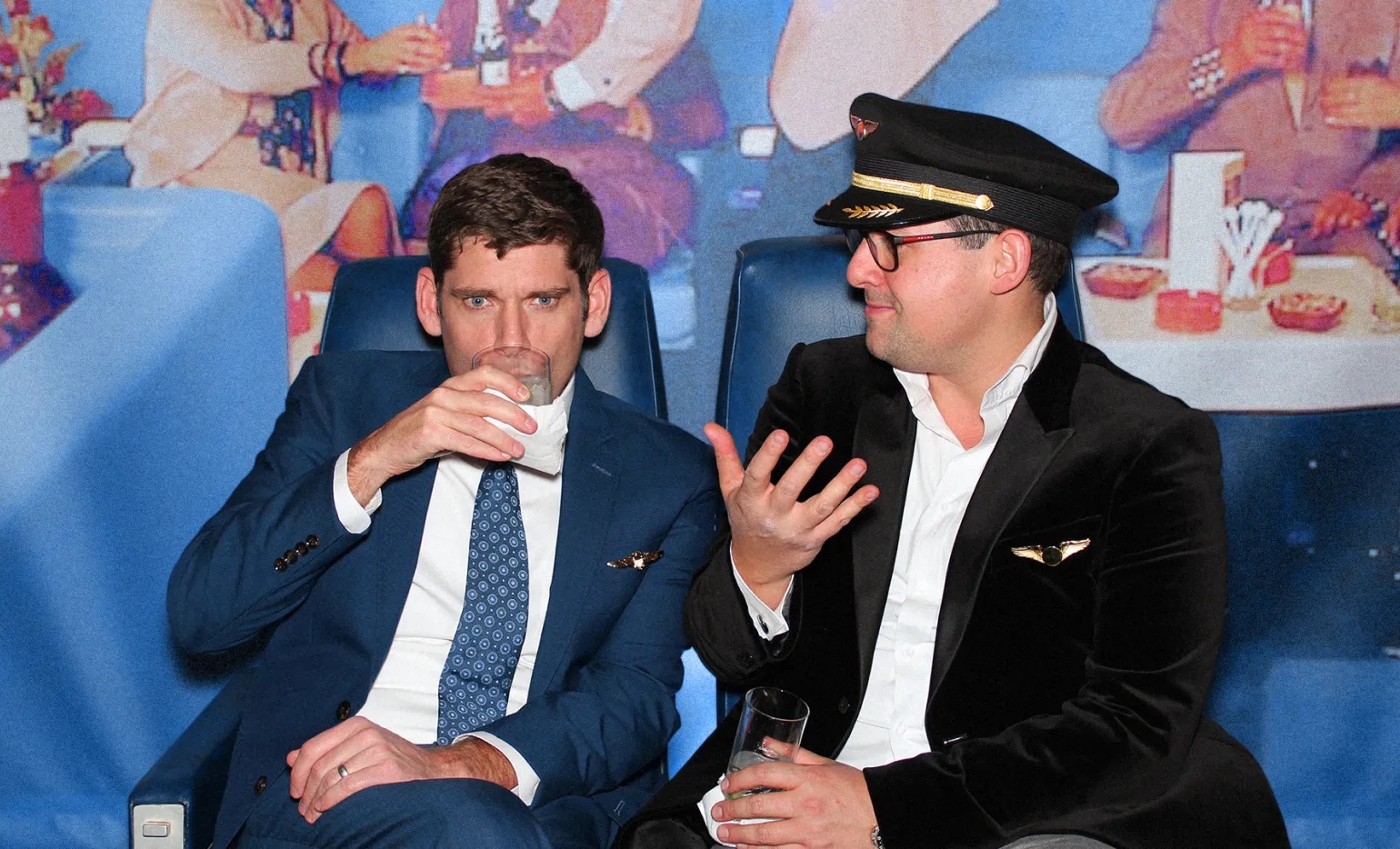
There is some theatre in his public persona too. An NJI photograph places Imperiale beside Shultz, wearing a pilot-style cap and gesturing with one hand. He appears entirely at home with an accessory that seldom features in a procurement meeting. The picture gives the agency’s fondness for personality a face.
Washington had the facts. Someone had to make them readable.
Imperiale’s professional background includes digital communications on Capitol Hill and work in the White House Office of Communications. These are environments where a message has an institutional purpose before it has an audience. A policy position can be carefully developed and still arrive in a form that nobody particularly wants to read.
He and Shultz came through the early period of political digital work: websites, blogs, graphics, social platforms and video. The opportunity they saw was practical. Public affairs organizations needed creative work that could carry difficult material beyond the people already fluent in it.
They founded NJI in 2007. Imperiale brought a particular frustration with the quality of creative work available from vendors. Shultz was concerned with service and relationships. Their interests gave the new business two standards to meet. A good-looking result could still be a miserable experience to commission.
Their partnership also began with a geographical complication. Shultz was heading to Chicago. Imperiale pointed out that the team was already spread across locations, so another city need not prevent them working together. The business was learning to accommodate distance long before remote work became a routine topic of office conversation.
The specialist audience remained important. NJI’s work serves organizations trying to explain public affairs questions, including corporations, associations and nonprofits. Design in that setting has a job to do. The viewer needs to understand something, remember it and perhaps discuss it with somebody else.
NJI’s relationship with Meta gives the creative assignment a concrete scale. An early project involved reviewing public policy material from more than 65 offices around the world. The challenge was to give existing content a coherent identity. The relationship expanded into work including economic reports and adapting messages for different places. A commission that began with a defined problem became a continuing collaboration.
That progression matters to a founder interested in long relationships. It gives the agency repeated opportunities to learn a client’s work, and gives the client repeated opportunities to judge whether the agency understands it. The next assignment has a history behind it.
Imperiale and Shultz establish NJI, bringing creative work and public affairs experience into one agency.
Four things a client should never have to chase
When Imperiale explains NJI’s service philosophy, he turns to hotels. He has described wanting the agency’s service to meet the standard a guest might expect from a fine hotel. The comparison has useful consequences: a guest should not need a diagram of the organization to get something done.
His priorities are efficiency, personalized service, accuracy and timeliness. Each sounds simple enough to put in a proposal. Each becomes harder when a project involves several disciplines, a changing brief and people working in different places. Keeping the promise requires decisions about how the business runs.
Use time well
Efficiency should create value in the work and the budget.
Know the guest
Shape the service around the particular client’s needs.
Check the details
Accuracy is part of earning trust.
Keep the time
Be proactive and deliver when promised.
A further hotel lesson concerns respect. Imperiale has drawn attention to the Ritz-Carlton’s approach to the standing of employees and customers: both matter. Colleagues should receive the consideration offered to clients. It is a demanding idea in a service business, where the person paying the invoice can easily absorb all the attention.
His grandfather’s influence gives that philosophy a personal history. Lopez kept visiting clients until retirement, building friendships through time spent together. An agency can add tools, departments and new markets. Knowing another person still requires a conversation that somebody has bothered to have.
A bigger company needs more people in charge
Imperiale and Shultz have described sharing leadership from the beginning. The formal titles developed over time. In January 2023, Shultz moved from president to co-CEO alongside Imperiale, and Lara Kline became president. She had been the agency’s first chief strategy officer and helped lead its expansion into London and Singapore.
Kline’s new responsibilities included the client portfolio and creative services. Later that year, Nate Politi became NJI’s first chief operating officer after nearly a decade with the business. These appointments give the growth story an organizational shape. A founder’s ambition becomes more useful when other people have responsibility for delivering it.
Recognition followed the work. Imperiale and Shultz received CEO Monthly’s Advertising CEO of the Year award for Virginia in 2023, and an advertising and brand development leadership award for 2024. Those are milestones in a longer story whose everyday substance is made by teams.
The same specialty, a different audience
NJI opened in London in 2020 and Singapore in 2021. The London move began with an existing client offering a budget to establish a presence. There was a specific relationship and a specific opportunity. After the invitation came the less glamorous business of hiring, finding space and handling the requirements of operating internationally.
Imperiale credited the finance and operations teams with making the expansion possible. His verdict was emphatic: “going international is the best decision we ever made.” The observation carries more weight with the operational work left in view. A new office takes more than enthusiasm and a pin on a map.
One specialty, more local knowledge.
- 2007WashingtonNJI founded
- 2020LondonOffice opens
- 2021SingaporeOffice opens
- 2025DohaOffice announced
By October 2021, the London team had a new Chancery Lane office. Imperiale spoke about reaching British and European decision-makers through creative content informed by data. His description of the creative requirement was economical: “Creative work needs to be smart and beautiful, and that’s where we succeed.”
As the international work developed, language and local context became explicit parts of the offer. In June 2023, NJI announced a partnership with Freedman International, bringing localization expertise to public affairs campaigns. The arrangement addressed a familiar problem: consistent branding can coexist with audiences who understand an image or phrase quite differently.
Imperiale returned to that question in a 2024 discussion of global campaigns with the Public Affairs Council’s Kristin Brackemeyer. His three themes were diversification, localization and engaging creative. Multiple channels give a message different opportunities to reach its audience. Local adaptation asks whether the communication belongs in the place receiving it.
In January 2025, NJI announced its Doha office, with Ivanna Ruiz Garcia leading the expansion. Imperiale emphasized partnerships with Qatari institutions and investment in local talent. The agency’s Look Closer Qatar campaign had already taken its work into nation branding. The map was growing, and so was the need for people who understood each destination.
The audience gets the last word
A newer question now sits beside the old problem of making policy interesting. With AI making production easier, how much of a story can be manufactured before people lose interest in believing it? Imperiale addressed that question in a May 2026 essay about authenticity.
His concern was quiet failure. Audiences do not always object publicly when a story feels artificial. They may simply decline to pass it along. The campaign runs, reaches the people it was paid to reach and leaves little behind. Distribution and conviction are different achievements.
“Authentic stories cannot be generated. They have to be found.”
Nathan Imperiale · May 2026
He makes room for AI in research and creative collaboration. The distinction in his argument concerns the human experience at the center of the story. Finding a person with something to say requires attention to a life that exists beyond the campaign.
NJI’s April 2026 launch of NJI Studio puts that concern into a working model. Co-led by Kara Mask and Ryan Raybould, the practice brings brand, film, digital and live experience together. Strategists, designers, filmmakers and technologists join the work from the outset, with AI helping production while people retain creative judgment.
The proposal connects to Imperiale’s earlier interests. Make the work carefully. Think about the person receiving it. Give colleagues the conditions to contribute. His grandfather had done some of that work by getting on a plane and visiting a client. Imperiale’s version now travels through films, websites, campaigns and offices abroad. Somewhere in the process, somebody still has to choose the music.