The first useful object in the Nancy Gruver origin story is not a magazine. It is a closed door. In the early 1990s, Gruver had been accepted to the midcareer public-administration program at Harvard’s Kennedy School. She was raising 11-year-old twins, Mavis and Nia, in a family without spare tuition money, so admission alone was not enough. She applied for a Bush Fellowship. The answer was no.
The rejection hurt, then became strangely productive. Within two weeks, Gruver borrowed a friend’s vacant apartment, three hours from home, and spent a day alone. She took stock. Her path already wandered cheerfully across categories: a psychology degree with an art minor, ceramics, studio and gallery work, then a craft gallery opened with three other women in Minneapolis. The gallery had paid its own bills but could not support its founders. Gruver still called it a “fabulous learning experience.” It had given her a taste for being her own boss, along with the less poetic taste of invoices.
A worry looking for a form
During that pause, Gruver had been reading Meeting at the Crossroads, Carol Gilligan and Lyn Mikel Brown’s work about girls approaching adolescence. It met a fear she had carried from her own youth. She worried that Mavis and Nia might lose some of their confidence as they grew older. When she looked for media that respected girls’ intelligence and range, she found a shelf full of instructions about what a girl ought to buy, admire and become.
The absence suggested a product. Gruver imagined a magazine that would let girls speak in their own voices. At dinner with a friend, the idea spilled into a conversation with Mavis and Nia, who had been babysitting the friend’s younger daughters. The family did not assign the twins a ceremonial children’s corner. The girls wanted into the work. That choice became the publication’s constitution.
“New Moon is about girls telling the world who they are, rather than the media telling girls who they should be.”Nancy Gruver
The shared-power loop
Learning the magazine business sideways
A how-to book informed Gruver that a serious magazine required New York and a million dollars. She had lived in New York after college and had no intention of uprooting her family. The million dollars was equally unavailable. So she looked for an alternative publication built away from Manhattan and found Utne Reader, based in the Twin Cities. A call to its office led to lunch with an editor, then to a consultant who knew the practical machinery of a start-up magazine.
The first consulting meeting almost did not happen. Gruver and Joe Kelly drove three hours and were stood up. The consultant had forgotten the appointment and gone to the county fair with her children. Mortified, she offered five hours free. Those hours became Gruver’s crash course in publishing. It is a nicely rumpled entrepreneurial anecdote: no accelerator, no immaculate pitch deck, just a county fair, an apology and enough useful advice to keep moving.
Gruver made the large ambition tolerable by reducing it to small jobs: find the first story, finish the first issue, settle the name, commission a logo, ask girls for feedback. In the fall of 1992, she circulated a Xeroxed brochure through her personal network. It explained the idea more than it sold the subscription. Her distant target was 3,000 readers.
The boardroom was the point
New Moon began in Duluth in 1992, with its first issue appearing in March 1993. Early meetings brought girls ages 8 to 14 to Gruver and Kelly’s home twice a month. The magazine ran 48 pages. Girls selected themes, read submissions, commissioned work and made editorial decisions. When agreement failed, the Girls Editorial Board voted. Adults handled spelling, production, context and the duty of arguing back when an idea needed testing.
That last part kept the experiment from becoming a sentimental exercise in adults applauding everything. Gruver’s phrase was “Share the Power.” Sharing meant girls had consequential authority and adults still brought knowledge. “We argue vigorously,” she said of the process, until the group reached a position everyone could live with. Respect, in this newsroom, included the respect of a proper disagreement.
New Moon also declined advertising. That removed a familiar source of magazine revenue, but it kept the pages from telling girls they were capable in one column and incomplete beside it. Subscriptions carried more of the load. The first issue started with a reported circulation of 500. The 3,000-subscriber dream arrived roughly 18 months after the idea. By 2000, circulation was about 30,000.
The fellowship returns
The door that had closed did not stay closed. After New Moon published its first issue, Gruver applied again for the Bush Fellowship and received it. She studied at Harvard while the magazine was an infant and used the Kennedy School’s cross-campus flexibility to take courses elsewhere. Harvard also gave her access to researchers whose work on girls had helped spark the idea in the first place.
Eighteen months after the premiere issue, New Moon could pay Gruver and Kelly salaries. Kelly’s journalism experience complemented the areas Gruver did not claim as strengths. Their daughters were not focus-group mascots. Mavis and Nia were part of the editorial board and, later, owners alongside their mother and outside investors. The family business had been designed around a parental concern, but it survived by inviting other families and other girls to make it their own.
One mission, several rooms
Gruver carried the argument beyond the magazine. She helped establish Girls International Forum and Dads and Daughters, later serving as executive director of the latter. She served as a trustee of the Women’s Foundation of Minnesota and on boards connected to mothers’ communities and girl-made media. In 2004, Penguin-Prentice Hall published her book, How to Say It to Girls: Communicating With Your Growing Daughter.
The connective tissue was conversation with stakes. A girl should have language for her own experience. A parent should know how to listen without disappearing. An adult ally should be ready to use institutional power while making room for a younger person’s judgment. Gruver’s work repeatedly returned to this balance. Voice mattered, and so did the structure that allowed a voice to alter a decision.
“At the core of everything New Moon does is our ‘Share the Power’ process.”Nancy Gruver
From paper orbit to online community
In 2008, New Moon Girl Media took its model online. The community launched on Gruver’s birthday, November 12, after beta testing. Girls could create with writing, art, photography, video, opinions and advice. Adults moderated communication, and advisory groups brought expertise about girls’ development. The tools were digital; the agreement was inherited from the paper magazine.
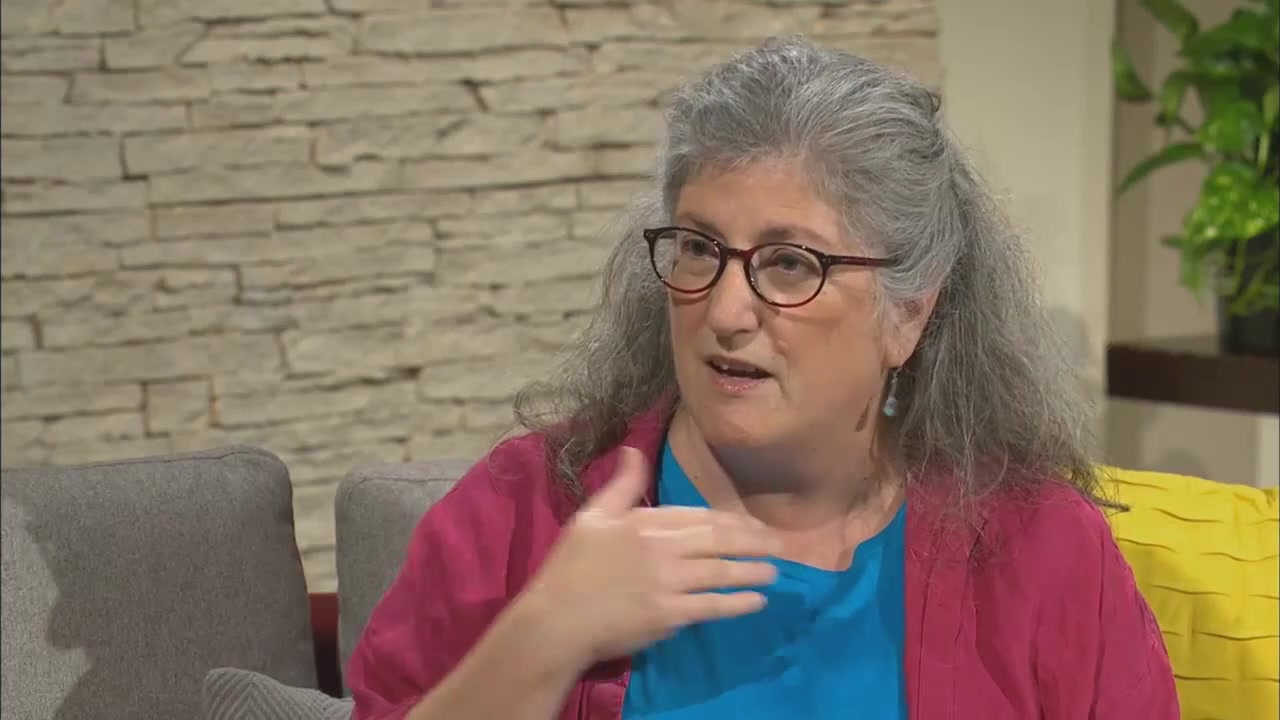
Years later, in a televised conversation about girls and media, Gruver described New Moon as a place where editors looked at what members were discussing and used those conversations to shape the magazine. She also spoke with the Brave Girls Alliance, a coalition confronting narrow stereotypes in media. Her criticism was precise: ambition, scientific work and a wider range of female purpose too often went missing on screen.
The recent archive keeps the work practical. In 2023, Gruver published or updated pieces on how New Moon moderates children’s contributions, how girls can submit art, how magazine sections work and why listening has been foundational since 1992. Another feature followed two girls making solar ovens. The subjects vary. The editorial reflex does not: notice what girls are already making and saying, then give it a larger room.
The useful question
Gruver has offered an answer to women stalled by the question “Who am I to do this?” Her reply is “Who else will do this?” It is not permission to ignore evidence or competence. It is a prompt to look squarely at an unmet need. If nobody is building the thing, does the world deserve to go without it?
New Moon’s lesson is easy to admire and harder to copy. Listening is pleasant as a value and inconvenient as a workflow. It adds meetings. It creates arguments. It lets the intended audience overturn an adult’s clever plan. Gruver built that inconvenience into the product. The result was a magazine in which girls did not have to wait for a flattering description from someone older. They could choose the subject, hold the red pen and send the next issue into the world.
The fellowship rejection changed course, the Xeroxed brochure found readers, and the county-fair mishap produced a publishing tutorial. But the durable invention was quieter. Nancy Gruver gave girls a chair that mattered. More than three decades later, you can still hear it scraping across the newsroom floor.