There are careers that rise in a straight corporate line, each title resembling the one before it. Naila Bhatti's does something more interesting. It changes scenery. A children's television studio becomes a telecom network; the network opens onto a cricket stadium; the stadium gives way to a century-old food company; the food company eventually leads to an enterprise technology firm. The props keep changing. The work underneath them does not: find the audience, build the machine that can reach it, and make the deadline look effortless.
Today, Bhatti is publicly identified as Chief Strategy and Marketing Officer at Xavor Corporation, the Irvine-headquartered technology company with a major presence in Lahore. It is a role that sounds tidily digital after a career full of satellite footprints, broadcast contracts, packed stands and jars of jam. Yet the move makes sense. Strategy, in Bhatti's public record, has rarely been an abstract noun. It has meant distribution, revenue, partnerships, programming and the dozens of unglamorous decisions that let a brand appear coherent to everybody outside the room.
The first audience was young
In the mid-2000s, Bhatti served as chief operating officer of Wikkid Plus, described at launch as Pakistan's first indigenous children's channel. The proposition was ambitious and specific: programming for children aged two to fourteen, with a majority of the schedule produced locally in Urdu and the remainder drawn from English-language shows. Stories, puppets, quizzes, travel, music, cooking, news and cartoons all had to fit inside one new television identity.
A channel without distribution is an expensive private screening. In 2007, Wikkid Plus moved onto the AsiaSat 3S satellite. Bhatti said the agreement enabled the service to grow from Lahore to the whole country and into other Asian markets covered by the satellite. The point was bigger than signal strength. A local idea had acquired regional reach. It was an early demonstration of a theme that would recur throughout her career: an audience is not merely discovered; it is engineered.
Bhatti then moved to Wateen Telecom, where published accounts place her as general manager of media for roughly four years. Her responsibilities included the company's in-house television channels. Her public profile also credits her with expanding Wateen Multimedia's cable network beyond DHA Lahore into four cities and developing new revenue streams. Television had become infrastructure, and infrastructure had become a commercial system.
Then the screen became a stadium
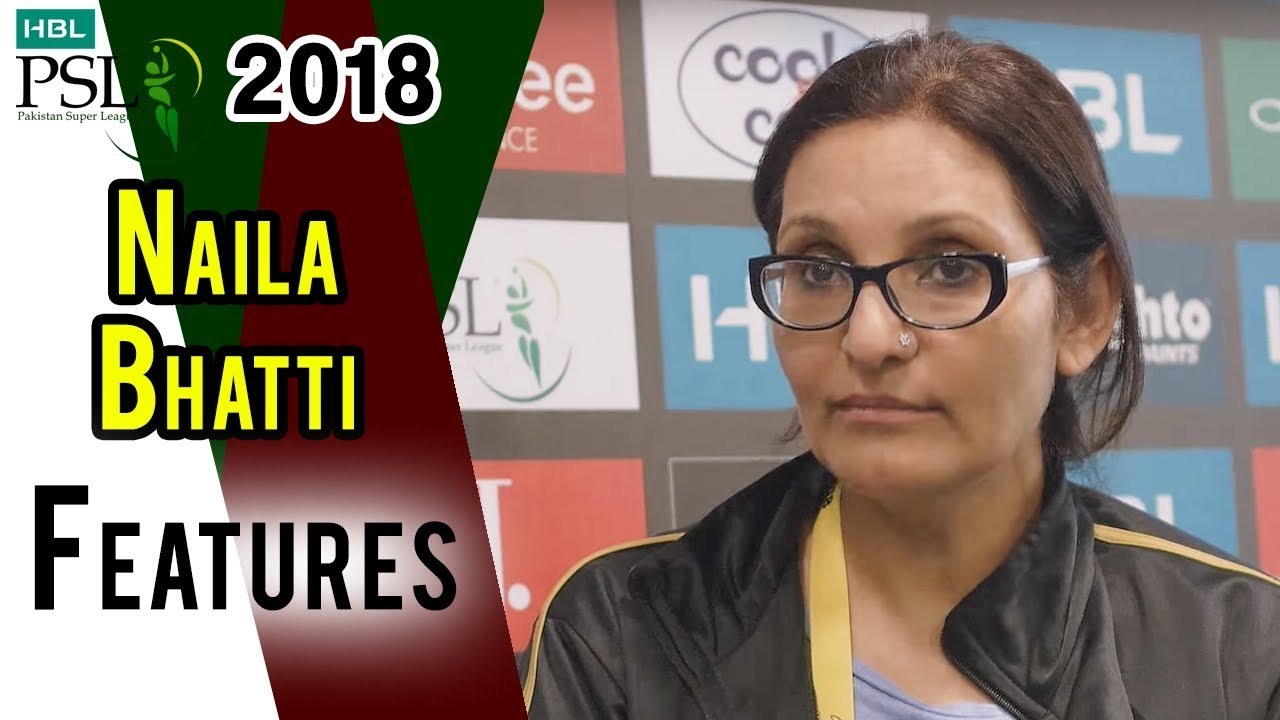
The Pakistan Super League was not born inevitable. When Bhatti joined the Pakistan Cricket Board's marketing operation in 2015, Pakistan had gone years without regular international cricket at home. The new league had to be staged in the United Arab Emirates, sold to franchise owners, carried by broadcasters and introduced as something more durable than a tournament on a calendar. Bhatti's own account of the job stretches from planning through franchise sales, broadcast rights, in-stadium rights and the launch event.
That list is a compact education in building a modern sports property. A league is simultaneously competition, television, sponsorship inventory, live entertainment and public story. Each part has a different buyer and a different clock. The cleverness is not in choosing one. It is in arranging all of them so the public experiences a single thing.
The PSL opening ceremony made that convergence visible. In 2018, the new Multan team inspired a Sufi theme. Abida Parveen and Sachal Studios shared the program with international pop star Jason Derulo. Bhatti explained that the idea was to present tolerance and a softer image of Pakistan while retaining the global element broadcasters expected. Her crispest line was also the broadest: We should think outwards and not just inwards.
“At the end of the day it has to be about cricket.”Naila Bhatti, on choosing the PSL ceremony's presenters
That sentence carried an operator's corrective. The show could be elaborate, but the field still belonged to a match. The ceremony took about six months to plan. A year earlier, clearing the stage had delayed play. In 2018 the team had strict instructions to finish on time. They hired a separate television director and built the program around a harder exit. Fireworks are romantic. Strike schedules are less so. Only one of them gets the players onto the pitch.
A detour through the pantry
Bhatti left the PCB in October 2018. Two years later, Mitchell's Fruit Farms appointed her chief executive officer and managing director. The company was one of Pakistan's old consumer names, founded in 1933, and it was wrestling with sustained losses. This was a different sort of public stage. A cricket audience gathers around scheduled drama. A food brand has to earn a tiny domestic ritual repeatedly, one shopping trip at a time.
Her appointment was a deliberate cross-industry bet and was debated as such in the business press. Bhatti did not arrive from the conventional packaged-goods route. She brought media, marketing and large-project experience. During her tenure, Mitchell's announced a SAP S/4HANA implementation as part of an effort to digitize and revitalize operations. Public filings identify her as CEO, managing director and executive director through 2022. The company recorded a narrow profit in 2021 before a steep loss the following year; Bhatti resigned in 2022 and Najam Sethi replaced her as chief executive.
It is tempting to turn every executive tenure into a clean parable. Companies are less polite. They carry commodity costs, debt, aging systems, boardroom histories and markets that refuse to follow the narrative. The Mitchell's chapter matters because it complicates the résumé. It shows Bhatti taking responsibility for an institution whose machinery could not be edited down to a launch night.
Back to the league, now with a price tag
In 2023, Bhatti returned to the PCB as PSL commissioner. The league she had helped introduce was now old enough to negotiate from evidence. At a January 2024 press conference, she described the auction for two new cycles of domestic broadcast and live-streaming rights. Four broadcasters competed. The leading domestic bid came in around 45 percent above the prior cycle; the streaming bid rose 113 percent. A third-party valuation had given the board a reference point, and the eventual broadcast offer exceeded that valuation by more than a billion rupees.
Numbers of that kind are retrospective applause. They measure the accumulation of seasons, rivalries, broadcast habits and sponsor confidence. Bhatti put it plainly: the bids showed that the PSL brand had become important and that companies wanted to be associated with it. In March, franchise owners publicly thanked the league team she led for its vision and work through the 2024 season. In May, she resigned as commissioner.
Her two periods at the PCB form a satisfying commercial bracket. In the first, the league was a proposition being assembled. In the second, it was an asset being priced. The journey between those moments is the difference between attention and equity. A launch asks the market to imagine. A rights auction asks it to write a number.
The framework catches up with the career
At Xavor in January 2025, Bhatti led a team session around a three-part framework: Outcome, Purpose, Action. The vocabulary is familiar to anyone who has wandered through a leadership workshop, but it acquires some muscle beside her career. The outcomes have varied wildly. The purpose has shifted with each institution. The action has remained concrete: extend the signal, sell the rights, clear the field, modernize the system, align the team.
Xavor works across enterprise software, cloud services, data, artificial intelligence and digital engineering. Bhatti's arrival there places her once again at the meeting point of technical systems and public meaning. Software companies can describe themselves as stacks of capabilities. Customers prefer a reason to care. A strategy-and-marketing chief translates between those dialects.
The audience sees the show. The operator sees the dependencies.
What can be borrowed from Bhatti's path is not a slogan about reinvention. It is a habit of looking past category labels. Television, telecom, cricket, food and technology appear unrelated until they are viewed as systems moving value toward people. Every system needs distribution. Every institution needs a story. Every story eventually meets a budget and a clock.
The stadium remains the best metaphor because it refuses to hide the deadline. Music swells, cameras turn, a sponsor's logo gleams, and somewhere a crew is counting backward from the first ball. Bhatti has spent much of her career in that countdown: close enough to the spectacle to understand its appeal, and close enough to the machinery to know why it works.