An accounting class is an unlikely place to acquire a lasting enthusiasm. In 2009, Nadim Alameddine took one anyway. Double-entry bookkeeping pleased him. Financial statements became readable. By his second year at business school, he was tutoring first-year students in the subject. It was the sort of interest that might ordinarily disappear into a respectable qualification and a forgotten textbook. His would return, years later, with a tax deadline attached.
The Lebanese entrepreneur is now the founder and CEO of Wafeq, which builds accounting software for businesses in the Middle East. Its work involves invoices, payroll, reporting and the many small obligations that sit between making a sale and knowing where the money went. Alameddine arrived there through consulting, technology and a shopping search engine. The route makes more sense when you follow the chores.
There is a useful distinction between wanting to start a company and knowing what deserves one. Alameddine had the first ambition early. The second took longer. It emerged while he was running another business, trying to do something that owners everywhere recognize: get the accounts into sufficiently good order to carry on with everything else.
The accounting class that stayed with him
Alameddine studied electrical and computer engineering at Georgia Tech and later earned an MBA at Wharton, where he majored in finance. His career included Accenture, Rocket Internet and Dubizzle. In a 2026 conversation about his working life, he described consulting as a conventional path he tried before realizing it did not suit him. Business school offered a chance to change direction. Technology was where he went next.
In that same conversation, he traced his wish for independence back to his father’s outlook. He had wanted to build something of his own since his early twenties. That wish coexisted for a while with paid employment, which supplied an education in the less romantic parts of internet businesses.
Accounting remained an interest rather than a career plan. He liked technology, and there was no obvious reason the two needed to become the same job. His eventual company would depend on precisely that combination: enough interest in the books to stay with the details, and enough interest in software to imagine doing the work differently.
Three founders, then one
In 2013, he co-founded Pricena, a shopping search engine, with two technical partners. For roughly three years, it was a side project alongside his day job. He handled the work outside engineering. The founders bootstrapped, concentrated on search-engine traffic and kept the operation lean. In 2016, he moved to it full time.
The smallness was practical. When three people are doing nearly everything, an expense has a way of becoming a conversation. Their technical skills let them build without first assembling a large team. Search visibility helped them find users. They received a term sheet but chose to continue without taking the investment.
He left the operating role in 2019 with an appetite to build something larger. At Wafeq, the founding arrangement would change: he was a solo founder, and he learned to build the initial software himself. Understanding the technical work gave him more control over what he was making. The commercial founder from the first company was acquiring another job.
The idea nobody found exciting
The immediate problem had appeared before he left Pricena. In late 2017, preparing for the introduction of VAT in the UAE, Alameddine needed to establish an accounting system for his startup. He approached bookkeeping firms and disliked what he encountered: cumbersome processes and services that seemed poorly matched to a digital business. He learned the software himself and built a small tool to automate some of the work.
By December 2018, he was considering a business around the problem. His first instinct was friendlier bookkeeping software. Conversations with entrepreneurs changed the brief. They wanted the work taken care of with as little disturbance as possible. In June 2019, he publicly launched WeKeep, a bookkeeping service combining a human bookkeeper with an online workspace.
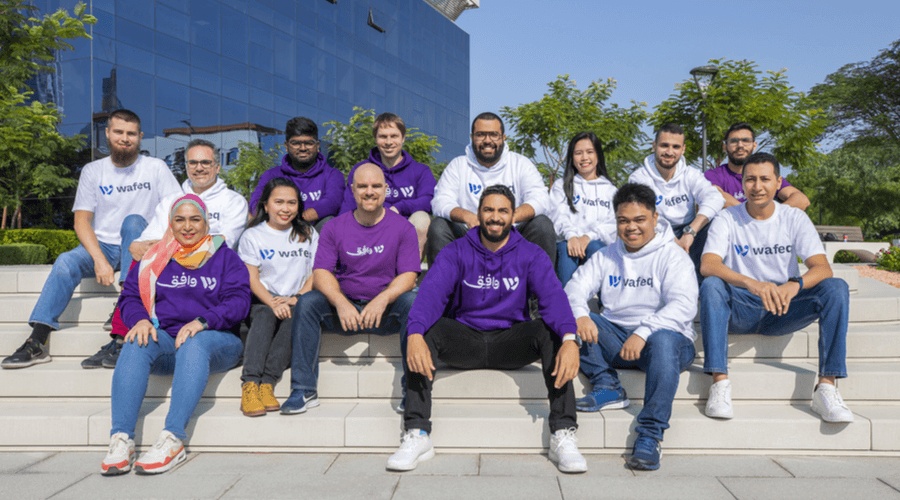
That summer, WeKeep joined YC Startup School. Fellow participants were often unenthusiastic about the problem. Alameddine took encouragement from the response. An unfashionable field might offer room to improve things. He described the team with uncomplicated affection: “engineers that love accounting”. It is a compact founding premise, and a difficult one to fake for long.
“Pick your game wisely.”
Nadim Alameddine, writing about funding in 2019
A business license, down to the day
His early blog also contains an incorporation diary. There is an application, a pitch to a committee, approval, a bank reference letter and a sequence of documents. Day 74 brings the license. Day 79 brings the original articles of association and the ability to apply for a bank account. He records fees and explains why the size of the share capital affects how finely ownership can be divided.
It is a remarkably administrative origin story. Nobody has to squint to see the accounting founder in it. The useful information is the point: how much, how long, what happens next. A company does not spring fully formed from a pitch. Someone has to obtain the documents.
In another post that July, he considered a question customers kept asking: had he raised money? His answer explored the choices behind it. Customer revenue could finance development and give a founder time to decide what kind of company to build. Venture funding suited some ambitions; a profitable independent business suited others. At the time, he intended WeKeep to keep funding itself through customers. He left the position open to change.
- 01Prepare the booksHis own startup’s VAT problem
- 02Do the work for othersWeKeep’s bookkeeping service
- 03Build the regional softwareWafeq’s accounting platform
The case for staying close to the rules
Wafeq’s larger opportunity rested on a geographic observation. Accounting products have to deal with the rules and habits of the markets they serve. Alameddine saw established local brands elsewhere and a fragmented landscape in the Middle East. He wanted to build a regional business with the attention to detail that accounting demands.
The argument becomes concrete at the invoice. A business needs the document to work in its language, satisfy the relevant requirements and fit into its daily operations. Arabic and English, local reporting and electronic invoicing all belong inside that practical brief. A polished interface can only do so much if the owner still has to bridge the gaps by hand.
At a 2024 investor gathering, Alameddine described accounting as the foundation for a broader finance operating system. Once a business keeps its records in one place, related work such as expenses, payroll and financing becomes a possible extension. He also emphasized the immediate priority: get the accounting right. The ambition had grown, but the order of operations remained fairly stern.
The books open onto a bigger business
In early 2023, Wafeq raised a $3 million seed round led by Raed Ventures, with Wamda Capital participating. In 2024 came a $7.5 million Series A led by 9900 Capital. Existing investors returned. Gary Turner, who had built and led Xero’s operations in Europe, the Middle East and Africa, also invested. An executive familiar with an established accounting business was backing Alameddine’s regional attempt.
Wafeq’s announcement put its customer base above 10,000 and reported more than two million invoices issued each month, worth about $400 million. These were figures about activity on the platform; invoice value was money represented in customers’ documents. Saudi Arabia accounted for 90 percent of its business at the time, giving the regional thesis a decidedly specific center of gravity.
By October 2026, Wafeq was reporting more than 18,000 companies using the software. It was another measure of the distance traveled since the service’s early days. The dates matter. The accounting venture that began with service work had developed into a software company with users, investors and a product roadmap extending beyond its original brief.
Funding milestones, not company valuations. Wafeq’s 2024 announcement reported 10,000+ customers; it reports 18,000+ companies as of October 2026.
Back to the owner’s desk
Alameddine’s recent public work has kept returning to the joins between financial tasks. At WafeqNEXT Dubai in 2025, he addressed a gathering of more than 120 accounting and finance professionals. The event included banking workflows and the use of automation. In May 2026, he discussed the gap between spending and bookkeeping with Pemo co-founder Ayham Gorani.
Another 2026 interview returned to his own route from employment to entrepreneurship and the challenge of building software across Saudi Arabia and the UAE. The subject is demanding in ways a startup pitch can compress too easily. Products take time to develop; customers have to trust them with consequential records. His early willingness to learn the technical work remains relevant to that task.
The discussion with Gorani considered a familiar timing problem: a business spends money now, while its accounting team may learn about the transaction later, through a statement, an email or a spreadsheet. That delay leaves someone to reconstruct what happened. For a founder who began by trying to automate his own accounts, the connection is direct. Each handoff is another place where software can either reduce work or leave it waiting for a person.
In September 2026, Wafeq announced that it had been listed as a pre-approved UAE e-invoicing service provider, with final accreditation assessment still underway. Alameddine’s stated aim was to keep accounting, invoicing and related financial work together, reducing the need for customers to assemble separate tools.
There is a recognizable continuity from the student who enjoyed reading financial statements to the founder thinking about disconnected workflows. The business has changed size and form. The irritation beneath it remains familiar: owners have things to do, and the books keep asking for attention. Alameddine has spent years making that request his business.