Fifteen years is a long time to wait for an investment to tell you whether it was a good idea. Manar Mahmassani held a property through the global financial crisis, eventually sold it for the price he had paid, and discovered that the apparently reassuring arithmetic left something out. Mortgage interest had consumed a substantial part of his money. The building had kept its price. Owning it had still been expensive.
He recounted that experience in September 2026, looking back on the frustrations that helped produce Stake. His childhood friend Rami Tabbara had spent years selling property, including off-plan homes whose buyers could wait years before receiving income. Mahmassani knew the waiting from the other side. Together, they had reasons to ask whether the investment could be arranged differently.
The questions were unglamorous enough to be useful. Could someone begin with less money? Could the property already be producing rent? Could selling an investment become easier? A skyline makes a fine brochure. These questions concern the person who has to pay for a piece of it.
Fifteen years, one awkward sum
Mahmassani’s experience complicates the familiar satisfaction of selling at the purchase price. The number on the sale agreement does not contain the entire history of owning something. Financing has its own running total. Time passes, money remains committed, and the investor’s other choices narrow. In his account, mortgage interest left him with a loss of roughly half his money.
That story gives Stake’s smaller entry ticket a personal context. The company offers fractional property investments from AED 500. A person can commit a smaller amount rather than purchase a whole home. The ambition also includes income-producing assets and more flexible ownership. Those are product choices with a recognisable human problem behind them: a purchase should leave room for the rest of a life.
London’s closed door, Dubai’s first offer
His own route crossed several borders before the business did. Born in Saudi Arabia, Mahmassani grew up in Paris and Lebanon, then studied mathematics and economics at the London School of Economics. The combination put numbers and the behaviour around them in the same degree. He graduated in 2005.
London did not immediately supply the career he wanted. He recalls spending six months looking for a suitable investment-banking job. In January 2006 he arrived in Dubai; the following month he joined SHUAA Capital. A brief period at Emirates Bank followed. Deutsche Bank became the longer chapter.
He spent nine years there, rising to lead MENA Structured Credit and global Islamic structuring. He later joined Falcon Group as managing director and head of corporate finance. His professional biography credits him with executing more than $6 billion in transactions for companies, family offices, financial institutions, and quasi-sovereign clients.
Those jobs put him inside the machinery of finance: arranging transactions, matching structures to clients, and working through the conditions that make a deal possible. The move to a consumer platform changed the audience. It retained the need to understand what sits underneath a transaction. A friendly screen still has to lead somewhere legally and financially coherent.
A friend, a banker, and a third chair
Mahmassani and Tabbara started building Stake in 2020. Their friendship predated the company by years. Their professional lives had supplied different views of property: Tabbara’s experience included a senior sales role at Damac; Mahmassani’s included the financial structures behind large transactions.
Ricardo Brizido brought the technology experience. A former CTO at the investment platform Seedrs, he completed the founding team. Mahmassani’s later account dates their first meeting to summer 2020 and says they persuaded him to join within the following year.
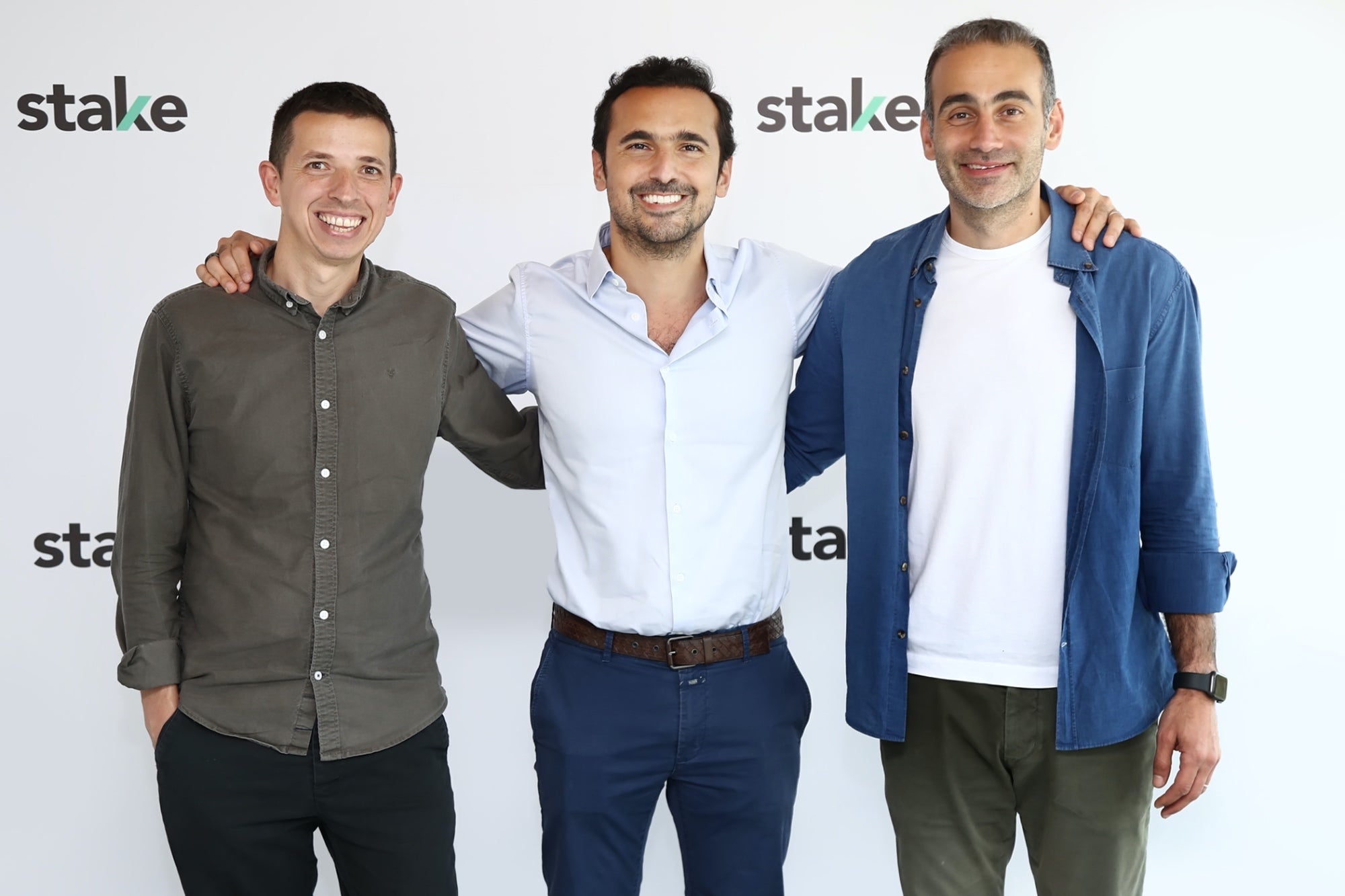
The venture began in a small coworking room in the Dubai International Financial Centre. It also had a less photogenic founding requirement: permission to operate. The early licensing process took around nine months. For a business that would handle people’s investments, the paperwork belonged in the origin story as much as the friendship did.
By June 2021, Stake had announced a $4 million seed round. Its early offering allowed people to buy property stakes from AED 2,000. The threshold later fell to AED 500. The change made the company’s idea more literal: ownership could begin with a smaller commitment.
The small ticket has a large back office
Fractional ownership can sound almost suspiciously easy. A person chooses a property and contributes money. The building, however, cannot become hundreds of separate buildings merely because hundreds of people would like a part of it. The ownership structure does the dividing.
For Stake’s UAE fractional product, a special-purpose vehicle holds the property. Investors acquire shares in that company in proportion to their contribution. The vehicle owns the title deed. The investor’s share connects them to the asset and its economics. Mahmassani has explained that distinction in his writing about Stake and real estate investment trusts.
A simplified ownership diagram, not a projection of returns.
The company also takes on the operational work around an acquired property, including tenant management and maintenance. In the early model Mahmassani described, already-rented homes were a key selection condition. That choice addressed the long wait he and Tabbara had observed. Income could begin from an existing tenancy rather than a building that still had to be finished.
The division of labour matters to his story. A smaller investor needs the same underlying questions answered as a larger one: what is owned, who manages it, and how money comes back. The platform makes the interaction shorter by taking on more of the work behind it.
The relief behind the funding number
In August 2022, Stake raised $8 million in a pre-Series A round. June 2024 brought a $14 million Series A, led by Middle East Venture Partners. The chronology is neat on a chart. Mahmassani’s account of the second raise was considerably less tidy.
He described a lengthy process and admitted that, only months earlier, an oversubscribed outcome would have seemed implausible. He singled out MEVP’s Walid Mansour for continued support: “Walid, you’re our rock.” The sentence has more personality than the usual ceremonial thank-you. Someone had stayed convinced while the outcome was still uncertain.
Individual announced rounds. These bars are not a company valuation or personal wealth estimate.
In February 2026, Emirates NBD led a $31 million Series B. Stake reported total funding of $58 million after the round. That stated cumulative figure is separate from the four rounded announcements shown here. The backing included institutions such as Mubadala and Wa’ed Ventures, alongside property-sector participants.
For Mahmassani, the resources supported a business extending beyond its first market. More capital brought more room to build, and more people to explain the business to. The fundraiser had once helped large clients arrange finance. Now he was arranging it for a company he had helped start.
A company grows beyond its first room
Saudi Arabia had been part of the plan well before the launch. In 2022, Mahmassani discussed the value of Stake’s MBC partnership for reaching that market. Stake officially began Saudi operations on December 9, 2024, working with a different market structure and offering private real estate funds.
Expansion also made the internal work more demanding. In October 2024, Mahmassani wrote about learning to build a company culture. He placed trust, autonomy, clear objectives, and recognition alongside the difficult decisions about who should join or leave. He also acknowledged that listening required deliberate work from him.
“I am frankly not the best at EQ”
Manar Mahmassani · October 2024
There is a useful humility in that admission from someone accustomed to finance leadership. A deal can be worked through in a model. A colleague deserves attention that cannot be delegated to one. His reflection leaves room for the founder to learn while the organisation continues growing.
In October 2025, Stake expanded into US industrial real estate and launched StakeOne for full property ownership. The product range had moved beyond the initial fractional proposition. The recurring theme remained the process surrounding ownership: finding the asset, understanding it, buying it, and handling what follows.
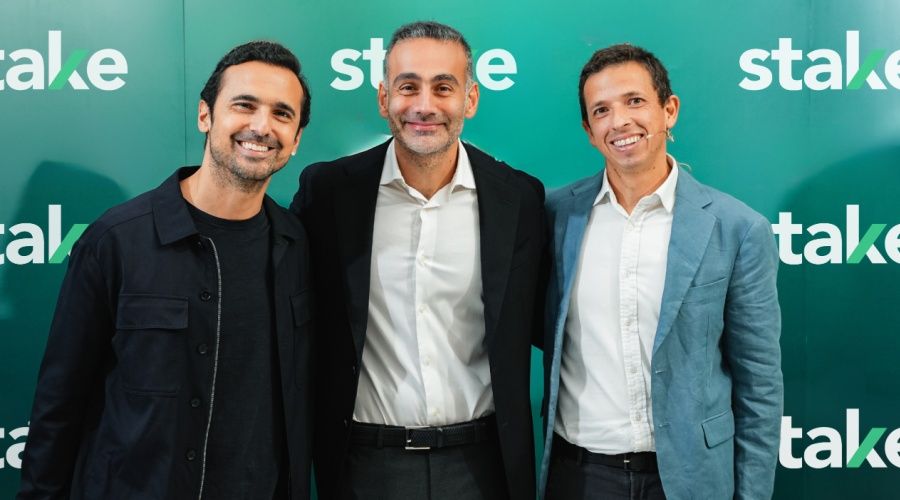
The next question is how to leave
The exit remains central to Mahmassani’s thinking. September 2026 interviews placed tokenisation among Stake’s next priorities. The company has described work with Property Finder and in-principle approval from Dubai’s Virtual Assets Regulatory Authority. The intention is to make fractional exposure more tradable. That describes a direction of work, rather than a completed promise of instant liquidity.
The distinction fits the original problem. Buying a smaller share changes the commitment at the start. Being able to leave on workable terms changes the experience at the other end. Property is an asset people can picture easily; the time required to sell it is harder to draw on a screen.
Mahmassani has also given the business a public notebook. He began his Substack in January 2026, covering property markets, technology, and the experience of hiring and expanding a company. His writing makes room for the mechanics that tend to disappear beneath a clean product pitch.
The revealing number in his story remains fifteen. It measures the stretch between an investment decision and its disappointing conclusion. Years later, he is working on the entry, the income, and the exit with two co-founders beside him. There is a certain economy in that: an expensive lesson becomes a set of questions other people can ask before they buy.