The first thing Naboo got wrong was what people wanted to do in a beautiful house. Its founders imagined companies arranging remote-work stays: laptops, countryside, a change of scenery. The timing seemed reasonable. Employers were learning to live with distributed teams. Yet the proposition disappointed. Looking back in 2024, cofounder Maxime Eduardo called it a “flop.” The scenery was pleasant. The buying reason needed work.
- Naboo bundles event sourcing, human support and purchasing software.
- Organizers get help booking; procurement gets approvals and spending visibility.
- The business earns SaaS subscriptions and supplier commissions.
The company moved toward seminars and corporate gatherings. That sounds like a modest adjustment. Both propositions involve taking colleagues somewhere. But a gathering has a deadline, an organizer and a budget somebody has already agreed to spend. Over time, Naboo followed that budget into a much larger problem: how a company buys all the services that make an event happen.
The person who inherits the offsite
Consider the familiar assignment: find somewhere for the team to meet. A venue search produces possibilities, then questions. Can everybody get there? Does the price include lunch? Who contracts with the caterer? Somewhere between the promising photograph and the purchase order, an employee acquires a second job.
Naboo offers a brief-to-booking service for that employee. Accommodation, workspaces, food, activities and transport can sit inside the same process, supported by an adviser. Its expertise lives in coordinating those interdependent choices. A room is available; whether it suits a particular group is a different question.
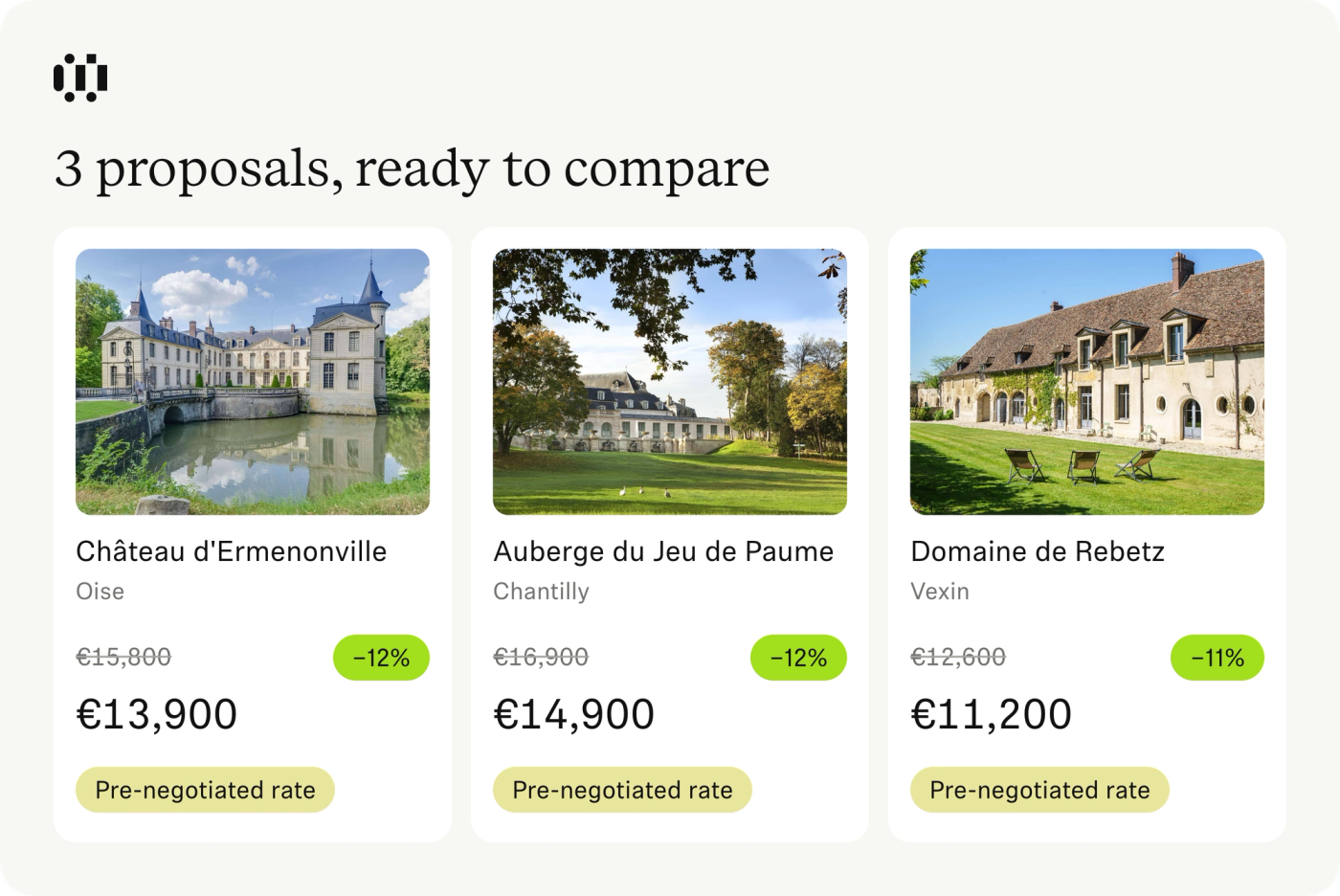
For a small team, the appeal is practical relief. For a large company, another customer enters the picture: procurement. It wants to know what different departments are buying, which suppliers they use and whether anyone applied the agreed policy. A pleasant retreat and a defensible purchasing decision have to coexist.
The buyer hiding behind the booker
Naboo launched its enterprise offering in 2024. Investor Notion Capital reported ten contracts with listed European businesses, carrying annual values between €1 million and €10 million. These were evidence of demand for a centralized process, rather than just another place to browse venues.
The same year, Naboo acquired BizMeeting. Eduardo explained that the deal supported its push into corporate accounts. The move joined a software-led marketplace to experience serving large organizations. Naboo was getting closer to the people responsible for repeated purchases, including the small meetings that accumulate across a sprawling company.
The difference becomes clearer in its Control Tower product. Requests enter a shared system; rules determine approvals; negotiated rates and preferred suppliers can be applied during booking. Procurement sees the commitment while there is still time to influence it. Reconstructing spending from invoices afterward is a much less useful kind of visibility.
- 01 Brief
- 02 Compare
- 03 Approve
- 04 One invoice
Keep the decisions connected, from the first request to payment.
Naboo also acts as a single vendor of record. Instead of separately onboarding and paying every provider, the customer can consolidate the purchase. That puts the company between a venue marketplace, an events agency and procurement software. Existing enterprise purchasing systems can remain in place; Naboo supplies the event-specific workflow and consolidated data.
What the convenience costs
The commercial model has two documented parts: a SaaS subscription and referral commissions paid by suppliers. Providers can list without charge, with commission deducted when a booking happens. For buyers evaluating an agreement, the useful comparison is the complete event price, contractual fees and internal work required to deliver it.
Alternatives include buying directly, using an events agency or working with venue marketplaces such as Kactus. Naboo’s distinction is the combination: sourcing and personal support attached to purchasing controls and payment coordination. The more events an organization buys across different teams, the more opportunities there are for that combination to matter.
The same logic suggests its limits. A company with one familiar venue and an occasional dinner may gain little from an enterprise rollout. Procurement also needs teams to use the process and suppliers to suit the brief. A consolidated invoice cannot repair a poor location or persuade employees to attend. Those remain human judgments.
There is another variable a purchasing team might want to see: an event’s environmental impact. Naboo’s MICE offering identifies Climeet as a partner for carbon estimates, taking account of the venue, food and transport. Those details belong to the same decision as the price. A cheaper destination can mean a different journey; the hotel bill alone does not describe the whole event. Putting more of the inputs together gives organizers a better basis for choosing, even when the final choice still requires a conversation.
Give the machine the paperwork
Naboo’s AI work sits inside this operational machinery: interpreting requests, identifying suppliers, processing proposals and supporting negotiations. Human advisers remain part of the service. The attraction is fewer hours spent arranging information before someone can make a sensible decision.
“If you want adoption, show the value.”
Maxime Eduardo · The Investment Memo
That principle is useful beyond events. Start with an observable burden, remove part of it, and let the saved effort make the argument. A procurement team can copy the approach before buying anything: collect event requests early, standardize the information vendors return, and decide approval thresholds before an organizer commits money.
The brand follows the budget
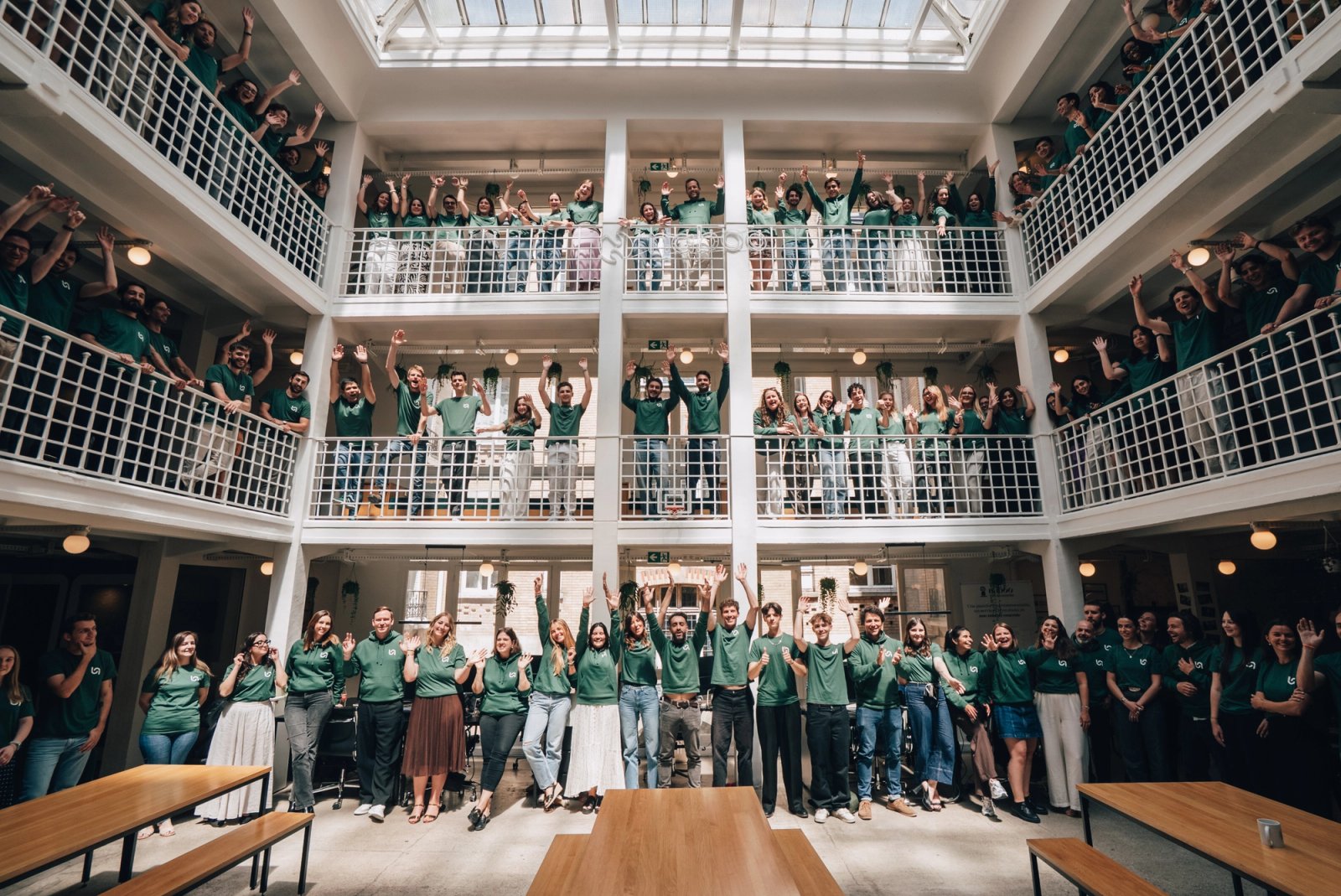
Investors have financed that expanding ambition. Naboo raised €7.5 million in February 2024, then €20 million in a January 2025 Series A led by Notion. In February 2026, Lightspeed led a $70 million Series B, alongside Notion, ISAI and Ternel. A New York office accompanied the announcement.
Value moving through the platform, not Naboo’s revenue.
By October, Naboo was reporting more than $300 million in annual event volume. A new identity, developed with Bleed, emphasized meetings and events spend management. The language had caught up with the buyer. Software for getting people together had become software for understanding what getting people together costs.
The original beautiful-house idea offered a new setting for work. The business that followed found a recurring task companies already struggled to complete. There is a useful discipline in that progression: watch what a customer must get done, especially the unglamorous part someone has to finish after everyone else leaves.