Mykola Paliienko once tried to sell butter to people who owned cows. He and his brother bought a box from a dairy in Yahotyn while staying at their family’s country place, then offered it around the village. The market had already arranged its own supply chain. They ate some of the stock and sold some to neighbours at cost. It was an economical education, provided one had an appetite for butter.
The story survives because Paliienko tells it against himself. The co-founder and former chief executive of EVO has spent much of his working life helping other people find customers. His own early customers had required rather more research. Years later, his businesses would give Ukrainian merchants a place to sell online and help companies exchange the documents that make a sale official. He had become interested in everything surrounding the transaction.
A salary, a server, a second attempt
As a child, Paliienko liked mathematics and did well in physics; academic competitions were a familiar part of his life. Two years into studying at Kyiv Polytechnic, he found a job paying roughly $50 a month. Practical learning arrived with a payslip. The attraction was making something people could use, an ambition that would remain recognisable even as his job moved further from writing the code himself.
His professional biography begins in 2001 at UnitedThinkers. Programming jobs at V.M.S. and Flextronics Design Ukraine followed, then software architecture work at Cogniance and Sonopia. The progression matters: he had worked inside other people’s systems before attempting to build a business around his own. Architecture asks how separate components behave together. A growing company eventually poses much the same question, with the additional inconvenience that its components have opinions.
By 2007, he and two friends were writing the code for what became Prom.ua in their spare time, using salary money to advertise it. The company was founded in 2008; he took its leadership in 2009. The original proposition was practical: let small businesses establish an online presence without paying for a bespoke shop. A website builder developed into a marketplace. An engineer’s side project acquired customers, obligations and a reason to keep going.
Paliienko later described becoming an entrepreneur at 28 as something circumstances had encouraged. Sonopia had closed after funding ran out. He could find another well-paid job, or try making something of his own. His partners, Denys Horovyi and Taras Murashko, were friends from school. They had known one another since eighth grade. Their venture began with a considerable asset that never appeared on a server invoice: years of knowing how the others behaved.
The customer does not arrive with the code
Prom’s appeal was that one technical solution could serve many businesses. In 2017, Paliienko was already arguing that Ukraine’s outsourcing industry could supply the people who would build its product companies. He understood the passage personally. Selling development capacity and assuming responsibility for an entire product were different jobs. The latter brought marketing, customer needs and the consequences of decisions back inside the same organisation.
Vchasno was an early expression of that wider responsibility. In September 2017, he described the electronic-document service as having launched that March and already serving more than 10,000 companies. Preparing, printing and posting documents were ordinary costs that software could remove. The business opportunity lay in a routine so familiar that people scarcely thought to question it. A signed document could travel without an envelope; the work around it could change too.
The ambitions became larger in November 2018, when EVO and Rozetka completed their merger. The announcement put the combined platform at 30 million annual transactions across four geographies and two billion site visits. Those were figures for the combined businesses, not Paliienko’s personal scorecard. They described the scale of the infrastructure problem: more consumers, more merchants and more reasons for a transaction to go wrong.
Paliienko’s stated aim was to build an ecosystem of online and offline services around the consumer. The phrase could sound abstract until a parcel needed delivering or a payment needed clearing. A marketplace depends on things beyond the screen. Joining with Rozetka offered a way to develop that surrounding machinery. For a founder who had started by helping merchants put up websites, the definition of the product had become considerably broader.
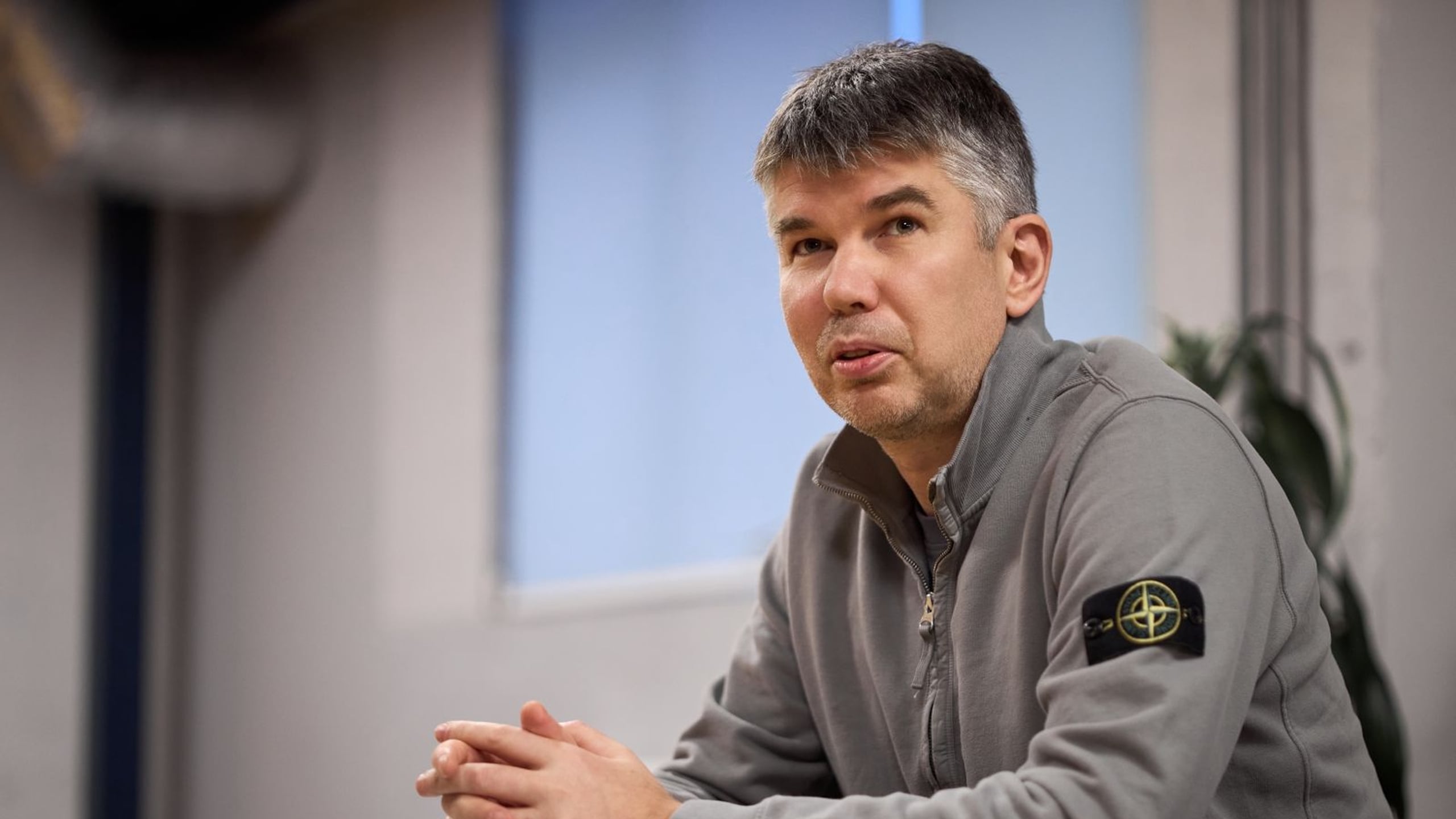
A company with fewer interruptions
By February 2021, Paliienko was describing a distributed EVO team with people in roughly 20 cities. A project manager could be in Kyiv, a product manager in Dnipro and a developer in Mykolaiv. He wanted agreements stored in a shared knowledge base rather than passed around as office folklore. The joke about folklore carries a serious managerial point: a process is fragile when the answer lives only in someone else’s memory.
At home, he arranged a height-adjustable desk, a laptop and a large screen. He jokingly called the setup his company control panel. Yet his account of effective work emphasised clear tasks, transparent rules, development opportunities and adequate pay. The control panel belonged to the chief executive; control over a working day mattered to everyone else. He reported that development and product productivity had held steady, while some teams handling calls and tickets had become more productive.
His thinking about organisational change also allowed for friction. In a discussion of EVO’s evolution, he described projects competing over shared development and marketing resources. Eventually, more of the capabilities a project needed moved inside its own team, while supporting services stayed shared. Autonomy had to be designed into the arrangement. Simply collecting projects under one company name did not settle who would get the next available developer.
“Overcoming inertia is the hardest,” he said. A settled system resists a new process; once the process takes hold, inertia can help sustain it. That observation is less theatrical than the usual language of reinvention. It makes room for repetition, resistance and people learning a different way to work. An engineer might recognise the appeal: spend effort changing the mechanism, then let the mechanism carry some of the load.
On changing an organisation“Overcoming inertia is the hardest.”Mykola Paliienko
When the market stopped
Russia’s full-scale invasion in 2022 brought a different order of difficulty. EVO depended heavily on the Ukrainian market. In the opening weeks, activity fell sharply; Paliienko said March revenue was only 15-20% of its normal level. Reserves helped absorb the loss. Projects that had previously justified investment suddenly had fewer customers or a different regulatory outlook. There was no elegant organisational diagram capable of cancelling that reality.
The company cut 430 people, about 30% of its teams. Paliienko spoke publicly about the decision, compensation and attempts to help people find other jobs. These were people losing work during a war, and the number belongs in any account of his leadership alongside the growth figures. His explanation was that some employees no longer had projects to work on, while the remaining teams needed to develop services the country would still use.
The same period produced Pidmoga, built with the Kabanchik team and support from the Ministry of Digital Transformation. Paliienko described a platform connecting requests for help to volunteers who could provide the relevant service. Someone able to transport supplies could register for that category; requests would reach people equipped to respond. It applied a familiar marketplace skill to a pressing civic problem: make a useful match, and reduce the time spent searching.
The blank slate had existing customers
In June 2023, Paliienko handed EVO’s chief executive role and operational responsibilities to Horovyi. A separate group, Tabula Rasa, took forward Vchasno and the procurement platform then called Zakupki.Prom. Its owners were Paliienko, Horovyi and Murashko. The three friends were still partners. What changed was the structure around the products, giving business software a separate home while EVO-Rozetka continued developing commerce, payments and logistics.
The name suggested a fresh start. The starting point was more substantial than an empty desk: there were established services and roughly 250 team members. Paliienko said he and his partners remained shareholders in EVO-Rozetka. He also spoke candidly about differing cultures and intentions among shareholder groups, and the difficulty of introducing new things inside a large organisation. Independence was meant to make decisions quicker and product development simpler.
By April 2025, the group had adopted the Vchasno name. Paliienko explained that customers understood the product identity better than a separate corporate name. The change spared everyone an explanation. He said the separation itself had required about a year of stabilisation and team building. Fresh starts, apparently, came with an administrative department. The group had more than 320 employees and was testing profit sharing for key team members twice a year.
His ambitions extended to investing. A February 2025 announcement named Tabula Rasa as a strategic partner and investor in Research Integrity Chain, a British startup with Ukrainian roots working on intellectual-property authentication. Founder Dmytro Shestakov pointed to the team’s experience scaling Vchasno as part of the value of the relationship. Documents had led Paliienko toward a related question: how people establish that digital information belongs to its claimed author.
- 2008Co-founds the business behind Prom.ua
- 2018EVO and Rozetka complete their merger
- 2023Hands over EVO leadership; leads Tabula Rasa
- 2025The group takes the Vchasno name
A perfectly good use for paper
By December 2025, Vchasno Group’s customer list included Aurora, Silpo, Nova Poshta, DTEK, Kyivstar, monobank and MHP. Its products covered documents, receipts, personnel records and reporting. The shared past remained visible in a Kyiv office centre housing Vchasno, EVO and Rozetka Pay teams. A corporate separation could create different businesses without requiring everyone to pretend they had never met.
Then there are the books. When Russian-language business titles were removed from the office library, Paliienko found the shelves thinly stocked. Vchasno Group’s partnership with publisher Vivat, Perekladaiemo Vchasno, helped bring business books into Ukrainian. Staff could propose titles with a written explanation; the publisher handled rights, translation and production. The scheme had published The Lean Startup and Leaders Eat Last by the time he discussed it with Vivat’s Yuliia Orlova.
He was comfortable with printed books as well as digital ones. Readers should have the format that suits them. The distinction is pleasingly practical: a book earns its place on paper; an invoice need not spend its life there. From the butter box to the document service, his career keeps returning to the conditions around a useful exchange. Find the person who needs something. Make the connection work. Leave them a little more time to get on with their day.