Consider the bank transaction you cannot recognize. The amount is familiar. The string of letters beside it looks as though a printer sneezed. Somewhere behind that little mystery sits a much larger one: how can a bank help you manage your money if it cannot explain where the money went?
- MX connects financial accounts and makes transaction data readable.
- Its buyers are banks, credit unions, fintechs, and businesses.
- The pitch: better information can produce more useful banking experiences.
MX Technologies, Inc. works in that space between a financial record and an explanation. Its software gathers account information, cleans descriptions, assigns categories, and adds context. A consumer gets a clearer picture of spending. An institution gets a better chance of recognizing what that customer needs. The same transaction can serve both purposes. Whether it does depends on what happens after the data arrives.
Two founders, one awkward problem
In 2010, Ryan Caldwell started MoneyDesktop. Brandon Dewitt co-founded MyJibe, a personal finance web application company. Both were working on helping people understand their finances. MoneyDesktop acquired MyJibe in November 2011, bringing their efforts together. The company adopted the MX name in September 2014 and introduced Helios, a digital banking application, and WideNet, a customer acquisition tool.
The route matters. MX builds tools that institutions can put inside existing banking relationships. A customer need not discover an unfamiliar budgeting brand before seeing an account overview or a useful spending insight. The bank supplies the familiar front door. MX supplies some of the machinery behind it. That arrangement also gives the institution a commercial reason to make financial guidance useful: people have other places to keep their money.

Dewitt, who led engineering, died in 2021. MX remembers the founding through an annual Founders Day holiday. Its stated values include objectivity in discourse and iterative innovation, alongside a founder mindset. Those are useful aspirations for a company whose work depends on repeatedly asking whether an apparently obvious financial record actually means what it seems to mean.
The machinery behind a useful nudge
Start with access. MX’s Account Aggregation lets people connect external accounts and see financial information together. Its core coverage focuses on the United States and Canada. Data Access works from the provider’s side, helping institutions share information through permissioned APIs and manage consent. Instant Account Verifications checks account details and ownership through supported connections, reducing dependence on small test deposits that interrupt account setup.
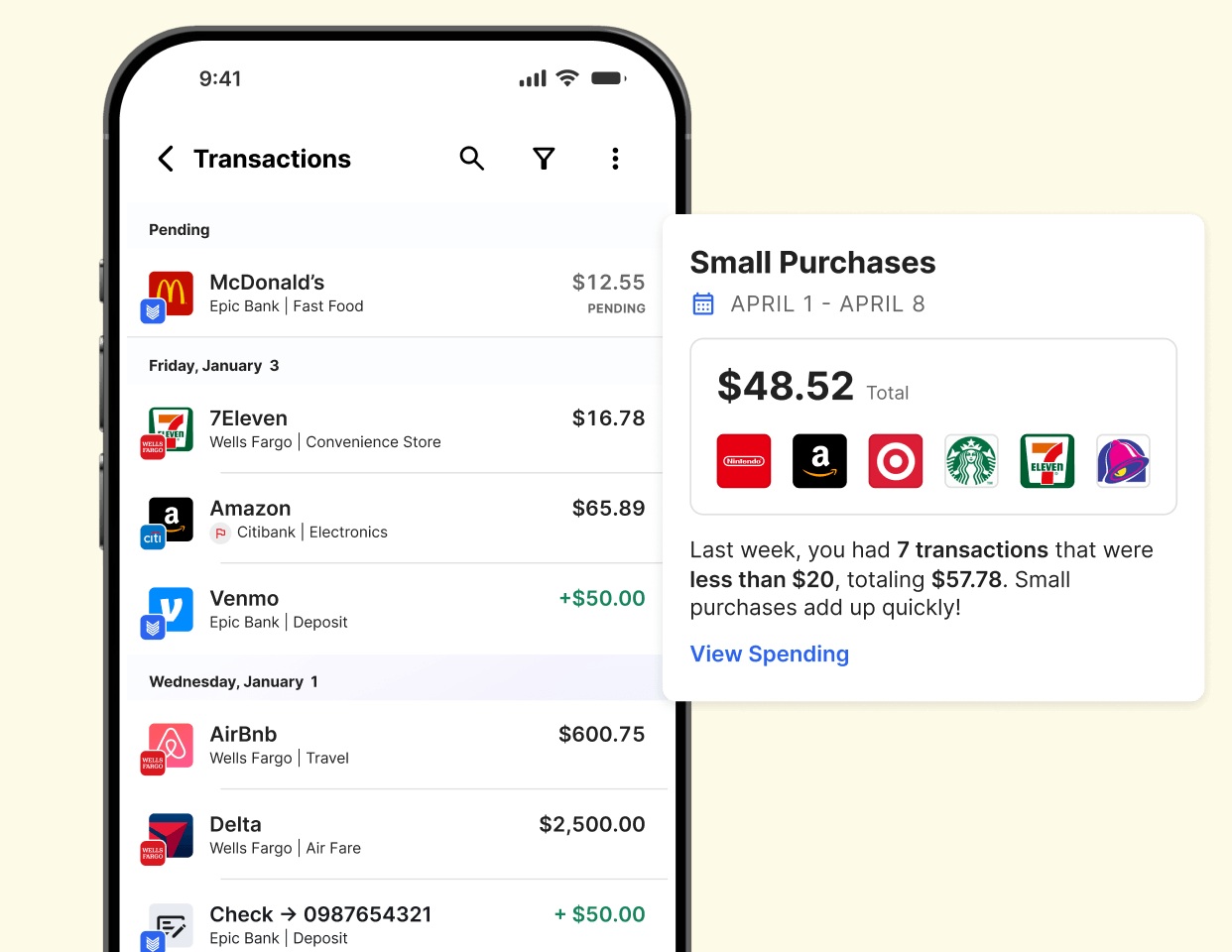
Then comes interpretation. MX’s Data Enhancement cleans and classifies descriptions, categorizes transactions, and adds metadata. Machine learning helps handle unfamiliar transactions where a human-written rule does not exist. Customer Analytics supplies dashboards and segmentation. Financial Insights, personal financial management tools, and mobile banking products bring the information back to the customer. Investment Data extends the account picture to brokerage and retirement holdings.
BECU offers a concrete example of the pieces working together. The credit union wanted more relevant member communications. It combined MX’s data with Amplero’s marketing platform, based on Salesforce Marketing Cloud, to improve email targeting. The issue was getting usable data, marketing tools, and execution to cooperate. Choosing a clever platform alone would not settle it.
“Relevancy is paramount, data is the fuel, and the platform executes on that data.”Brian Knollenberg · BECU
In MX’s published case study, BECU reported up to a 10% lift in loan applications, with near real-time tracking to adjust campaigns. The repeatable lesson is modest and useful: organize the evidence before deciding who should receive which message. Then measure the response. A better category can be the beginning of a better conversation.
Up to 10% lift in loan applications at BECU, using MX data with marketing technology. A case study result, not a platform-wide guarantee.
OneUnited Bank used MX Insights to embed personalized guidance in digital banking. Its case study reports an 18% jump in product engagement in the first month. Users viewing insights held nearly ten times the checking balances and almost four times the savings balances of those who did not. Those comparisons describe an association. They do not establish that viewing an insight caused the balance difference. People already interested in their finances may also be more likely to use the tools.
Who pays for understanding?
MX sells financial data APIs and software to institutions and businesses, using a demo-led sales process. Its place in the market overlaps with Plaid and Mastercard’s Finicity in connectivity and financial data services. Plaid also offers transaction enrichment. MX’s combination of data processing, analytics, and embedded banking experiences is the proposition to examine, rather than assuming any single capability belongs to it alone.
The financing gives a sense of the undertaking. A $100 million Series B led by Battery Ventures arrived in June 2019. In January 2021, MX announced a $300 million Series C led by TPG Growth at a $1.9 billion valuation. That is a dated financing valuation. It says little about what an institution should pay for a particular integration today.
One specific price decision is public: in May 2023, MX announced Data Access would be free for financial institutions and data providers. That offer concerned the data-sharing solution. Buying and integrating the broader platform remains a separate commercial decision.
A conversation still needs the right numbers
In June 2026, MX announced a financial AI assistant intended to live inside an institution’s digital channels. The product page describes it as in development and invites early access. Its design separates conversational answers from financial actions handled by existing institutional processes. Existing platform results should not be read as results for this assistant.
Meanwhile, a September 2026 Lumin Digital integration began rolling out API and OAuth connectivity, including controls to see and revoke access. The practical constraints remain familiar: supported accounts, reliable connections, permission, and integration work. Advice also has to earn attention. MX’s useful idea is to begin earlier than the notification or the chat window: make sure the underlying transaction says something worth understanding.