There is a photograph on a wall at Decart’s Tel Aviv office. It is a plain printout of an investor the founders call Sarah, and its significance is not flattering to either side. She had doubted that an Israeli team could train the kind of AI model they were proposing. Moshe Shalev and his co-founder, Dean Leitersdorf, left her picture where they would see it while building one. Startup offices are full of slogans. This one chose a face and a very specific objection.
The picture belongs to an origin story, but it also describes Shalev’s way of working. He seems drawn to claims that can be tested. At Decart, the test began with computing efficiency, moved into a playable AI world, and now reaches live video and software intended to make demanding models cheaper to run. The company has collected large financing rounds along the way. None of those rounds, of course, can answer the question the founders once asked each other: what would their future Wikipedia page say they actually solved?
For Shalev, the question has a personal echo. His own path would make a poor straight line on a recruitment brochure. He grew up in a Haredi family in Bnei Brak, left yeshiva at 17, worked in retail and event production, studied accounting, entered an intelligence technology unit at 23, and stayed for 13 years. In 2023, he became the co-founder and chief product officer of an AI company. The title sometimes gets blurred in retellings. The work is easier to describe: helping make research into something people can use, and an organization able to deliver it.
The long route into the room
Shalev has said that curiosity about the outside world began tugging at him as a teenager. Leaving the yeshiva did not send him directly toward software. He worked in a Bnei Brak shop and at events for the Haredi community, then spent time in Jerusalem, where accounting classes competed with work. Another account places him in a butcher shop while he studied. It is a vivid detail because it resists the polished version of a technology founder’s youth. There were shifts to finish, things to learn, and no obvious startup in view.
At 23, he enlisted through Bina Beyarok, a program created to bring ultra-Orthodox men into military technology work. By then he was married with a child. He joined Unit 8200, the Israeli military intelligence unit, and went on to serve for about 13 years in technical and managerial roles. He eventually worked closely with commander Yossi Sariel. The public record does not turn those years into a neat list of projects; what is clear is that Shalev left with experience building complex systems and organizing people around them.
He also found an outlet outside the unit. In 2017, while still serving, Shalev and fellow alumnus Dor Saban co-founded StartAch, a nonprofit that built software for Israeli charities. It is a small but revealing chapter in a career often narrated through billion-dollar valuations. Software is only useful after someone understands whose problem it is meant to solve. At StartAch, the customer was an organization with a public purpose and limited resources. At Decart, the scale is larger, but the same product question returns.
A conversation becomes a company
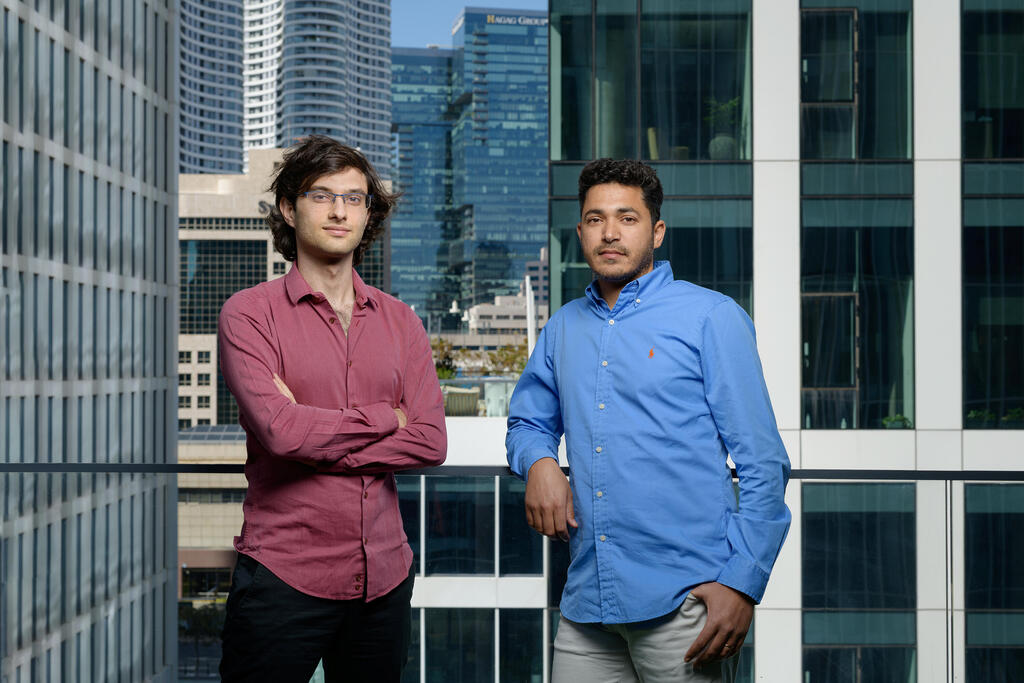
Shalev and Leitersdorf met through Unit 8200. Their partnership took shape after a hallway conversation at a base in 2021. Leitersdorf was trained in computer science and AI research; Shalev had spent years making technical efforts work inside a large institution. Each heard something in the other that was missing from many purely technical conversations. Shalev has described Leitersdorf as a researcher who also thought about product impact. He described his own contribution as making a broad technological idea operational.
“We’re both strong executors, but we dream differently.”Moshe Shalev on his partnership with Dean Leitersdorf
The distinction matters more than the familiar founder story of complementary personalities. Their first Decart business addressed the cost of AI computing. By December 2023, the company had found a multimillion-dollar customer for software that improved the use of Nvidia chips. That is the kind of early revenue young companies usually spend years seeking. Shalev nevertheless said the founders did not consider it the large problem they wanted to spend their time on. They kept looking.
Decart was registered in September 2023. A month later, reserve duty interrupted its start. Early recruiting and research took shape under those conditions, with the founders still deciding exactly what the company would become. Their test for ideas was unusually editorial: imagine the future entry on Wikipedia, then ask whether its central claim would be worth reading. That prompt did not produce a product specification. It did force them to choose a problem larger than a feature list.
The game that answered back
Oasis was Decart’s first widely visible answer. Released in 2024, it looked at a glance like a blocky video game. Beneath the surface, a model generated the view as players acted. Each movement invited a new frame. A conventional game engine follows programmed rules and assets; Oasis demonstrated the unsettling possibility of an environment continually produced by a model. The result was often rough, even strange. That made it legible. People could see that the scene was being invented in response to them.
The founders said Oasis reached one million users within three days. The metric belongs to the company’s account, and it measures attention to a demo, not lasting adoption. Still, it was evidence that people would spend time inside an interactive generated world rather than merely watch another AI clip. It gave Decart information a lab benchmark could not: how visitors behaved when the model was placed under their fingers.
The demonstration also drew attention to cost. Real-time generation is an unforgiving promise. If the model cannot produce a response before a person loses the thread of an action, the experience collapses into a loading screen. If it costs too much to run, it cannot become an ordinary product. Decart’s early optimization work therefore sat beneath the playful surface of Oasis. The company was exploring the visible experience and the invisible economics at once.
Money followed. A $21 million seed round in 2024 brought Sequoia Capital into Decart, followed shortly by a $32 million round led by Benchmark. Shalev announced the seed investment on LinkedIn with Leitersdorf. The company raised another $100 million in 2025, then announced $300 million in May 2026, led by Radical Ventures. By then, the offerings had settled into three named lines: DOS for optimization, Lucy for live visual transformation, and Oasis for interactive world models aimed in part at physical AI.
From novelty to infrastructure
Lucy makes the shift especially easy to see. The model changes video while the camera is live. Decart described Lucy 2 in January 2026 as running at 1080p and 30 frames per second, and released Lucy 2.5 in July with improved editing and visual consistency. Its uses range from entertainment to simulations. The same demand runs through them: the model has to stay responsive over time, not merely produce an attractive sample once.
Shalev’s July 2026 podcast appearance made the company’s strategic move explicit. He discussed video models and physical AI, but also the revenue from optimizing AI infrastructure. The episode description says Decart had decided to step back from consumer products and concentrate on deeper infrastructure. That is a meaningful change from the early rhetoric of building an app for a billion users. It need not make the Oasis experiment a detour. The demo showed what real-time systems could do; the infrastructure might be the durable business that lets many such systems run.
It is a peculiarity of AI that the most cinematic work may depend on the least cinematic decisions: where a model runs, how memory is handled, what a chip does between frames, and which latency a user will tolerate. Shalev’s CPO job lives among those choices. A product officer cannot simply admire a model’s output. Someone must decide whether the output arrives quickly enough, costs little enough, and answers a need that survives the first wave of curiosity.
A sale that did not happen
For a few weeks in August 2026, Decart seemed headed toward a different sort of conclusion. Reports described advanced talks for Anthropic to buy the company for roughly $6 billion to $7 billion. The deal never closed. In September, reporting said Anthropic had ended the acquisition process after due diligence. Various explanations circulated, including questions about the technology and disagreement over the company’s location. Neither company publicly confirmed a single account of why the talks stopped. The certain fact is simpler: Decart remained independent.
That distinction matters in a profile of a living founder. A proposed acquisition can make a convenient final paragraph, complete with a large number and an implied verdict. An abandoned one makes the present more interesting. Shalev and his colleagues still have to decide which parts of Decart become dependable products, which customers they serve, and how the research should be organized. The answer will be written in releases and contracts, not in a term sheet.
The wall photograph is still the more telling image. It began as a response to an investor’s doubt about whether the team could train a model. That claim could be tested, and Decart did put interactive models in public hands. The harder claim is the one Shalev posed to himself and Leitersdorf. What problem, exactly, will the future say they solved? For now, he is working in the space between a compelling demonstration and a lasting answer. It is a less tidy story than an exit, and a better one to keep watching.