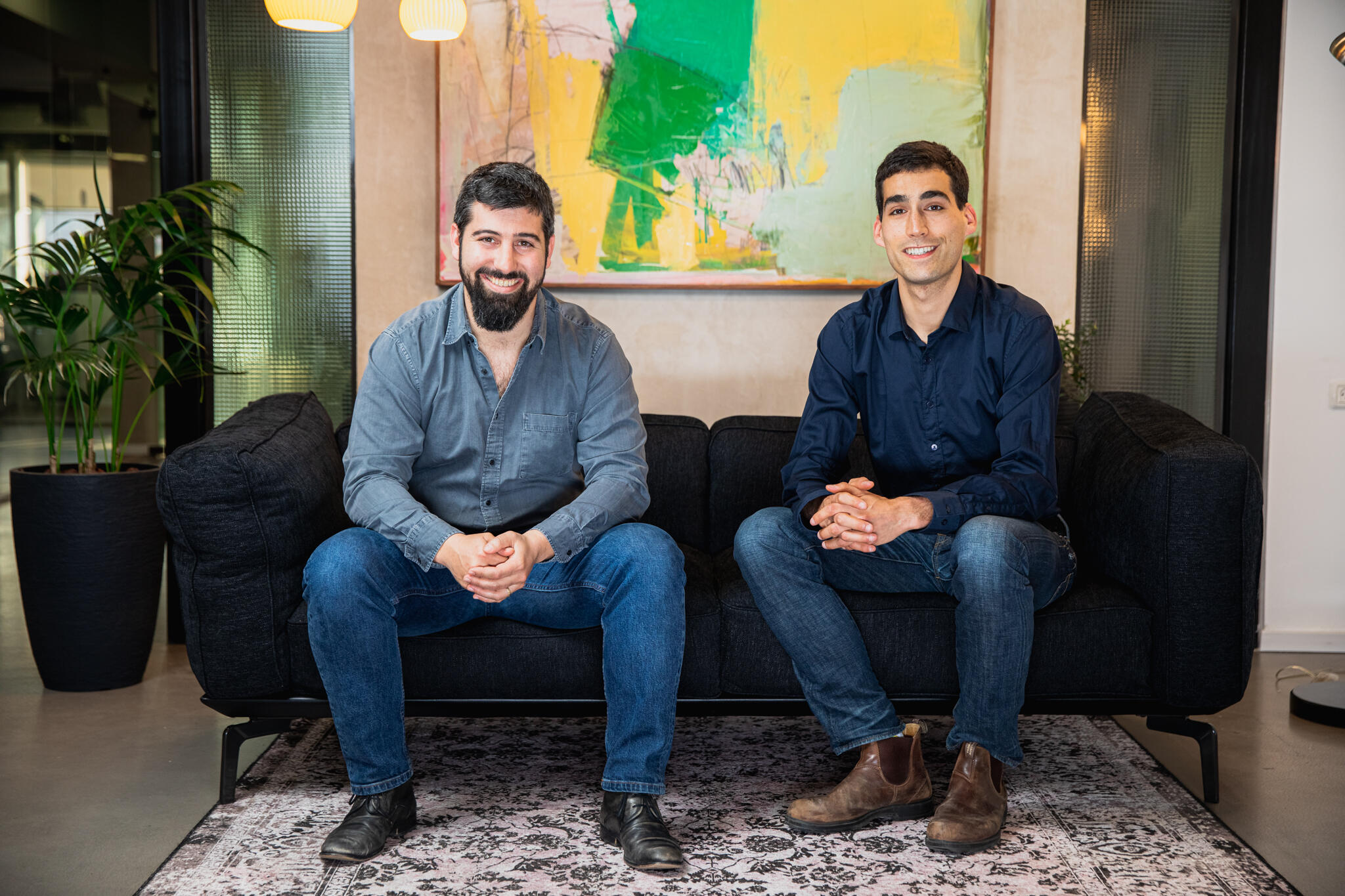
The first serious test of Tamar Bar-Ilan’s startup career looked a little like a job interview. He and Yotam Segev sat with the investors who might back them. They could describe the kind of company they wanted to build, and they could describe why they trusted each other. They could not yet describe its product. There were no customers and no finished business. For a pair of people seeking to start a cybersecurity company, this was a conspicuous amount of empty space.
The meeting made the founders themselves the first thing under examination. Could this partnership find a real problem? Could it listen when the first idea failed? Bar-Ilan later recalled that Cyberstarts investors Gili Raanan and Lior Simon wanted to understand the two men, their relationship and their reasons for doing the work. That is an unusual opening scene for a company now known for protecting corporate data. It is also an honest one. Cyera began with a team and a question.
Bar-Ilan and Segev had history before they had a pitch. They met in Israel’s Talpiot program, then worked together in Unit 8200. A third colleague from the same cohort, Yonatan Itai, later became a Cyera co-founder and leads development and operations in Israel. As young soldiers, Bar-Ilan and Segev talked about building a technology company. In 2021 they finally started one, initially working from Bar-Ilan’s living room. The room had the useful quality of making a company feel real before a market had agreed that it was.
The product that did not survive the interviews
The founders did something less theatrical than inventing in isolation: they went to talk to people. Bar-Ilan has described meeting anyone who might help them understand commercial cybersecurity, from founders to practitioners inside large organizations. They asked what occupied those people, where existing tools failed and which problems buyers would pay to solve. During the first year, travel and customer conversations consumed much of their time. The account sounds simple until one remembers that every answer can invalidate a week’s work.
Their first concept was an agent that would show how data moved among cloud servers. It had the charm of a technical demonstration. Customer interviews pushed them elsewhere. Security leaders struggled with a more basic inventory problem: knowing what sensitive information the organization held, where it lived and who could reach it. The founders turned toward discovery and classification. In large companies, data sits in cloud stores, software services, databases and shared files. A record can be copied many times and remain important even when the system containing it is otherwise well guarded.
The idea is easier to picture at kitchen scale. A household knows it owns a passport, a spare key and a stack of letters. Now imagine the contents have been duplicated into hundreds of cupboards maintained by different teams, with some doors opening automatically for software. Protecting the house becomes an inventory problem as much as a lock problem. Cyera’s early platform aimed to map that inventory and identify the risky access around it. Bar-Ilan’s engineering work sat at the center of the attempt to make that map accurate enough to be useful.
“Data context is the ultimate boundary.”Tamar Bar-Ilan, on AI agent security
There is a useful symmetry in the company’s origin. Its founders had to classify the market before they could classify their customers’ data. The discipline was the same: ask what is actually there, then decide what to do about it. A founder can love an idea into irrelevance. Bar-Ilan, who describes himself as analytical and inclined to challenge his own assumptions, says the early search required being candid about what worked and what did not.
The zero in the growth chart
The first sales story offers no smooth curve. Cyera announced a $56 million Series A in 2022. Yet money in the bank did not translate automatically into customers. An early quarter produced no sales. Segev moved to the United States to spend more time with buyers, and the team revised its approach. The customer trips that had helped define the product became part of the work of selling it. This is the point where a startup’s neat founding thesis has to survive a procurement process.
Bar-Ilan later joined Segev in New York. He recalled that on the night after his move, the two sat in a bar and set a target: $100 million in annual recurring revenue within four years. He said they reached it in less than half that time. The detail matters because it contains both a very large ambition and a scene of two colleagues trying to give it a number. No whiteboard mythology is required; a bar table did the job.
The company went on to announce a $300 million round at a $1.4 billion valuation in April 2024, then further financing as it expanded. In June 2026 it announced $600 million at a $12 billion valuation. Those figures measure investor appetite and the scale of the opportunity the company is pursuing. They do not erase the quarter with no sales, nor do they settle whether the software will keep solving the problems its customers face. Bar-Ilan’s account of the early years gives the less convenient figures a place beside the celebratory ones.
A CTO who asks about failure
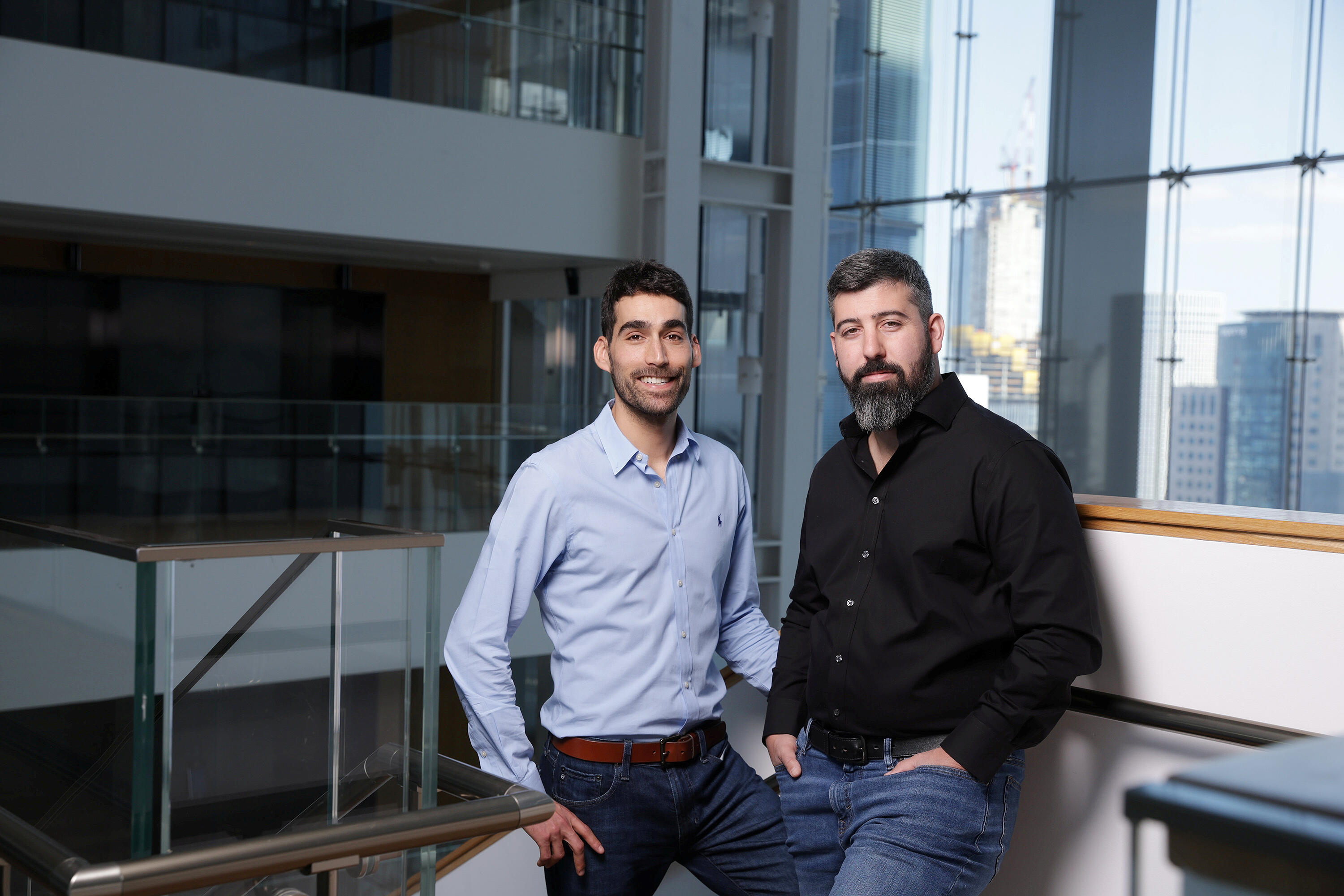
The title chief technology officer invites a tidy portrait: a person who understands the system better than anyone else in the room. Bar-Ilan gives a more interesting description of the role. When interviewing candidates, he likes to ask about both a major success and a major failure, then press into the details. He is listening for the work behind a polished summary: what the candidate actually did, what went wrong and what they learned. Curiosity and humility count more to him than a performance of certainty.
He has also named a difficulty of his own. Numbers and analysis come naturally. Marketing and sales can demand decisions whose evidence is incomplete and whose human element is impossible to reduce to a table. Bar-Ilan says he has learned from the colleagues who lead those functions and is trying to recognize when additional analysis helps, and when it is time to make a judgment. For an engineer managing a growing company, admitting the edge of one’s method is a practical skill.
There is a personal side to his appetite for learning. Bar-Ilan grew up in Haifa in a family of four brothers. He has called his brothers close friends and advisers, and named technology and football as two abiding interests. In a later interview he offered a small explanation for his first name: his parents had expected girls when he and his twin brother were born. The story is amusing in the way family stories often are, a reminder that founders carry more than business plans into their work.
What the agents can see
Cyera’s original question has acquired a new urgency as companies put artificial intelligence to work on their internal information. A human employee might open a file, copy a passage and send it to a colleague. An AI agent can search, combine and act on far more information, far faster, through chains of tools and delegated tasks. If an organization cannot identify its sensitive data or understand an agent’s access, it cannot easily tell whether an apparently helpful result came from the wrong material.
Bar-Ilan has written about this shift. In February 2026 he described the need to understand the data AI can reach and how exposure can spread across cloud and hybrid systems. When Cyera acquired Ryft that April, he emphasized that agents can shift identity according to their task, tools and delegation chain. The technical work has widened accordingly. Cyera has expanded from data discovery and classification into data loss prevention, access controls and governance for AI use. Its partnership with AWS placed its data security software inside AWS Security Hub Extended.
None of this makes the original inventory problem quaint. It makes the inventory more consequential. An agent’s request still reaches some piece of data, held in some place, under some set of permissions. Bar-Ilan’s compact phrase about data context as a boundary points back to the first interviews with security teams. Before deciding what an AI system should do, a company needs a clear account of what it can see. The technology has changed quickly; the first question has proved stubborn.
The company he still wants to build
Bar-Ilan has said he wants Cyera to become a large Israeli technology company with a lasting place in the global market. He and Segev live in the United States because being near enterprise customers helps them build it; he has also spoken about returning to Israel. The ambition has a geographic pull in both directions. New York supplies customers and capital. Israel supplies the early partnership, a major engineering base and the sense of purpose he attaches to the company.
A founder’s ambitions are easy to print and hard to audit. Bar-Ilan’s are unusually visible in the small decisions beneath them: asking buyers what hurts, discarding an elegant first idea, finding out why sales stopped, learning from colleagues whose judgment works differently from his. Segev has described him as the partner who can give a client a precise answer on the spot. Precision is a modest virtue until the client’s question concerns information scattered across an entire company.
The two men once went to investors with almost nothing to sell beyond their partnership and their willingness to find a problem. Five years on, the business is larger, the software covers more ground and AI has made the stakes of data access harder to ignore. Bar-Ilan’s central question remains almost disarmingly plain. What is there, and who - or what - can reach it? For a CTO, that is enough work for a career.