In 1993, the U.S. secretary of agriculture arrived in Clay Center, Nebraska, carrying a problem that would not tolerate the usual pace of science. A deadly E. coli O157:H7 outbreak tied to hamburgers had shaken the country. Mike Espy had visited families in Seattle, then flown to the Roman L. Hruska U.S. Meat Animal Research Center. He asked Mohammad Koohmaraie, a research physiologist with a gift for turning biology into plant-floor practice, to build a team and find answers.
The days stretched to eighteen hours. Koohmaraie gave his colleagues a blunt measure of the assignment: “If saving little kids’ lives doesn’t excite you to come to work, then you’re in the wrong business.” No elegant phrase could make the stakes any plainer. The crisis changed the direction of his laboratory, and the laboratory helped change the routines of an industry.
Yet the emergency makes sense only beside the patient work that came before it. Koohmaraie’s career has moved along three lines: the chemistry that makes meat tender, the routes by which pathogens reach it, and the instruments that measure its quality. One concerns pleasure, one safety, one price. All three ask the same practical question: can a biological mystery be turned into a reliable decision?
Before the laboratory, twelve shops
Koohmaraie’s education in meat began before it acquired a Latin vocabulary. His grandparents raised sheep, fattened them, had them slaughtered at government facilities and distributed the meat through 12 retail outlets. He started helping in seventh grade. The operation was vertically integrated long before a business-school case study might have called it that. To a boy, it was simply family work.
He earned a bachelor’s degree in animal science at Pahlavi University in Iran. In September 1978, he moved to the United States for graduate study. Reading University in England had accepted him, but he believed his personality better suited America, so he chose Texas A&I University. The decision also introduced him to Susie, his future wife. When he later described his career, he was quick to give her much of the credit.
An M.S. in meat science followed in 1980. Oregon State University awarded him a doctorate in animal science in 1984, with a focus on meat science and muscle biology. After three years of postdoctoral work connected to the federal meat research center and Michigan State University, he joined the Clay Center staff in 1987. Four years later he led its Meats Research Unit.
“Tenderness is the most important trait to consumers, and the most variable.”Mohammad Koohmaraie, USDA Agricultural Research magazine
The microscopic brake in a steak
Tenderness is easy to judge at dinner and devilish to predict beforehand. After slaughter, muscle stiffens through rigor mortis. During aging it softens, though not evenly and not always enough. Koohmaraie and his colleagues helped establish the mechanism: an enzyme called µ-calpain degrades structural muscle proteins after death. Another protein, calpastatin, restrains it.
The surprise was the brake. “The most significant part of this project,” Koohmaraie said, “was learning that it’s calpastatin - not calpain - which controls tenderness.” The distinction is wonderfully domestic. Knowing that a car has an engine is useful; knowing how firmly the brake is pressed tells you whether it will move.
The research identified a major control, not a crystal ball. Genetics, handling, diet and other environmental factors still matter.
Calpastatin activity explained about 45 percent of the variation, too little for a flawless classification system by itself. That limitation proved useful. The team explored calcium injection, aging, DNA markers and non-genetic influences such as handling and diet. They argued that beef should generally age for 14 days before sale to reduce the odds of toughness. The answer was biochemical, genetic and logistical at once. A steak occupies a plate; the problem behind it occupies a supply chain.
Then urgency walked through the door
The 1993 outbreak redirected that habit of mechanism-seeking. Koohmaraie’s group investigated where E. coli O157:H7 lived, how it moved from an animal onto meat and where processors could interrupt the journey. The work depended on cooperation among federal researchers, regulators, beef companies and industry funding groups. Food safety, like tenderness, refused to belong to one discipline.
The team developed early rapid tests for pathogens on beef, pork and poultry carcasses. It demonstrated that cattle hides were a principal source of E. coli and other pathogens entering beef processing, leading to hide interventions and more exact sanitary dressing practices. It also helped show that lymph nodes could be an important source of Salmonella in ground beef. Each finding moved the point of attention. If the source is known, the control can be placed before the damage is done.
One of the least glamorous tools was among the most useful. Traditional decontamination could require trimming away meat with a knife. Koohmaraie’s team demonstrated that steam vacuuming could remove visible contamination as a practical alternative in appropriate situations. Their data helped the Food Safety and Inspection Service approve the method. It became common because it did two unfashionable things well: it improved safety and reduced waste.
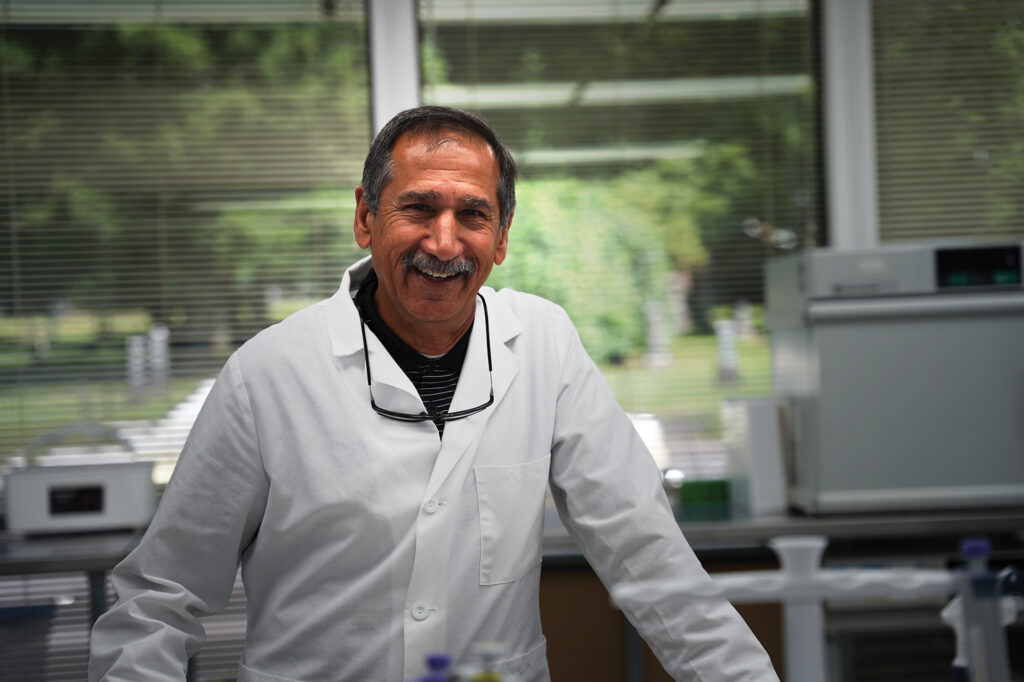
By the time Oregon State profiled him decades later, Koohmaraie could say the pathogen was still “lurking” but manageable because the industry knew how to control it. That is the peculiar victory of preventive science. Success is an event that does not happen, produced by a routine that does.
When a camera learned the carcass
Alongside enzymes and microbes, Koohmaraie pursued a third puzzle: measurement. Beef carcasses had long been judged by trained eyes and hands. His research helped develop non-invasive instruments that could estimate yield, muscle area, fat and quality from images. He also worked on online tenderness classification.
The aim was to preserve expertise while making a high-speed commercial judgment more consistent, repeatable and transparent. Large U.S. beef packers adopted instrument systems for applying USDA grading standards and determining value. A camera, properly taught, could become a stern little accountant.
A second act without a change of subject
In 2005, Koohmaraie became director of the U.S. Meat Animal Research Center. Three years later, he left federal service for IEH Laboratories & Consulting Group. After 24 years, the move might look like a clean break. He described something more continuous. USDA had given him unusual support to conduct research that affected daily life. He wanted new challenges, and IEH offered a place to continue the work he liked.
At IEH he has been identified publicly as president, and also as CEO, of the Meat Division. The title matters less than the bridge: laboratory testing, consulting and plant validation put the scientific question beside the operational one. In 2022 he spoke at the American Meat Science Association’s Reciprocal Meat Conference on approaches to reducing salmonellosis and on strengthening meat science as a discipline.
Recognition has accumulated without changing his preferred unit of measurement. Awards from USDA, the Agricultural Research Service, the American Society of Animal Science and the American Meat Science Association fill a long list. He entered the Meat Industry Hall of Fame in 2012 and received Oregon State’s Distinguished Alumni Legacy Award in 2022. A 2024 mentor recognition established support for fresh-meat research and its presentation by others.
“All along, my objective has been to make a difference.”Mohammad Koohmaraie, on his Meat Industry Hall of Fame induction
The plural in his final measure
In June 2026, the American Meat Science Association selected Koohmaraie for its R.C. Pollock Award, recognizing lasting contributions through research, teaching, service and extension. His response placed the emphasis elsewhere: “I have had the greatest honor and privilege to work side by side with many dedicated and gifted students and scientists to use our training to contribute to the betterment of society.”
The pronoun is the point. Teams found the enzyme system, traced the pathogen, validated the vacuum, taught the cameras and carried the practice into plants. Koohmaraie led many of them, but his own account keeps the cast plural.
His career began with sheep arriving from the countryside and meat leaving for a dozen family shops. It matured in a Nebraska laboratory where national urgency came knocking. Between those places lies a consistent idea: science earns its keep when someone can use it. One result may be a better steak. The more consequential one is the safeguard so routine that dinner arrives without a story at all.