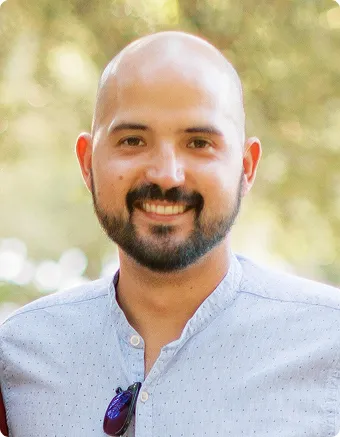
Surgeons treating Parkinson's disease have, for decades, done something that sounds medieval: they drill into the skull and push a rigid metal lead through living tissue toward a target deep in the brain. It works. It also keeps a lot of people who could benefit from ever signing up. MJ Antonini's company is built on a different idea - that the brain already has a road network, and it is full of blood.
Antonini is the co-founder and CEO of NeuroBionics, an MIT spinout developing bioelectronic fibers about as thin as a human hair. Instead of cutting through bone, the fibers are threaded through blood vessels in a procedure that looks a lot like placing a stent. The plan is to reach deep neural structures from the inside of the vasculature, leave a soft fiber in place, and run neuromodulation therapy from there. No open brain surgery.
The fibers are not simple electrodes. The platform NeuroBionics calls evStim is designed to record and stimulate electrical, chemical, and optical signals at the same time - a multifunctional interface rather than a single-purpose probe. To carry current without the bulk and MRI headaches of traditional platinum and iridium electrodes, the team builds with carbon nanotube fiber. It is cheaper, it lasts longer, and it does not fight the magnet when a patient needs a scan. Power comes from an implantable battery roughly the shape of an AirPods case, designed to run for five to ten years.
None of this appeared overnight. The technology is the product of more than a decade of work in Professor Polina Anikeeva's bioelectronics lab at MIT. Antonini and his co-founder, Nicki Driscoll, met there as postdocs around 2021. They spent roughly two years building flexible fiber devices side by side before Antonini said the thing that turns a research group into a company: he wanted to take the mature technology out of the lab and into the clinic.
"I really want to spin this out into a startup," is how he framed it. The instinct, by his own account, was to "go beyond the cool paper and create an actual product." Plenty of academics say that. Fewer leave a tenure-track trajectory to do it. Antonini and Driscoll launched NeuroBionics in the spring of 2023 while still finishing their postdocs, then went full-time in January 2024.
His path to that decision is unusually wide. Antonini came up through the Harvard-MIT Program in Health Sciences and Technology, a decades-old track that sends students through medical school at Harvard and engineering at MIT. He has called it a "niche program that they don't advertise for the wrong reasons." It produced exactly the hybrid the company needed: someone who has stood in a clinic with neurological patients and someone who can argue about fiber fabrication with the people drawing the fibers. His doctorate, earned through HST, is in Medical Engineering and Medical Physics. Three patents from his MIT years went into the company, giving the university a small stake in the outcome.
That dual fluency shows up in how he talks about the market. The endovascular approach is meant to plug into workflows that interventional neurologists and radiologists already know. The fibers go where catheters already go. The procedure rhymes with one hospitals already perform thousands of times a year. The pitch is not "learn a radical new surgery." The pitch is "use the road you already drive on."
The conditions NeuroBionics is aiming at read like the back half of a neurology textbook: Parkinson's disease, essential tremor, stroke, epilepsy, chronic pain, depression. The company is also pursuing nearer-term peripheral applications - stimulating nerves like the vagus and phrenic - partly because a shorter-duration, lower-risk use case is a faster path through the FDA. Antonini has pointed to a Class II de novo route for those peripheral cases, with the bigger central-nervous-system ambitions following behind.
Investors have noticed. The seed round opened with a first close led by Dolby Family Ventures, then grew into an oversubscribed $10 million round when Future Ventures - the firm co-founded by Steve Jurvetson - led a second close. Vanedge Capital, LionHeart Ventures, Gaingels, Opus 44, and GreyMatter Capital joined. The money is pointed at one milestone above all others: getting from successful large-animal studies into the first human being. "With this oversubscribed seed round," Antonini said, "we are well-positioned to move from successful large-animal validation to first-in-human endovascular neuromodulation."
To get there, the company has been doing the unglamorous work that separates a demo from a device. It signed an offtake agreement with DexMat for Galvorn carbon nanotube fiber, locking in the raw material at the center of the platform. It set up shop in the Boston-Cambridge-Somerville biotech corridor, joined Greentown Labs, and came up through MIT's delta V accelerator. The team has grown to around sixteen people spanning engineering, quality, operations, and business development - including a head of innovation with dozens of issued medical-device patents and a business lead who spent two decades at Medtronic. These are not hires you make to write another paper.
What makes Antonini interesting is not that he wants to fix the brain. Everyone in this field says that. It is the specific bet underneath the company: that the least invasive way into the nervous system is not a better drill but a better wire, soft enough to ride the bloodstream and smart enough to listen and talk at once. If he is right, the most dramatic part of the procedure will be how undramatic it looks.
He is careful about timelines, as anyone shipping an implant should be. Reaching patients at scale is a late-decade proposition, not a next-quarter one. The regulatory road for anything that lives inside a human for years is long by design. But the near-term plan is concrete: design freeze, biocompatibility testing, manufacturing, an FDA pre-submission for guidance, and an early feasibility study in humans within a 12 to 24 month window.
For now, MJ Antonini spends his days somewhere between a fab and a clinic - the two places his training prepared him to translate between. The fiber on the bench is thinner than the hair on your head. The ambition attached to it is not.