The short version
- The work: help rice farmers drain and re-flood paddies at measured intervals, reducing the conditions that produce methane.
- The proof: combine field teams, gas samples, satellite radar, AI and physical models into a rice-specific audit trail.
- The customer: carbon-credit buyers, food companies, NGOs and public climate programs - with farmers sharing in credit revenue.
- The scale: more than 100,000 farmers claimed by 2026, $12.5 million in equity funding and a one-million-credit agreement with Google.
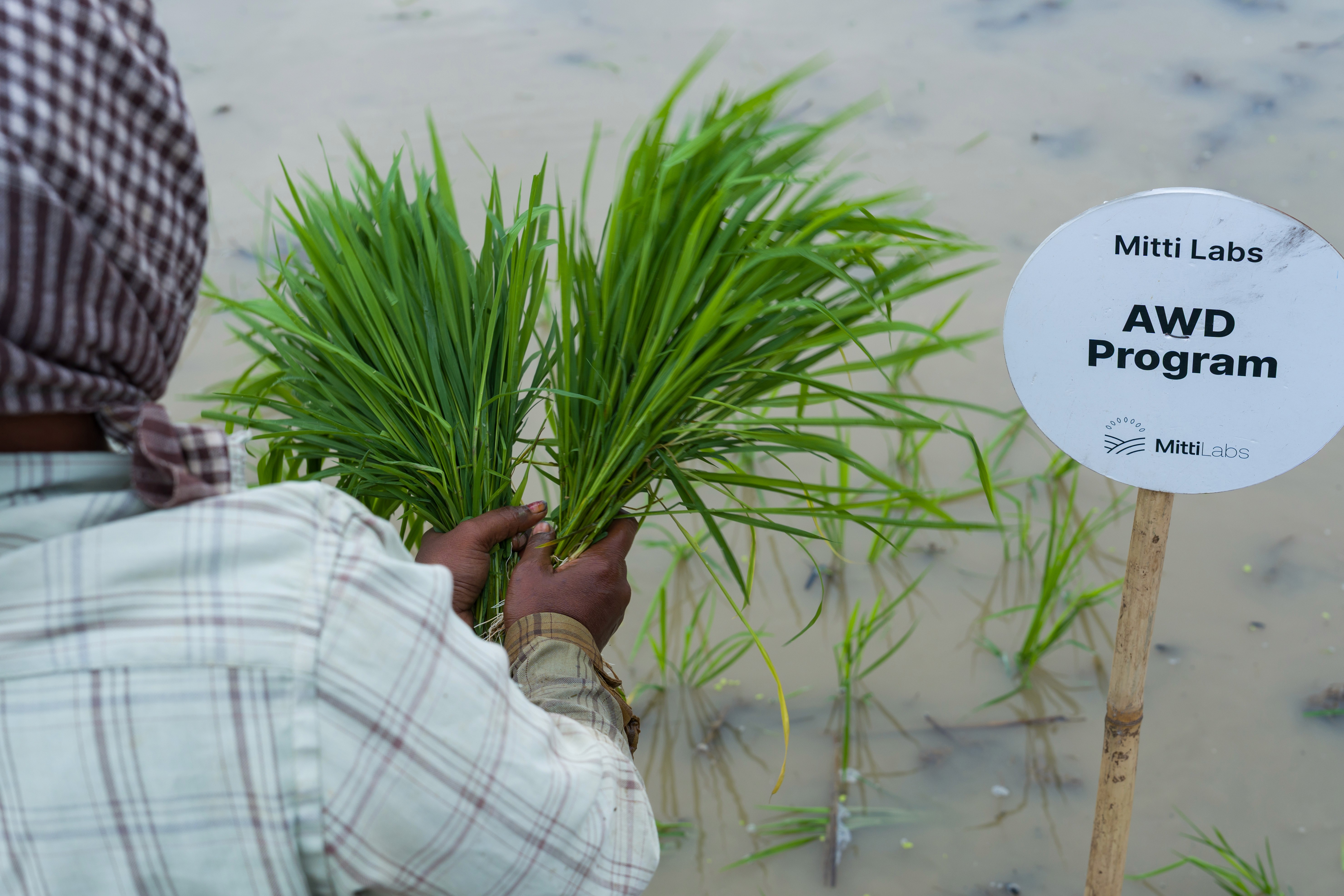
The most revealing object in the Mitti Labs system is not a satellite. It is a short length of perforated pipe. A farmer pushes roughly half of it into the mud of a rice paddy and watches the water inside. When the level drops far enough, the field is ready to be irrigated again. The object is cheap, legible and decidedly unmagical. It is also the hinge between a farmer's judgment and a carbon buyer's spreadsheet.
Rice is normally grown under standing water. Flooding helps suppress weeds, but it also starves the soil of oxygen. Microbes respond by producing methane. Alternate Wetting and Drying, or AWD, interrupts that process: drain the plot during safe windows, let air back into the soil, then flood it again. Researchers and extension programs have promoted the technique for years. The science was not waiting for a startup.
The operating system was. Small rice plots are scattered, farmers do not all control irrigation in the same way, and a corporate buyer cannot inspect a hundred thousand fields. A practice can be sound and still fail as a product if nobody can show who followed it, when they followed it or what changed afterward. Mitti Labs was formed in 2023 to close that awkward gap.
The old measurement broke before the farming did
Devdut Dalal knew food and agricultural supply chains. Xavier Laguarta Soler had worked on net-zero strategy and carbon finance. They met at Harvard Business School, found rice oddly neglected in the climate conversation and teamed up with Nathan Torbick, a remote-sensing scientist with more than two decades in the field. Torbick became the technical co-founder.
Their first problem was not convincing agronomists that a paddy could be drained. It was replacing averages. Traditional carbon accounting can apply a broad emissions factor to an acre of rice and sample a small share of farms. But a field in Punjab does not behave exactly like one in Telangana. Soil, weather, variety, seeding and irrigation all matter. Farmer logbooks are useful until a program contains tens of thousands of farmers. Then the first thing to fail is the unit of observation.
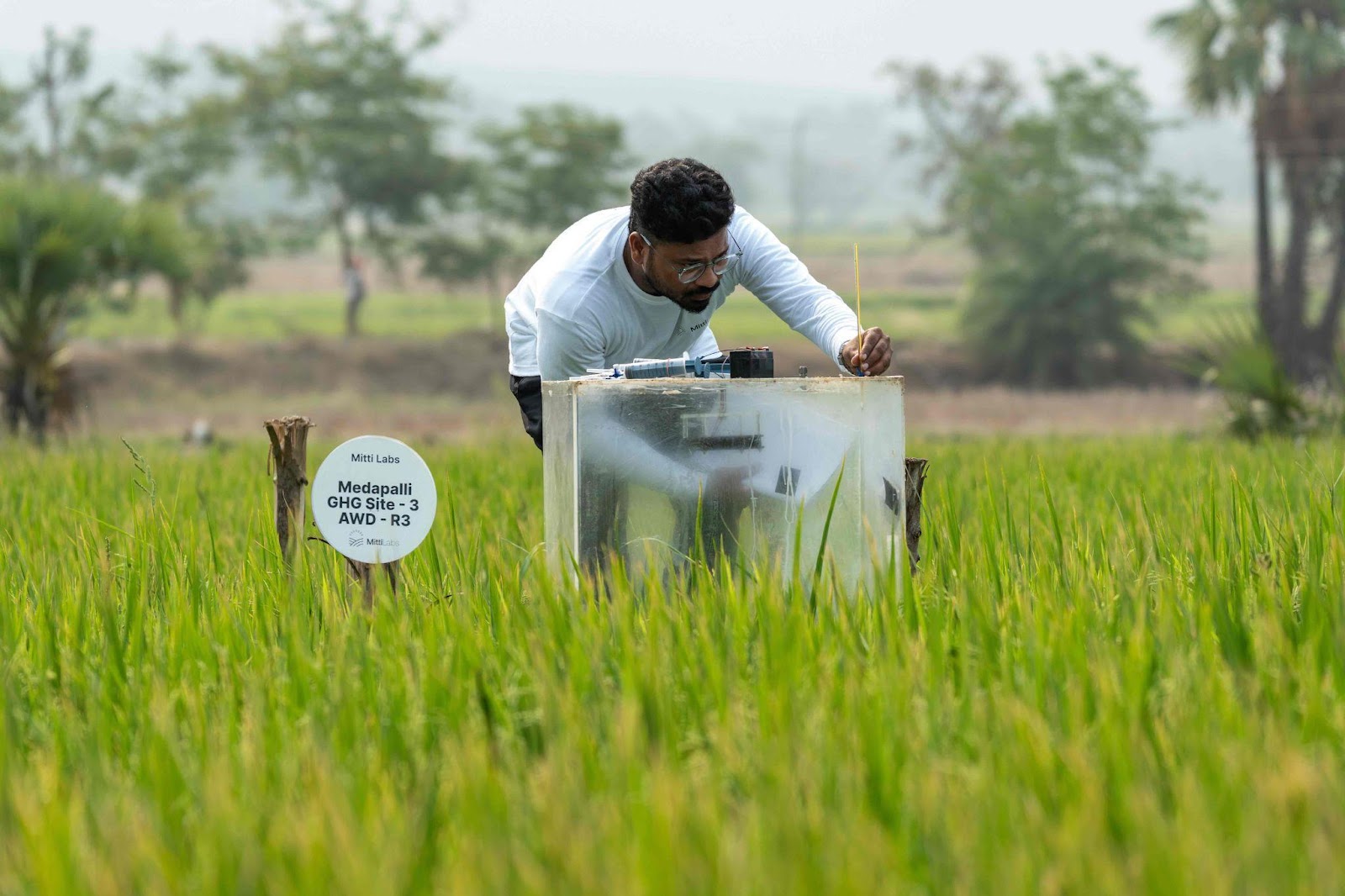
Mitti's answer is layered on purpose. Synthetic Aperture Radar can see through monsoon clouds and at night. Optical and thermal imagery add other clues. Field teams record boundaries, sowing dates and irrigation events. Acrylic chambers capture gas; laboratories analyze it with gas chromatography. Biogeochemical models connect those measurements to fields that were not directly sampled. The company calls the result a digital twin, but the important word is not “digital.” It is “field.”
“Each farm is different and we help optimize every field for yield and sustainability to benefit the grower.”Nathan Torbick, co-founder and CTO
One field test, two useful numbers
The cleanest early result came from Warangal during the 2024 monsoon season. Across three supersites and 30 carbon-project sites, Mitti compared AWD with continuously flooded fields. The AWD plots used an average 3.14 megaliters of water per acre, against 4.96 megaliters for conventional irrigation - a reported reduction of 37%. Grain yield was not lower: about 2.5 metric tons per acre for AWD and 2.4 for continuous flooding.
Warangal / Kharif 2024
Company field-study figures. Water savings varied by site; a separate Haryana comparison reported 19%.
This is the bargain in miniature: use materially less water without asking a farmer to surrender the crop. Methane reduction supplies the saleable climate outcome; lower pumping, fewer irrigation rounds and the prospect of credit revenue supply the reason to participate. In the ACCESS Development Services program, 18,000 farmers joined across five districts in Andhra Pradesh. Mitti reported 20 billion liters of water saved and an 8% yield improvement across that partnership.
The product got larger than a carbon credit
An investor later described the first version of Mitti as a carbon company. That was accurate but incomplete. The business now has two connected engines. It develops projects and sells rice-methane credits to corporate buyers. It also sells monitoring and agricultural intelligence to food companies, NGOs and climate programs that need to know whether a practice changed.
That second engine matters because carbon markets are fussy, deservedly so. A buyer is paying for the difference between what happened and what would have happened. Mitti's defense is a more demanding chain of evidence: direct regional measurements, more than 95% claimed detection accuracy for its digital monitoring, a full geospatial trail and independent validation. Sylvera awarded the project an A rating in July 2026. ICAR-IARI is helping build better region-specific emissions datasets. NASA backed cropland-burning measurement work with a $826,818 Phase II award.
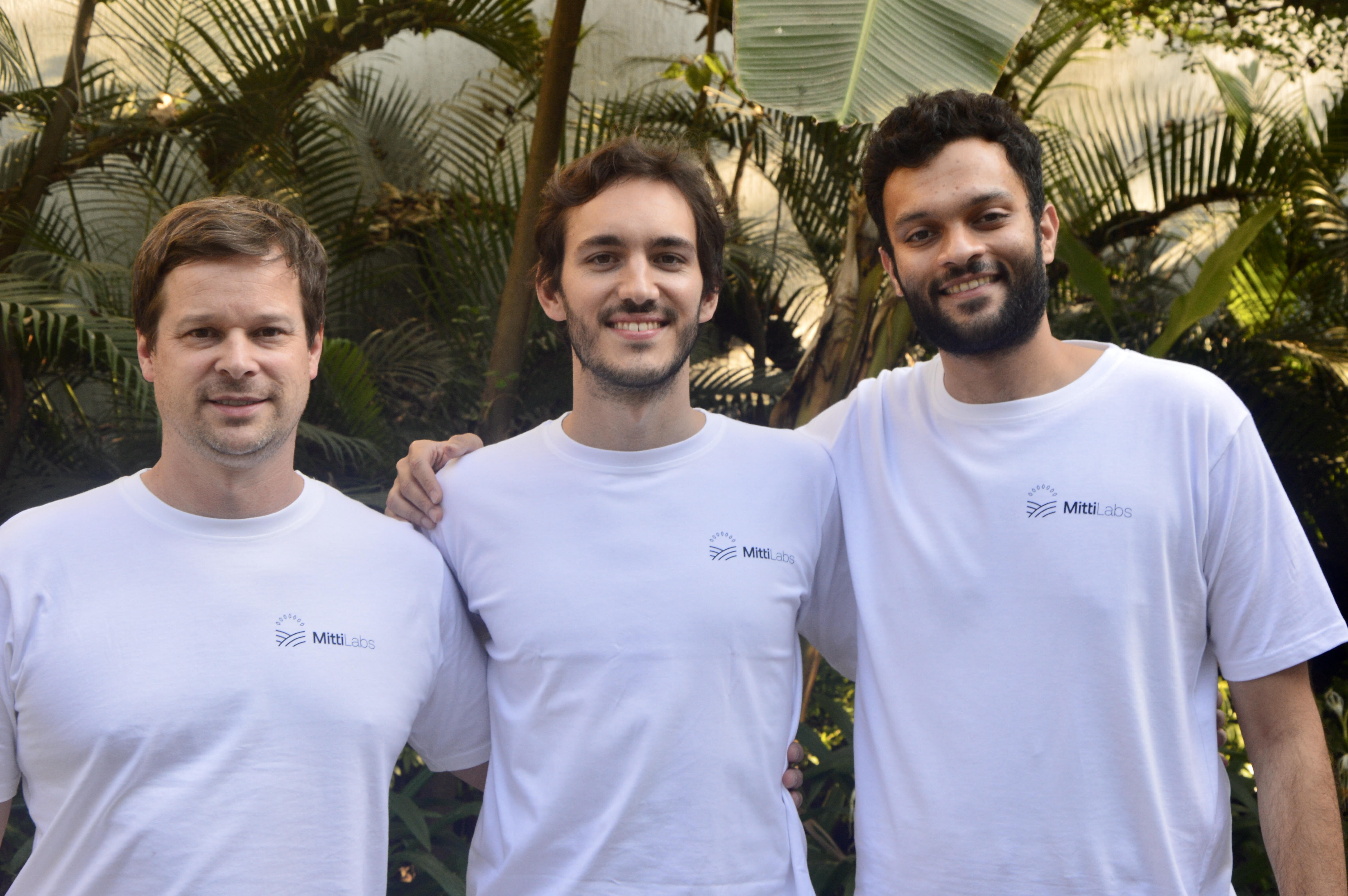
The capital bill is now visible. Lightspeed India, Voyager Ventures, Overview and angels supplied a $3 million seed round in 2024. Aramco Ventures led a $9.5 million Series A in August 2026, joined by Lightspeed, Godrej Industries Group, Cisco Foundation, Francis Family Fund and Volta Circle. Total disclosed equity funding: $12.5 million. One month later, Google agreed to purchase one million credits over four years through 2030. The contract price was not disclosed.
At peak delivery, the Google program is expected to cover roughly 100,000 hectares in Karnataka, Andhra Pradesh and Telangana. That is a long way from the 850 farmers Mitti worked with in 2023-24. It is also why the company cannot behave like a software vendor with a clever dashboard. ACCESS, Syngenta Foundation, Dr. Reddy's Foundation, Ebro Foods and local organizations are part of the distribution system. Trust arrives through people who already know the villages.
The field has veto power
AWD is not a universal switch. A farmer needs enough control over irrigation to decide when water returns. The plot must drain evenly. Drying too far, or at the wrong stage, can threaten yield. Weeds may become harder to manage. A carbon program also needs a credible baseline, long-lived monitoring, local partners and a buyer willing to pay enough to cover training, verification and farmer incentives.
Those conditions explain Mitti's shape. Remove field support and adoption becomes a brochure. Remove ground measurements and satellite inference becomes a confident guess. Remove the buyer and the farmer is being asked to carry transition risk for a public benefit. The company works only if all four parties - farmer, field partner, verifier and buyer - keep their part of the bargain.
What another operator can copy
- Start with a visible tool. The farmer needs a decision aid, not a climate abstraction.
- Pair scale with ground truth. Remote sensing gets cheaper when field data makes it believable.
- Sell the proof twice. The same measurement layer can support credits and operational intelligence.
- Use local distribution. Community organizations are infrastructure, not a line item called outreach.
- Protect the farmer's downside. A climate practice travels faster when yield is measured as carefully as emissions.
Mitti means soil in Hindi. “Labs” was added, the founders say, to preserve a habit of tinkering. The name captures the company's useful tension. It is muddy and analytical, local and orbital, an agronomy program dressed as a data business and a data business that cannot function without agronomy. Somewhere between the pipe and the satellite, a flooded field becomes legible. That legibility is what Mitti sells.