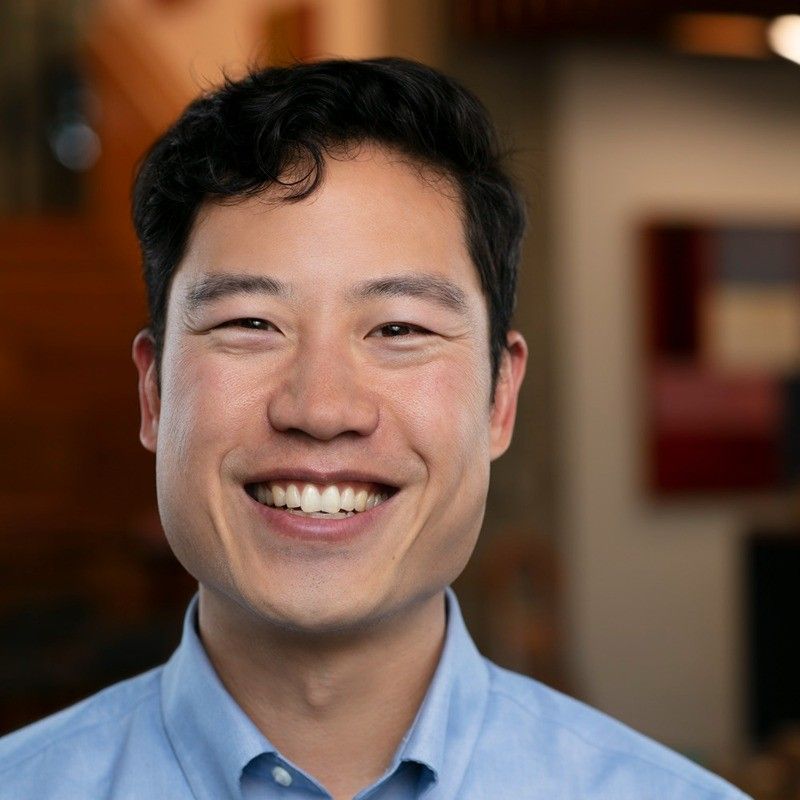
The quiet economist of carbon removal
Kurt Tsuo writes carbon credits for a living, which means he spends most of his days convincing serious people to pay for something they will never hold. As Chief Business Officer of Varaha, the Gurugram-based carbon removal company, his product is a tonne of carbon dioxide kept out of the sky - measured, verified, and traced back to a smallholder farmer in Asia or Africa who agreed to do something different with their land.
That last part is the whole point. Varaha does not build its case on a clever machine. Its co-founder and chief executive, Madhur Jain, has said plainly that the company's advantage lies less in proprietary technology and more in execution. Tsuo runs the side of the business where execution gets tested: pricing the credits, closing the buyers, and proving the math holds up. The customer list now includes Google and Microsoft. In February 2026 the company closed a $45 million Series B led by WestBridge Capital, with existing backers RTP Global and Omnivore returning.
Carbon removal, Tsuo has written, is weird. He is not wrong, and he is not pretending otherwise. The honesty is the tell. A lot of people in this corner of climate talk in absolutes and moonshots. Tsuo talks in pathways and unit economics. He has spent two decades learning that the gap between a good idea and a working business is paved with logistics, trust, and someone's actual field.
Carbon removal is weird.
- Kurt Tsuo, on the business he chose anywayBefore climate was a headline
Tsuo's resume reads like a climate thesis written backwards. He came to carbon through agriculture, and to agriculture through finance, and to finance through the unglamorous question of how poor farmers get paid. He started at The Boston Consulting Group, then moved to the Gates Foundation, where he dug into how digital technologies could lift the productivity of smallholder farmers. That was years before "regenerative agriculture" became a pitch-deck phrase.
From there he went operational. At Farmer's Business Network and then as Chief Operating Officer of ProducePay, he learned the texture of the work - the part that does not fit on a slide. ProducePay finances growers of fresh fruits and vegetables across Latin America, a business most banks avoid. Tsuo understood why. "Banks just don't understand agriculture very well, particularly in Latin America," he has said. The problem compounds with perishability: a grower's entire season can rot on a loading dock.
His answer was not more collateral but better understanding - what he described as combining "digital analytics and boots on the ground." Weather reports, market data, and field agronomists, used to judge whether a farmer can actually succeed in a given season rather than what they can pledge against a loan. It is a philosophy that travels well. It is, more or less, the same instinct he now applies to carbon: trust the people doing the growing, then build the rigor around them.
Banks just don't understand agriculture very well, particularly in Latin America.
- Kurt Tsuo, on the gap he kept trying to closeThe grocery store test
Ask Tsuo about impact and he does not reach for a metric. He reaches for a memory. Walking through a Los Angeles grocery store, he would regularly spot Latin American produce that ProducePay had helped finance. The fruit on the shelf was the receipt. It is a small, human way to keep score, and it says something about how he thinks: development work is real when you can put it in your cart.
He is also disarmingly candid about how strange the work can be. The diversity of farms still surprises him - he has worked with growers raising everything from tomatoes to shrimp. He talks about "maximizing local context and knowledge" not as a corporate value but as the only thing that works when you are operating in Bangladesh one week and Mexico the next. The lesson repeats across his career: there is no global farmer. There is only this farmer, in this place, with this soil and this season.
From buried carbon blocks to living soil
In 2023, Tsuo helped start something more elemental. As co-founder and COO of Graphyte, he worked on a method the company calls Carbon Casting - taking readily available biomass from timber and farming operations, drying and compressing it into dense carbon blocks, wrapping them in an environmentally safe barrier, and burying them underground with careful monitoring. The premise is almost stubborn in its simplicity: plants already pull carbon from the air, so stop them from rotting and releasing it again.
Graphyte sat at the engineered end of carbon removal. Varaha sits at the natural one - regenerative agriculture, agroforestry, biochar, and enhanced rock weathering, largely with smallholder farmers and industrial partners in emerging markets. Tsuo has now stood on both sides of the same coin. He frames the agricultural climate problem as two questions that rarely get separated cleanly: how farms can cut emissions while staying productive, which he calls abatement, and how they can pull more carbon into their soils, which he calls sequestration. Most companies pick one. He keeps building businesses on both.
Farmers of fresh fruits and vegetables face tremendous challenges because what they grow and sell is highly perishable.
- Kurt Tsuo, on why this work is hardThe advisor's bench
Tsuo collects hard problems the way other people collect board seats. Alongside Varaha, he advises a clutch of deep-tech climate startups: Elysia Creative Biology, ChemFinity Technologies, and RedNOx, the last of which is building a novel N2O sensor to cut the fertilizer emissions that quietly make agriculture one of the planet's most stubborn polluters. The pattern is consistent. He gravitates to the unsexy, measurement-heavy, infrastructure-of-trust problems - the ones that decide whether a carbon market is real or just a story people tell.
It helps to know where the analytical confidence comes from. Tsuo holds two Harvard degrees: a bachelor's in economics and philosophy, and an MPA/ID from the Kennedy School, a program known for its quantitative weight in economics, statistics, and industrial policy. The philosophy half is easy to miss and hard to ignore. He is, in the end, a man asking a moral question with a spreadsheet: who gets paid when the world finally decides that carbon has a price?
What he is actually building
The thing Tsuo is chasing is not a technology. It is credibility. The carbon-removal industry has a trust problem, and the loudest version of it is the worry that credits are vapor - paper promises sold to corporations to launder a conscience. Varaha's bet, and Tsuo's job, is to make high-integrity credits that survive scrutiny because they are rooted in measurable change on real land, owned by real people who get a real share. The Varaha Industrial Partners Program, launched alongside the Series B, extends that logic to industrial operators with biomass and gasification capacity who can plug into the company's digital measurement systems.
That is the unglamorous future he is betting on: carbon removal that is boring, rigorous, and rooted in someone's field. Not a miracle. A market that works for the people standing in the dirt. After seven years in agriculture and two stints as a startup COO, Tsuo has earned the right to be unimpressed by hype. What he seems to want, instead, is for the receipt to be real - the way the produce in that Los Angeles grocery store was real. You should be able to point at the tonne of carbon and trace it home.