A billboard in a video game is an odd place to begin a career in payments. But Mitch Davis noticed the advertising scenery. Playing Grand Theft Auto: Vice City, he saw a fictional clothing advertisement for “the Goop.” A game could invent an entire city, complete with shops and roads. It could also invent somewhere for a real advertiser to spend money. The joke shop sign contained a business proposition.
His idea was to use an internet connection to change the advertisements after a game had shipped. A campaign could arrive, run and disappear while the game itself stayed on the shelf. The scenery would acquire a commercial life of its own. Davis called the company Massive, a name that left little room for modest expectations.
The subsequent career takes in Microsoft, movie tie-ins, virtual goods, international payments and digital gold. The companies change; a recurring commercial question remains visible. How does an audience become a business? Sometimes someone buys space in front of the audience. Sometimes a member of that audience buys something. Davis has worked on the machinery for both.
Before the billboard, the encyclopedia
Davis graduated from the University of New South Wales with a Bachelor of Commerce in 1984. His degree was in marketing. The early business record includes agency work at APM Consulting and Maine Marketing, along with ventures in software and online media. He co-founded Digital Rights, later acquired by Liberty One, and was involved in Parcelhouse, a middleware developer whose customers included FedEx, DHL and IKEA.
Then came Encyclopaedia Britannica. As a senior vice president, Davis ran its internet and CD-ROM business units, with responsibility spanning advertising sales, editorial, production, product development and international operations. The encyclopedia had become a collection of products and distribution channels, each requiring its own business decisions.
This makes the later move into games less surprising. Britannica put him on the buying side of advertising, responsible for attracting customers to digital products. At Massive, he would sell advertisers access to another kind of digital audience. He had crossed the desk. The work still required someone to explain why a screen deserved a slice of a marketing budget.
A billboard that could keep time
By May 2004, Massive was demonstrating its system at the Electronic Entertainment Expo in Los Angeles. Atari and Ubisoft had signed agreements to make selected games available for the technology. Davis identified a practical limitation of conventional product placement: development could take 12 to 24 months. An advertisement committed that far ahead had to survive a very long wait for its audience.
Changing the creative after release gave advertisers a different timetable. A film campaign could follow a theatrical opening rather than the development calendar of a game. The game supplied the setting, and the network supplied the changing message. Massive was selling a way to coordinate those two clocks.
The placement also had to belong in the world around it. A roadside billboard in a driving game is familiar scenery. An advertisement in the wrong setting becomes an unwelcome guest with excellent distribution. Publishers retained approval rights, and Massive worked with them from development through launch. The commercial agreement depended on the creative relationship.
In 2005, Davis put his own history plainly: “I have been an entrepreneur since the age of 24.” He was talking about an operating business, with advertisers already using the network. The proposition had moved beyond an interesting demonstration. Brands could buy a campaign across games, while publishers could earn revenue from space inside them.
Microsoft buys the scenery
On May 4, 2006, Microsoft announced it was acquiring Massive. The intended starting points were Xbox Live and MSN Games, with other online environments under consideration. The examples were pleasingly ordinary: soft-drink cans, pizza boxes, posters, billboards and television screens. Digital advertising had found plenty of household surfaces to occupy.
Microsoft did not disclose the financial terms. The disclosed ambition was broader distribution, alongside standards intended to protect the experience of playing. An ad had to make sense within a game. Even in a virtual world, the landlord had rules.
Later in 2006, Electronic Arts agreed to work with Massive and another advertising network, IGA Worldwide. Need for Speed: Carbon was the first announced EA title for Massive. Davis was building relationships across publishers, rather than relying on a single game to carry the proposition. A racing game could become one address in a larger media buy.
He left Massive in January 2007. His departure statement contained a compact explanation: “Pursuing entrepreneurial start-ups has been my passion.” Selling a business to Microsoft had not supplied a permanent job description. Another company was already a plausible next destination.
Microsoft announces the Massive acquisition.
Financial terms undisclosed.
Hollywood proved a harder customer
One destination was Brash Entertainment, launched in 2007 to publish games based on entertainment properties. Davis became its co-founder, chairman and CEO. The premise put recognizable films and other licensed material at the centre of the publishing plan. In a March 2008 interview, he talked about strong intellectual property, development time and the ambition to make good games.
The releases included Alvin and the Chipmunks, Jumper: Griffin’s Story and Space Chimps. The company closed in November 2008. Its brief existence belongs in the same career as the Microsoft acquisition. One business had made advertising work inside other people’s games; another had undertaken the risk of bringing licensed games to market.
The distinction matters when reading a founder’s career. A recognizable franchise gives a project an audience to pursue. It still leaves a game to build and sell. Brash brought Davis closer to the product risk borne by the publishers Massive had served. The outcome supplies a necessary interruption to any account consisting only of acquisitions.
“Pursuing entrepreneurial start-ups has been my passion.”
Mitch Davis / January 2007
The game becomes a checkout
Live Gamer, founded in 2007, addressed another part of the gaming economy: commerce in digital goods. Davis and co-founder Andrew Schneider worked on a business that helped game companies monetize their audiences. The company’s remit eventually extended across payments and advertising, two different ways for a publisher to earn from participation.
In 2011, Live Gamer bought gamerDNA Media and BrandPort. The latter offered a mechanism through which players could watch advertising to earn virtual items. A player could contribute attention rather than money. For publishers, that made the audience beyond paying customers commercially relevant too.
This was familiar ground for Davis, although the transaction had changed. At Massive, a brand bought access to the game world. In the expanding Live Gamer business, the mechanics could also connect a player’s engagement to an item inside it. Advertising and virtual goods shared the same commercial plumbing.
The company sold its microtransaction platform in 2014, with Autodesk identified as the buyer of Live Gamer Elements. The remaining business concentrated on payments. On June 2, 2015, Live Gamer relaunched as Emergent Payments. The new name announced a broader customer base: digital businesses selling into international markets, beyond the original gaming specialization.
A global customer pays locally
The obstacle was concrete. A merchant might have a product a customer wanted and still fail to take that customer’s money. International credit cards were only part of the picture. Local payment preferences, integration, taxes and operating requirements complicated the journey between interest and a completed purchase.
At relaunch, Emergent’s Pay+ platform advertised support for more than 200 payment methods across 180 territories. Those were the company’s 2015 coverage figures. The service brought different payment routes behind one integration and a merchant agreement, offering businesses a way to expand without assembling every connection themselves.
Davis also assembled people who knew those connections. In August 2015, Emergent added finance executive Joseph Podulka, business development director Rob Freedman and merchant solutions executive Pawan Chawla. Their backgrounds included PayPal, Worldpay and Visa. In November, Davis announced that Rossini Zumwalt had joined as senior vice president of payments.
By February 2016, he was announcing that Emergent was live and transacting in India. It was an operational milestone stated in operational language. A country had become somewhere the business could accept money. For a company promising merchants access to customers, that was the work behind the promise.
Gold, then another payments company
In January 2018, Emergent Payments announced that it had become part of Emergent Technology Holdings. Davis was identified as the parent company’s chief commercial officer. The announcement described local payment services in more than 60 high-growth markets. That later scope should be read in its own terms, alongside the earlier platform coverage figures.
Emergent Technology was also pursuing Responsible Gold and G-Coin. In a 2018 interview, Davis described tokens representing ownership of physical gold, with the metal traced through its supply chain. The ambition connected a familiar asset with digital transfers and payments. His stated goal was to make gold more liquid, an aspiration rather than a result to assume.
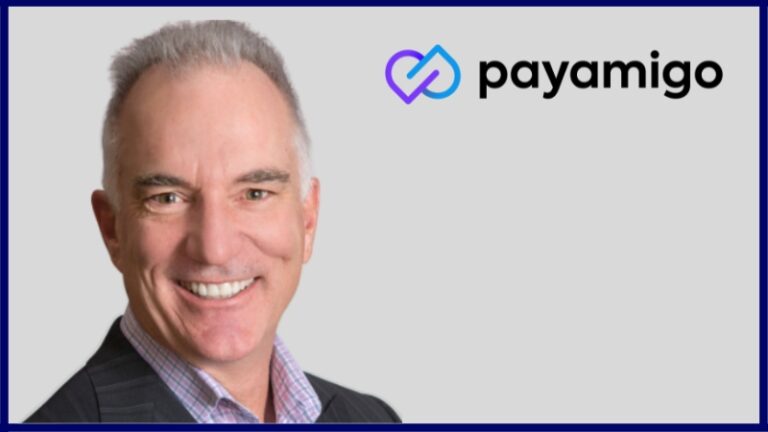
By 2022, Davis was appearing at Advertising Week as a Frequency Fund partner, on a session about gamers and attention. In October 2023, he appeared on Leaders in Payments as PayAmigo’s co-founder and chief revenue officer. PayAmigo’s leadership page lists him as CRO, alongside CEO Frank Mastrangelo and COO Abhishek Banerjee.
The names now describe payments, but the thread still runs back to the game. A billboard becomes a campaign. A virtual item becomes a purchase. A local payment method makes an international customer reachable. Across those changes, Davis keeps returning to the point where an entertaining or useful digital experience has to support a business. There is usually more to that moment than the button marked “pay.”