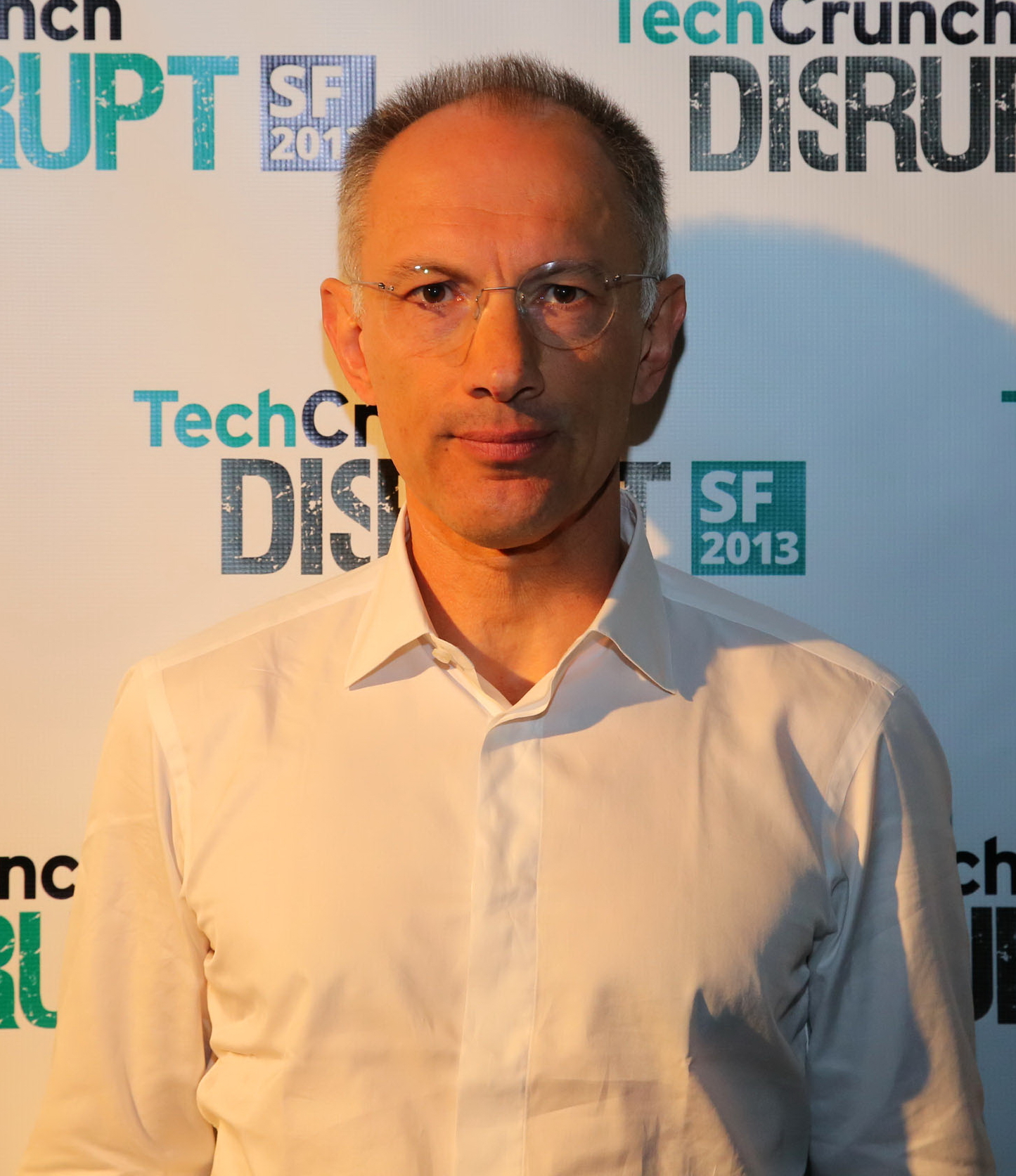
He gave Yahoo's founders exactly 24 hours to accept a million dollars. Not because he was cruel. Because, as he later put it, "I felt a need to deliver them from the agony of indecision." That is Michael Moritz in one sentence: a man who spent nearly four decades converting other people's uncertainty into history.
The story starts in Cardiff, 1954. His parents - Ludwig and Doris, both Jewish refugees who fled Nazi Germany separately before the war - built a quiet, bookish life in Wales. His father became a Classics professor. His mother survived. The family made it. Michael left for Oxford to study history, then crossed the Atlantic on a Thouron Scholarship to earn an MBA at Wharton. He was, by any measure, not cut out for Silicon Valley.
Which is probably why he understood it better than anyone.
The Journalist Who Asked the Wrong Questions
In 1982, Moritz was Time magazine's San Francisco bureau chief - a job that put him in the room when the editors decided to give their Person of the Year award to a machine instead of a person. The computer. Steve Jobs was furious. Moritz was, in his words, "equally distraught" by editorial changes to his reporting. But Jobs, ever calculating, saw something in the young journalist: someone who could write the real story of Apple.
Jobs hired Moritz to document the Macintosh's development. Moritz delivered a book - The Little Kingdom: The Private Story of Apple Computer (1984) - that Apple historian Andy Hertzfeld would later call "one of the best books about Apple Computer ever written." Jobs's verdict was different. The book included interviews with his ex-girlfriend Chrisann Brennan about their daughter Lisa. Jobs severed all contact, threatened to fire anyone who spoke to Moritz, and never looked back. The book sold anyway.
I have never been involved in an investment that became a very successful business, without fearing earlier that the business was going to fail.
- Michael MoritzMoritz left Time. He tried to get into venture capital and was rejected by four firms. Don Valentine at Sequoia Capital took the meeting anyway, and in 1986 hired a Welsh journalist with no technical background, no startup experience, and no Silicon Valley pedigree. It was the most unlikely hire in venture capital history - and the most consequential.
The Yahoo Ultimatum and the Google Bet
Moritz's first great deal came in 1995. Jerry Yang and David Filo had built a directory of the web out of a Stanford trailer. Sequoia offered them $1 million for 25% of the company. Moritz gave them 24 hours to decide. They took the money. Yahoo went public the following year. The $1 million investment preceded a company that briefly touched a $125 billion market cap.
Then came 1999. The dot-com boom was maxing out, and most analysts were already calling the search wars settled. AltaVista. Excite. Ask Jeeves. Lycos. The race was over. Two Stanford PhD students named Larry Page and Sergey Brin had built something cleaner, faster, smarter. Sequoia wrote a $12.5 million check at a $100 million valuation. Moritz sat on the board. Google went public in 2004 at a $23 billion valuation. The math is straightforward. The courage was not.
"The only thing we really understood with great clarity," Moritz said of that Google bet, "was that the need for search on the Internet was only going to go in one direction."
The same clarity showed up again and again. PayPal. YouTube - acquired by Google for $1.65 billion in 2006. Zappos. Skyscanner. LinkedIn. Stripe, when fintech money was going to incumbents. Klarna, years before buy-now-pay-later became a category. The pattern: get in before the category exists, find founders who cannot imagine doing anything else, write the check while everyone else is still arguing about whether the market is real.
The Cancer He Kept Quiet
In 2006, the same year Forbes named him #1 on the Midas List for the first time, Moritz was diagnosed with a rare, incurable blood cancer. He told almost nobody. He kept investing. In 2007, he topped the Midas List again. In 2012 he stepped back from Sequoia's day-to-day management - elevated to chairman - but continued working. He backed companies for another eleven years. The diagnosis is now nearly two decades old.
What to make of a man who gets the hardest news of his life and decides to keep going, quietly, without turning it into a narrative? Perhaps the journalist in him knows that some stories are better told by what they leave out.
It's all too easy to identify the things that might go wrong with an investment. It's far more difficult to identify what might be possible.
- Michael MoritzThe Outsider Who Always Belonged
There is a thread running through everything Moritz has done: the productive advantage of not quite fitting in. A Welshman in California. A journalist among engineers. A historian backing technologists. A man whose parents fled one country applying for citizenship in the country they fled from. In March 2026, Moritz told the BBC that "Britain is an uncomfortable place for Jews today" - and announced he was applying for a German passport. The son and grandson of Nazi refugees, completing a circle that nobody could have predicted.
That same restless intelligence shows up in his giving. His £75 million donation to Oxford University in 2012 - then the largest undergraduate gift in European history - came with no building named after him. His $20 million to the ACLU in 2018 was the largest donation the organization had ever received. His Crankstart Foundation paid for the Booker Prize for six years. In 2025, Crankstart committed £150 million to the National Gallery London. These are not the donations of a man buying legacy. They are the investments of someone who genuinely believes the next great idea is hiding in places that money usually overlooks.
Books, Boots, and Sir Alex
In 2015, Moritz co-authored Leading: Learning from Life and My Years at Manchester United with Sir Alex Ferguson - one of the most celebrated sports managers in history and a man whose obsessive intensity Moritz recognized immediately. He is a lifelong Manchester United supporter. He also deliberately refuses to invest in the club: "Too dangerous to mix passion with business." The line between stories worth telling and investments worth making has always been clear to him.
In 2026, he published Ausländer: One Family's Story of Escape and Exile - a memoir built from documents his mother left behind when she died in 2019 at 94. His father had died in 2003. The book reconstructs how two people, born in the same country, fled separately from the same catastrophe and found each other in Wales. It is the most personal thing Moritz has ever written, and possibly the most important.
He also co-founded the San Francisco Standard in 2021 - a local digital news publication for the city he has called home for decades. The journalist never left. He just changed the currency.
Since our wealth - like all fortunes - rests so heavily on the intelligence, work and contributions of others, it seems only right that we voluntarily give most of it to causes that help improve the lives of people we do not know.
- Michael Moritz, Giving Pledge StatementWhat He Looks For
Moritz on founders: "If a really distinctive individual is paired with a novel, interesting idea that lights up a market that doesn't seem to exist, then customers will follow." He is not looking for the obvious bet. He is looking for the person who cannot stop, paired with the idea that does not have a name yet.
He is famously bullish on naivete. "There is so much value to being naive," he has said. The founders who don't know a market is impossible are the ones who build it anyway. That is not a cliche. That is a career thesis backed by Google, Yahoo, PayPal, Stripe, and two consecutive #1 rankings on the Forbes Midas List.
He missed Netflix, when it was still mailing DVDs. He backed Airbnb in 2008 - during the financial crisis, when strangers sleeping in each other's homes sounded like the world's worst idea - without imagining it would become a global hospitality platform. He keeps that admission close. The humility is load-bearing.
At 71, he runs Sequoia Heritage, the $15 billion wealth management fund he co-founded in 2010. He writes. He gives. He is applying for a German passport. The man who turned journalism into a superpower is still, in every meaningful sense, in the business of finding the story before it has been told.