Mike Balkin had already spent two years on Horizon Technology Finance’s board when the company handed him a different seat. On June 5, 2025, he became chief executive. The investor who had spent decades considering what smaller companies might become would now lead a business that helped finance the journey. There was a rather practical condition attached: the loans would need to be repaid.
He had not been looking for another job. The people at Horizon and the opportunity ahead persuaded him. That makes the appointment more interesting than a routine exchange of executive nameplates. Balkin brought a long career in small-company investing to a venture lender, with all the possibilities and obligations that combination implies.
The story reaches back to Northwestern, passes through banking and real estate, and spends years among the smaller companies of the public markets. It includes partners, advisory roles and a Chicago nonprofit. By 2026, it also includes a merger, a new lending partnership and a quarter that demonstrates why growth is a demanding promise.
Before the balance sheets, a tennis court
Northwestern’s men’s tennis record book places Michael P. Balkin among its letter winners for 1978–1981. It is a compact entry: a name and four seasons. Alongside his Bachelor of Arts degree, it gives his university years a dimension that executive biographies tend to leave out. Before the investment committees, there was a place on a college team.
A tennis record cannot explain an investment career. It does, however, offer a pleasing companion to his later declaration, “I want to win.” The competitive language has a documented setting outside finance. There is no need to invent a decisive match, an early revelation or a coach’s prophetic advice. Four seasons will do.
His early professional life included roles at First Chicago and Bankers Trust. He also co-founded Cityview Associates, a real estate firm specializing in transactions intended to add value to property. The sequence already contains several ways of looking at a business: from inside a bank, through a venture of his own, and eventually as an investor choosing where to place other people’s capital.
Those are different responsibilities. A founder must get a business working. A portfolio manager must decide whether it belongs beside the other investments. A lender must consider the terms on which money can leave and return. Balkin’s career has moved among these positions, making the change at Horizon part of a longer pattern.
Small companies, long partnerships
In 1999, Balkin and his partners Karl Brewer and Mark Fuller started the William Blair Small Cap Growth Fund. The partnership is a useful anchor for the years that follow. Small public companies would remain a recurring subject in his work, even as his job descriptions expanded.
The word “small” can do these businesses a disservice. It describes their place in the market, while leaving the work ahead entirely open. For an investor, that means deciding which ambitions deserve money and which prices make sense. The company’s potential and the terms of the investment must fit together. Admiration alone is a remarkably expensive research method.
At William Blair, Balkin became a partner and co-manager of the fund. His career there comprised a combined 30 years. Between 2005 and 2008, he was a partner and chief investment officer at Magnetar Investment Management, a subsidiary of Magnetar Capital. By 2010, he was again a William Blair partner and portfolio manager, a role he held through December 2020.
His work also brought him into teaching and public discussion. Northwestern’s Kellogg School lists him among Asset Management Practicum speakers discussing equity analysis. In May 2018, he appeared on CNBC to discuss the outlook for small-cap stocks. These are glimpses of the same professional subject from different rooms: the fund, the classroom and the television interview.
In 2021, he served as CEO of Foresight Acquisition Corp. He began advising Wasson Enterprise that year, and later became a principal of the Rail-Splitter Micro Cap Rebound Fund. The settings changed, but the interest in smaller businesses continued. Advisory work added another position at the table, alongside managing money and leading an organization.
A board member inherits the decisions
Balkin joined Horizon’s board in June 2023. Two years later, the company’s succession plan called for Robert D. Pomeroy Jr. to retire as CEO and Gerald A. Michaud to retire as president. Balkin would succeed Pomeroy, who initially remained chairman. By May 2026, Balkin held both the CEO and chairman roles.
The distinction between serving on a board and running the company matters here. Directors oversee the business and consider its direction. The chief executive must organize the work that makes that direction real. Joining the board gave Balkin a period inside Horizon’s governance before he took responsibility for the operating agenda.
Horizon finances companies through secured loans. Its investment objective combines income from debt with potential appreciation from warrants received in connection with lending. A warrant provides a right to purchase shares under specified terms. It gives a lender a possible interest in the borrower’s future success, alongside the debt obligation.
That structure gives Balkin’s equity background a place in the new job. The business needs companies capable of growing, while the financing must hold together on its own terms. Selecting an appealing company is one decision. Deciding how much to lend, and on what conditions, requires another set of judgments.
“We will continue to focus on diversification, mitigation of risk and portfolio growth”
Mike Balkin, on becoming CEO, May 2025
His appointment message put those three priorities together. Diversification spreads exposure. Risk mitigation addresses what can go wrong. Portfolio growth increases the business being managed. They can complement one another, but they are not interchangeable achievements. Adding loans does not, by itself, establish that the portfolio has become better.
More capital, more choices
On April 14, 2026, Horizon completed its merger with Monroe Capital Corporation, with Horizon surviving. The combined company had approximately $471.7 million in net assets on a pro forma basis immediately after closing. The transaction brought approximately $141.1 million in cash, intended for repayment of some existing borrowing and new investments.
For Balkin, the significance is practical. Available capital expands what a lending business can consider. It also creates the task of deploying that money well. A merger supplies a date on the calendar and a new balance sheet. The decisions that follow supply the results.
Another change had arrived a month earlier. Horizon and CR Financial Holdings, the holding company for Roth Capital Partners, announced a joint venture with initial capital commitments totaling $100 million. Its intended borrowers were small and micro-cap public companies, primarily in the United States. Horizon brought lending experience; Roth brought public-market relationships.
This places the expansion in territory familiar from Balkin’s investment career. The financing instrument has changed, but the public-company universe has a recognizable outline. At launch, he described a focus on growth financing in the $5 million to $25 million range, with the ability to increase transaction size when appropriate.
In September, RoHo provided a concrete example: a $20 million senior credit facility for NeoVolta, a battery energy storage company. The initial $20 million was funded at closing, with the ability to increase the facility to $30 million by mutual agreement. NeoVolta was developing a manufacturing facility in Georgia with its joint venture partner.
For a reader following Balkin’s strategy, the transaction puts a borrower and an amount beside the expansion plan. The distinction between the funded amount and the possible larger facility is worth keeping. Finance has enough large numbers without asking one loan to wear two sizes at once.
A scoreboard with awkward numbers
Horizon’s second-quarter 2026 results show both the activity and the difficulty of this period. At June 30, its total investment portfolio stood at $676.7 million. During the quarter, it funded nine loans totaling $72.7 million. Its committed backlog reached $228 million.
There was also a setback. Net asset value per share was $6.23, compared with $6.98 at the end of March. Balkin described adverse developments at one portfolio company, including its prospects for raising equity, that contributed materially to unrealized losses. The portfolio could grow while its value per share came under pressure.
These figures make the job more legible. New lending measures activity. Backlog describes commitments ahead. Net asset value reflects the value attributed to the portfolio after liabilities. Reading them together is more useful than selecting the number that makes the neatest headline.
Balkin’s plans therefore face a test with several parts: finding borrowers, structuring loans, managing existing exposures and protecting shareholder value. His long acquaintance with smaller companies is relevant experience. Each new financing still needs its own judgment. Experience travels; certainty, regrettably, declines the invitation.
Chicago, with a different kind of return
Outside the investment career, Balkin’s Chicago connections include Good Sports, which supplies equipment, footwear and apparel to help children participate in sports. At the organization’s 2022 Chicago Legends Gala, he spoke about his involvement and its work in the city. The evening brought together 250 guests after a two-year hiatus.
Good Sports’ 2024 annual report listed him as a director and chairman of its Chicago advisory board. That gives the tennis entry another companion, decades later: a former college player helping an organization concerned with access to sport. The connection is tangible without requiring a grand theory about what motivates him.
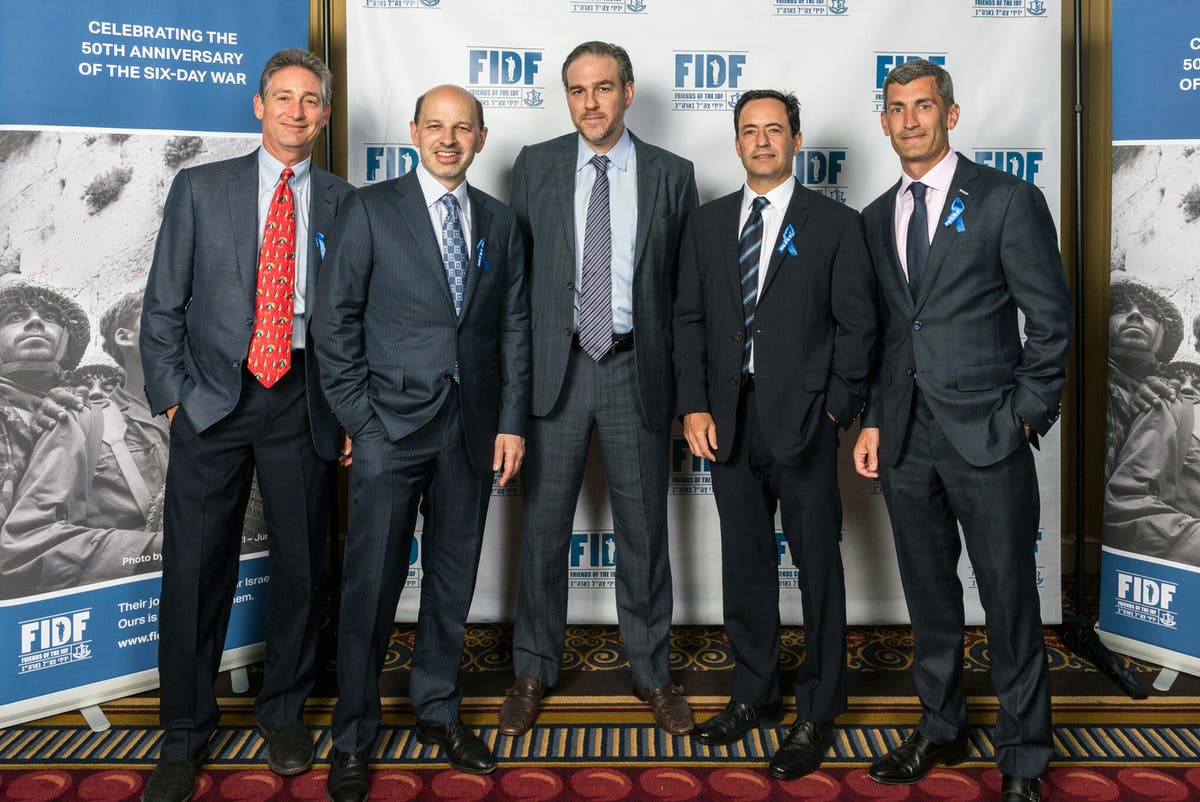
His community appearances extend beyond that nonprofit. In June 2017, he was an annual dinner committee member at the FIDF Central Region event in Chicago, photographed with fellow committee members and the evening’s speaker, Bret Stephens. The group photograph records another part of a working life built around organizations and people.
That is where this portrait settles: a Chicago investor with a long history among smaller businesses, a college sports entry, recurring partners and a new operating responsibility. Horizon has more capital and a wider set of lending opportunities. Balkin’s next chapter will be written in the choices he makes with them, and in the numbers those choices eventually produce.