The website was supposed to be ready. It wasn’t. Michele Romanow and her partners were launching Buytopia at a trade show, with deals to sell and a contractor who had missed the deadline. Their solution was almost impudently simple: put up a picture of the proposed website, add a working PayPal button, and see whether anyone would buy. The early deals brought in $10,000. A customer, it turned out, could forgive an unfinished website more readily than an unfinished opportunity.
That episode is a useful entrance into Romanow’s career. From a distance, the résumé looks neatly assembled: Queen’s University, Groupon, Dragons’ Den, Clearco. Up close, it contains a café, a failed luxury-food venture, a corporate job and several experiments that never became famous. She has repeatedly moved between making businesses and judging them. The experience has given her a particular interest in what happens when a promising idea encounters the cost of getting started.
An education with a coffee machine
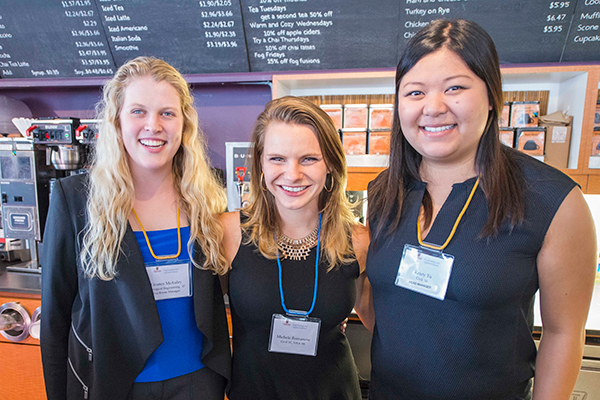
Born in Calgary, Romanow studied civil engineering at Queen’s in Kingston. She completed her engineering degree in 2007 and an MBA the following year. Bridges might have offered a more conventional use for the qualification. Instead, a student café became her first working business. The Tea Room was conceived around zero consumer waste, giving an environmental ambition the everyday obligations of a place that had to open, serve customers and pay its way.
The café gave her a chance to use engineering habits outside a classroom: work through approvals, find capital and turn a proposal into something other people could actually use. It also put her among future collaborators. Anatoliy Melnichuk, whom she met during her degree, and Ryan Marien became business partners. The relationships outlasted the individual ventures. An education can supply methods and credentials; occasionally it also supplies the people willing to drive east with you and try an unlikely business.
The wrong year to sell fish eggs
The unlikely business was caviar. Romanow and her partners identified demand from chefs who struggled to obtain it. Their response involved business plan competitions, prize money and a pilot venture in New Brunswick. They travelled there in Marien’s Toyota Camry. It is a pleasingly modest vehicle for an expedition into one of the more ostentatious corners of the food trade.
Evandale Caviar required boats, fishermen and work with the product itself. This was entrepreneurship with very little distance between the plan and the fish. Early customer interest suggested the opportunity was real. Then the 2008 financial crisis weakened demand for luxury goods, and export restrictions complicated access to important markets. A carefully researched opening had encountered circumstances that the founders could neither sell around nor wish away.
The reversal matters because Romanow’s later advice can sound breezy when detached from it. Start now. Try the idea. Learn as you go. Those instructions came from someone who had watched a plausible business falter. She took a corporate strategy job at Sears Canada, where she worked on growth and retail improvement. Her engineering training still offered a way to analyze problems. The entrepreneurial ambition survived, though its next expression would be cheaper than caviar.
- Campus caféLearn to operate
- CaviarMeet market risk
- CouponsTest digital demand
- CapitalQuestion the terms
The customer could still click Buy
At Sears, Romanow encountered the group-buying model. Online services could introduce customers to merchants through discounted offers, without requiring either party to invent an entirely new shopping habit. She reunited with her partners to try it. Buytopia emerged around the end of 2010 and beginning of 2011. Its makeshift launch supplied a practical answer to a familiar founder’s dilemma: how much needs to work before you can learn whether anyone cares?
The business subsequently signed national brands, including Sears, Staples and Cirque du Soleil. It also participated in the consolidation of a crowded daily-deals market. The founders were doing the less photogenic work behind the offer: selling to merchants, managing customers, building technology and watching competitors. The launch could be improvised once. Operating the company required a more durable arrangement.
SnapSaves moved the same attention to consumer friction into grocery coupons. Shoppers photographed receipts to claim cashback, rather than remembering to clip and carry paper coupons. Brands gained a digital route to customers and purchase information. Buytopia helped finance the new venture. Groupon acquired SnapSaves in 2014, and Romanow went on to work at the company until March 2016. The transaction connected a Canadian experiment to an established American platform.
There is a pattern in these businesses without a grand plan connecting every dot. A café needed a workable operating model. Caviar needed a market that could still afford it. A deals site needed buyers before its website was polished. A coupon app needed a simpler customer action. Romanow kept moving toward the point where an idea had to earn a response.
An investor learns to question the deal
Television added a new kind of response. Romanow appeared on the online Next Gen Den before joining season 10 of CBC’s Dragons’ Den in 2015. She was 30 and the youngest Dragon the programme had appointed. The public saw an investor in a chair; the chair had been preceded by years of asking other people to take her businesses seriously.
She learned television as another working environment, watching recordings to understand pacing, interruptions and what survived an edit. A panel of business leaders is an unusual place to practice taking turns. When fellow Dragon Jim Treliving addressed her as “Sweetie,” she answered, “Don’t call me Sweetie.” The exchange supplied its own compact introduction. She could respect experience without accepting every form in which it spoke.
“Don’t call me Sweetie.”
Michele Romanow, Dragons’ Den
In a 2018 interview, she said she had never particularly aspired to television. Her investment interests, meanwhile, extended past the performance of a pitch. A broadcast can compress a proposal into a few lively minutes. Due diligence and the eventual founder-investor relationship run on a longer clock. Her involvement with businesses such as Endy and truLOCAL has continued to feature in her public reflections on investing.
The show also exposed a recurring financing problem. Founders were prepared to give away ownership to pay for online advertising. Ads could help sell the next batch of products, but the ownership they surrendered would remain surrendered. Romanow began asking whether a repeatable expense needed that particular kind of capital. Clearbanc, co-founded in 2015 with Andrew D’Souza and other partners, grew around an alternative.
Raise money in exchange for an ownership stake.
Repay funding and an agreed fee from business revenue.
The numbers got bigger. So did the obligations.
The original approach offered capital without taking an equity stake, using a company’s digital performance to help evaluate it. For an online merchant, sales and advertising accounts could provide evidence that a conversation or introduction might fail to convey. The aspiration was to make financing depend more on the business itself and less on the founder’s access to the right room.
In April 2021, Clearbanc became Clearco. The company announced US$100 million in equity funding and US$250 million in debt, at a valuation of almost US$2 billion. Those are different quantities: investment in the financing company, borrowing capacity, and a negotiated valuation. They are easy to collapse into a single dazzling number. Keeping them separate makes the ambition easier to understand.
Clearco’s April 2021 financing announcement
The new name expressed a wish to support founders beyond the initial transfer of money. Clearco was adding tools and relationships intended to help businesses grow. D’Souza described the work of raising the company’s own capital as lengthy and demanding. There was a neat irony in needing conventional investors to build an alternative for other founders. The irony did not remove the need.
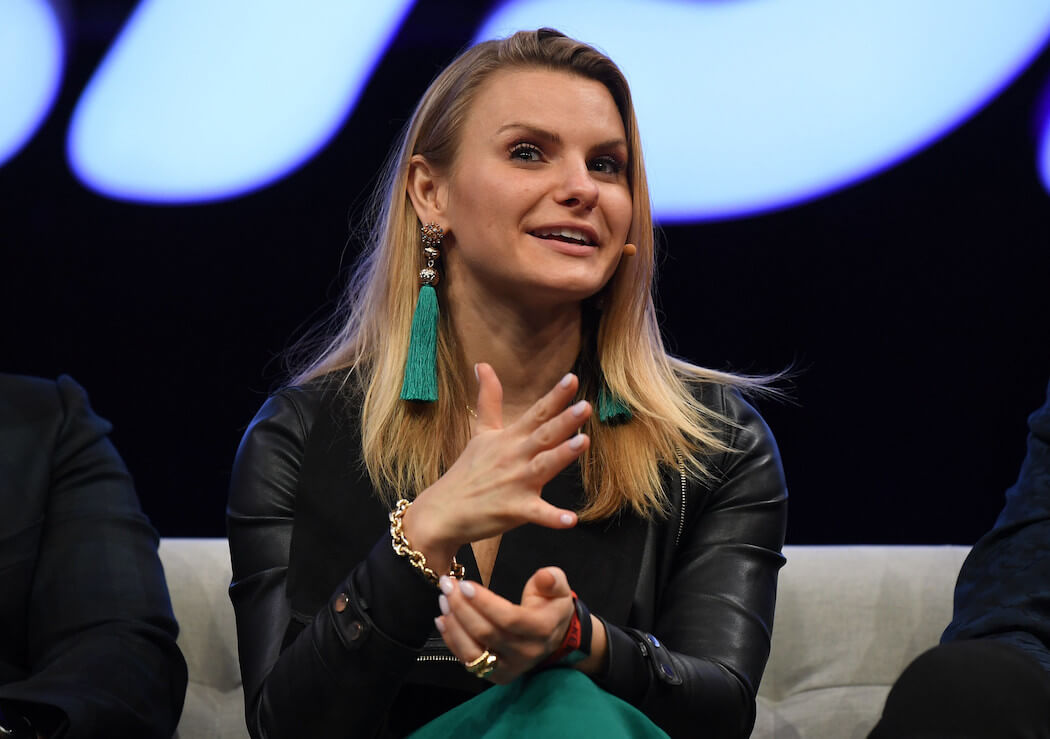
Romanow became CEO in February 2022, succeeding D’Souza. The company then faced a harsher operating environment and cut staff. In January 2023, Andrew Curtis took over as chief executive as further layoffs were announced. The focus was profitability and cash flow discipline. Expansion had given way to a very different set of immediate obligations.
Romanow moved to executive chairman rather than leaving the company entirely. Her responsibilities included external relations and fundraising. That distinction gives the career a less tidy, more accurate shape. She remained a founder involved in the business while another executive took responsibility for running it. A company can require different leadership as its needs change, even when the founding idea retains its appeal.
A different chair, the same unfinished question
Her work now spans investing, television and boards. Vail Resorts’ 2025 proxy statement lists her as a partner at Athena North since February 2024, alongside the Clearco executive chairman role. She has also hosted The Revisionaries, a podcast about entrepreneurs and the changes behind their businesses. The interest is consistent with a career in which the second attempt often explains more than the original pitch.
Her personality comes through in smaller details. She has described herself as an extrovert and an active, hands-on operator. Her public advice emphasizes moving from planning to execution. Yet she has also discussed the difficulty of making personal involvement work at a growing company. The person who can handle every task in a young business eventually has to create room for other people to handle them.
The café and the financing company sit far apart in scale. Both began with someone looking at an existing arrangement and asking whether it could work differently. Romanow’s record includes exits, setbacks and a CEO handover. It makes starting over look less like an interruption to a career and more like work that belongs inside it. The next customer, founder or business problem still gets a vote.
Keep following the conversation
Profiles, interviews & the businesses