The promotion took Michel Khalaf to the top of MetLife. One of his first decisions took the executive team down the building. At 200 Park Avenue, senior leaders had occupied the 56th floor while colleagues worked on floors two through six. He brought the executives to the sixth. Fifty floors of separation disappeared with a change of address.
There is a certain pleasure in an executive decision that can be explained without a consultant. People were too far apart. Move them closer. A company selling confidence over decades depends on innumerable exchanges between people, and its chief executive had chosen to shorten at least a few of them. The symbolism was easy to read. Whether a leader remains accessible requires daily work.
Khalaf arrived at that office after a career spent changing countries, responsibilities and employers' letterheads. His route ran through investment management, local insurance operations and regional leadership. To read the appointments in sequence is to watch the definition of his job expand. Long before he became responsible for a global company, he had repeatedly been responsible for learning somewhere new.
A résumé with a departure gate
Born and raised in Lebanon, Khalaf attended the International College in Beirut before studying in the United States. At Syracuse University, he earned an engineering degree in 1985 and an MBA in finance in 1989. The combination gave him two different ways into a business: understanding how a system works, and understanding how money moves through it. His professional life would eventually require both.
Engineering is an intriguing starting point for someone whose working materials would become contracts, investments and organizations. The connection should not be overstated; a degree cannot explain a personality. Still, insurance gives a technically minded executive plenty to consider. A product sold today creates obligations extending into tomorrow. Pricing, distribution, investment and service must fit together, even when the people responsible sit in different countries.
In 1989, Khalaf joined American Life Insurance Company, known as Alico, as an investment officer in Wilmington, Delaware. The first step was in the machinery behind the insurance promise: managing money. His next appointments put geographical distance between him and that starting desk. He became regional investment manager in Paris, then deputy general manager in the Bahamas, followed by chief operating officer of Alico Unionvita in Italy.
Those titles describe a useful change in perspective. An investment role asks what to do with capital. An operating role adds questions about the people, processes and customers that make a business function. There is less room to treat an organization as a tidy diagram once responsibility extends to running it. The diagram acquires telephone calls.
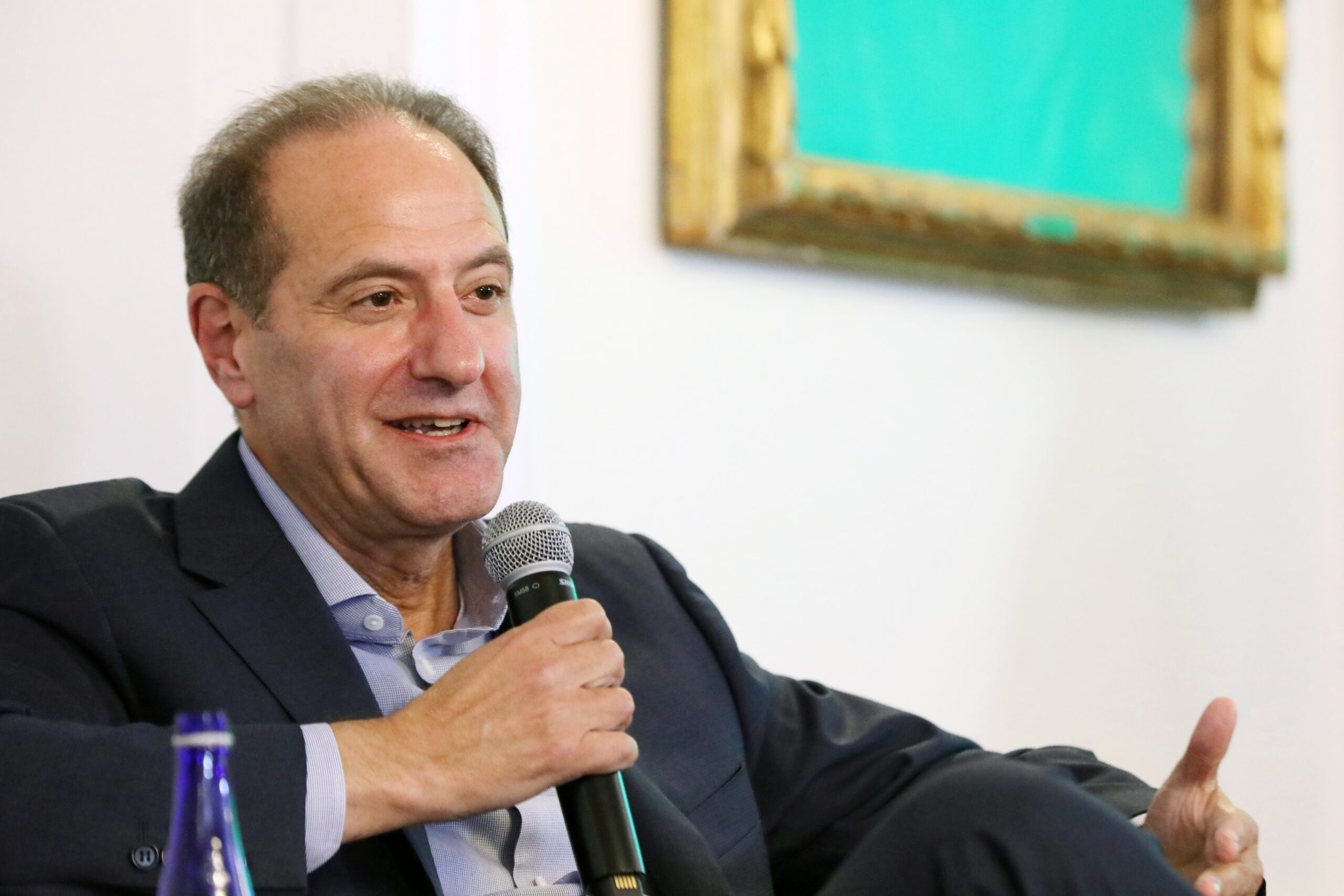
Learning the business, one market at a time
Egypt brought a different assignment. In 1996, Khalaf became the first general manager of Alico's operation there. By 2001, he was responsible for life insurance, pension and mutual fund operations in Poland, Romania and the Baltics, while serving as president and CEO of Amplico Life in Poland. In 2006, he moved to the Philippines as deputy president and chief operating officer of Philamlife.
It is tempting to turn that itinerary into a travelogue. The more interesting detail is the repeated shift in scale. A local operation demands close attention to its own rules and customers. A regional role requires comparison without assuming that every market can be managed identically. Khalaf's appointments placed him on both sides of that problem. The eventual global role would gather those experiences under one title.
Investment officer
General manager
Deputy president & COO
President & CEO
In 2008, he became Alico's regional president for the Middle East, Africa and South Asia. Two years later, MetLife acquired Alico, bringing Khalaf into the company he would eventually lead. The transaction was a corporate turning point and a personal one: his experience abroad became part of a larger insurer's international operating knowledge.
MetLife named him president of Europe, the Middle East and Africa in 2011. In 2017, it added responsibility for the U.S. business. The sequence matters. The American role came after years of international management, rather than serving as his introduction to the rest of the world. By the time the board selected him as chief executive, he had worked across the geographical boundaries that headquarters charts tend to make look deceptively simple.
His U.S. responsibilities included group benefits, retirement and income solutions, and the property and casualty business. These put quite different customer relationships within his remit: employers choosing benefits, institutions arranging retirement commitments and individuals buying protection. The title on the business card stayed compact. The practical assignment involved understanding how several businesses could belong to the same company without behaving like the same business.
Thirty years to the first day
Khalaf became MetLife's president and CEO on May 1, 2019, succeeding Steven Kandarian. There were thirty years between his first Alico appointment and the new job. His career offers little support for the notion that leadership experience must arrive in a straight line. It does offer a rather demanding version of patience: take the next responsibility seriously, even when it sends you somewhere unexpected.
Taking charge of an established insurer carries a particular constraint. Customers have already made plans around promises the institution has made. A new executive inherits those promises along with the authority to change the business. The challenge is to find room for movement while keeping the company dependable. A stirring speech has a much shorter shelf life than an insurance contract.
His first five-year strategy, Next Horizon, sought to focus, simplify and differentiate MetLife. By the end of that period, the company reported that it had exceeded its financial commitments. That is the corporate scorecard. The personal significance is the transition it allowed Khalaf to make: from a newly appointed chief executive setting an agenda to an incumbent asking the organization to attempt the next one.
“I think about playing more offense than we did a few years ago, and being more front-footed.”Michel Khalaf, December 2024
The next five years need a scoreboard
In December 2024, he introduced New Frontier, the strategy for 2025 through 2029. Its priorities were concrete: group benefits, retirement, asset management and international growth. The vocabulary of frontiers may suggest open country; the actual plan concerns familiar businesses in which MetLife already has positions it wants to expand. Khalaf described the change as giving greater weight to growth.
The four priorities also show how much of Khalaf’s present job reaches back into his earlier work. Asset management echoes the investment desk; international expansion recalls his regional appointments; retirement and group benefits connect to the U.S. portfolio he took on in 2017. The strategy gathers those strands together. Its success will depend on what the teams responsible for each one deliver over time.
The plan came with numerical commitments. MetLife targeted double-digit growth in adjusted earnings per share, adjusted return on equity of 15 to 17 percent, a reduction of 100 basis points in its direct expense ratio and $25 billion in holding-company free cash flow over the five-year period. These are forward-looking targets, with defined adjustments, rather than a record of money already earned.
Forward-looking commitments announced December 2024. Adjusted return on equity excludes AOCI other than foreign currency translation adjustments and total notable items.
The asset management priority became tangible when MetLife Investment Management agreed to acquire PineBridge Investments in December 2024. The initial announcement specified $800 million in cash at closing, plus two contingent payments of $200 million each. It also excluded PineBridge's private equity funds group and its joint venture in China. Even an acquisition headline has boundaries; the fine print tells you what is actually being bought.
The acquisition closed on December 30, 2025. More than half the acquired client assets belonged to investors outside the United States, with one-third in Asia. That geographical mix connects neatly with Khalaf's own career, although a transaction must earn its place through business results. Familiarity with international markets provides context. Integrating teams and retaining clients supplies the test.
By the second quarter of 2026, MetLife reported $1.6 billion in adjusted earnings and adjusted earnings per share of $2.43, up 20 percent from a year earlier. Adjusted return on equity reached 17 percent. Net income was $705 million. Keeping the adjusted and accounting figures distinct matters: they answer different questions about the same institution, and an attractive number should always travel with its label.
A family with two very public jobs
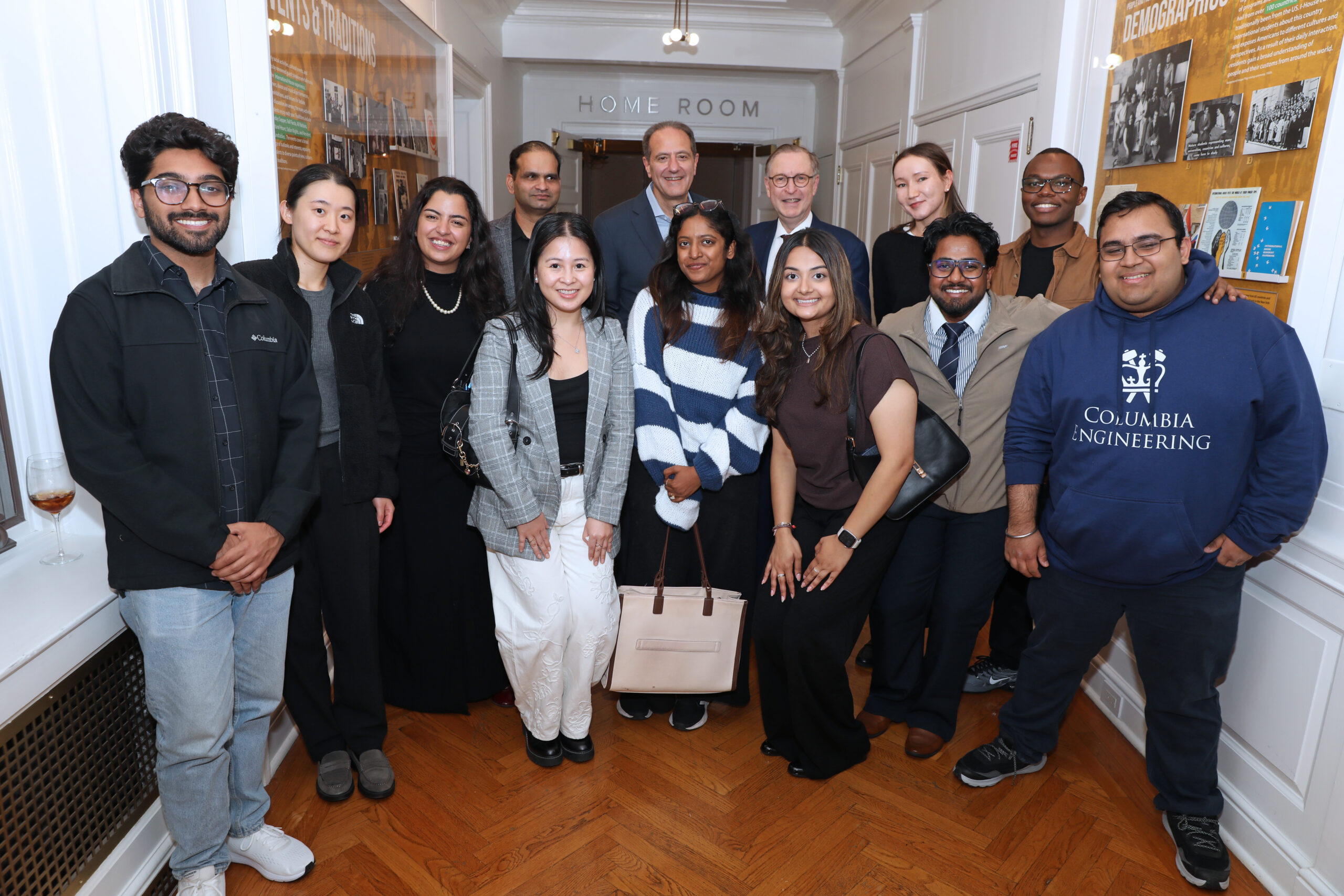
For all the numbers attached to his office, Khalaf can be funny about status. At an October 2026 conversation with Glenn Hubbard at International House in New York, he joked about sibling rivalry: his appointment as CEO had briefly seemed decisive, until his sister Roula became editor of the Financial Times six months later. The family had found a way to make running MetLife an arguable second place.
His public responsibilities also extend beyond MetLife. He serves on the boards of the Geneva Association and the Partnership for New York City. The roles place him in conversations about the insurance industry and the city where he works. They are a reminder that a multinational company still has a local address, and that an executive's decisions meet institutions outside his own organization.
The sixth-floor move remains an unusually clear image for the kind of leadership he describes. Organizational distance can be measured in reporting lines, permissions and habits. Occasionally, it can be measured in elevator stops. Khalaf's career carried him through countries before it carried him into the chief executive's office. Once there, he chose to bring that office closer to everyone else.