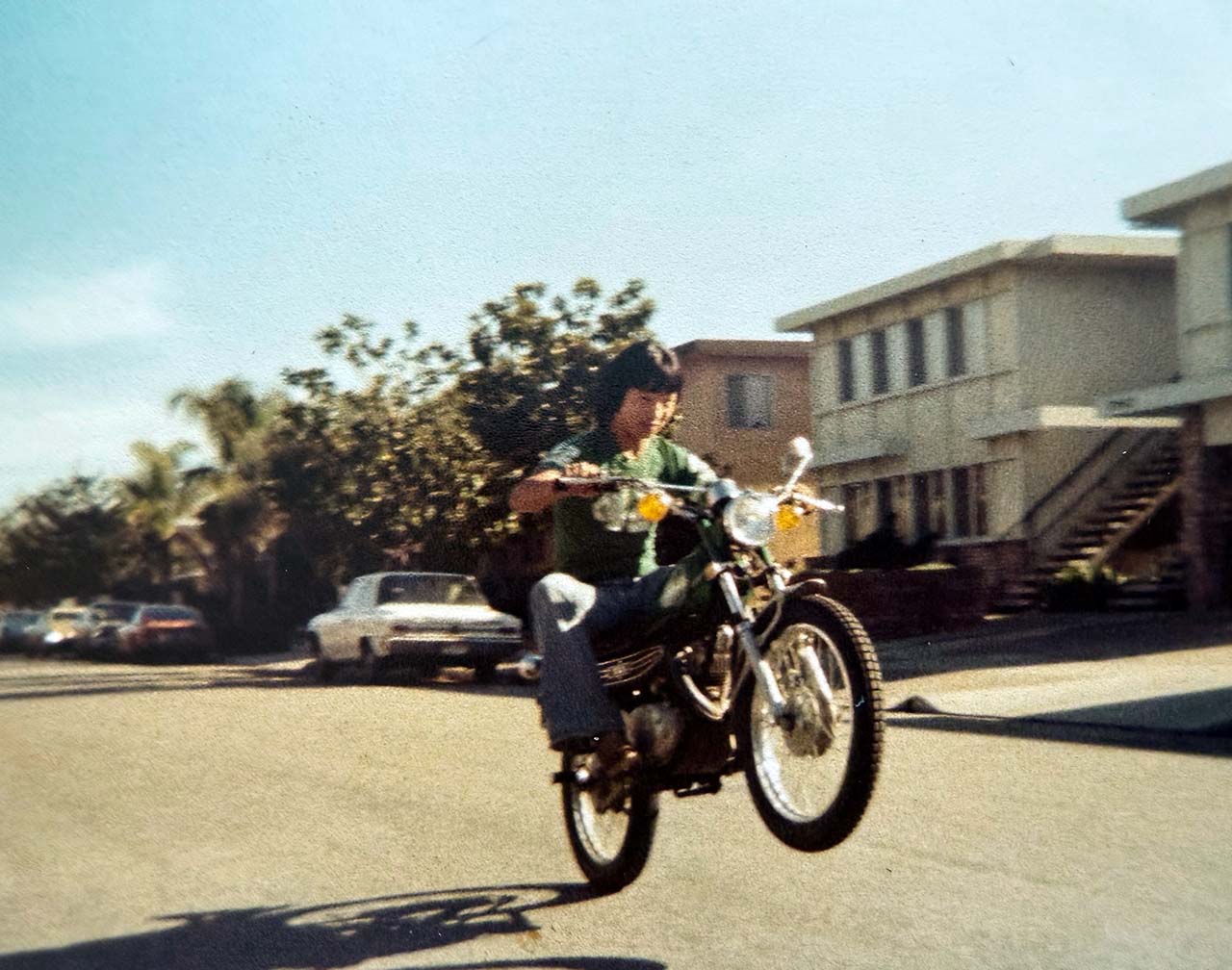
The motorcycle cost Michael Yang $200. He was fifteen, newly arrived in San Jose, and working part-time at a 7-Eleven while attending high school. Another teenager in the neighborhood wanted a bigger bike. Yang wanted a way to get to school. A used Yamaha Enduro seemed a satisfactory arrangement for everyone, including, briefly, the future thief.
A few months later, Yang came outside with his helmet and backpack. The Yamaha had disappeared. There was one parking space at the apartment for his father’s car; the motorcycle had spent the night on the street. He could not afford to replace it. Life carried on, as life has an irritating habit of doing without first consulting its owner.
Years afterward, he would help build companies that made shopping easier for millions of people. One would sell in a stock transaction announced at roughly $700 million. Yet that inexpensive motorcycle kept a place in his memory. Its attraction was simple enough to survive a complicated career: the pleasure of being able to go somewhere.
A new country, then a new industry
Yang was born in Seoul in 1961. His family moved to California in 1976, when he was fourteen, settling in San Jose. He had to learn English and find his footing in an unfamiliar school and culture. Work at the convenience store ran alongside his education. The teenager buying transportation was also learning how to make a place for himself.
His eventual qualifications covered both the machinery and the management of a technology business: electrical engineering and computer science at UC Berkeley, a computer-science master’s at Columbia, and an MBA at Berkeley’s Haas School. His working life included Xerox and Samsung Electronics, with responsibilities extending through engineering, marketing and management.
That background matters because mySimon did not emerge from an adolescent dropping everything for a browser. Yang had spent years inside the industry before founding it. He understood technology as work, with colleagues, customers and budgets attached. The internet offered a new setting for skills he had already been accumulating.
Twenty dollars, two shops, one question
One account of mySimon’s beginnings involves a purchase almost comically modest beside its eventual sale price. Yang bought Microsoft FrontPage for $180 at Micro Center. The next day, he found the same software for $160 at Fry’s Electronics, two miles away. Twenty dollars had gone missing in the space between two shelves.
A comparison service could do that legwork for a customer. Yang teamed up with Yeogirl Yun, an engineer who had worked for him previously, and they founded mySimon in 1998. Their proposition was easy to grasp: search across online stores, compare the offers and save the shopper time.
The product operated in a young retail web that was becoming harder to navigate as it became more useful. A growing choice of stores created a growing amount of homework. mySimon made that homework its business.
By January 2000, the service searched about 2,500 merchants. Its range extended beyond computers to ordinary purchases such as cookbooks, golf equipment and power tools. The opportunity for CNET was to bring shopping comparison together with its existing information business, reaching well beyond the technology aisle.
One bought a motorcycle. The other valued an entire company in an acquisition.
The exit arrived before the ending
CNET announced the mySimon transaction on January 20, 2000. It planned to issue approximately 11.3 million shares for the company. The roughly $700 million valuation belongs to that corporate transaction. Treating it as a personal payday for Yang would erase the other shareholders and the rather consequential word “stock.”
The acquisition came less than two years after mySimon’s founding. It also came before Yang had completed the future he had imagined for the business. He has described wanting to keep growing the company and take it public. Investors preferred the sale. He was outvoted.
There was another complication inside the success story: he had already lost the CEO position. He stayed on the board through the acquisition, but the company’s rapid growth had not preserved his control of it. A founder can create something valuable and discover that its next decisions belong to other people.
In retrospect, the timing of the sale looked fortunate as the dot-com boom broke apart. That did not make the experience emotionally tidy. Yang’s later accounts leave the disagreement in place. They give the familiar acquisition story a human interior: ambition can remain unfinished even when a transaction succeeds.
Back to the shopping aisle
In 2004, Yang and Yun returned with Become.com. They were approaching a related problem from another direction. Price comparison helps once a customer knows what to buy. Before that comes a messier interval of reviews, specifications, advice and doubt. A bargain is less cheering when it is attached to the wrong product.
Become brought shopping research into its search proposition. Professional reviews and buying information could help people understand a purchase before comparing merchants. Its Affinity Index Ranking technology was intended to organize relevant material within that narrower shopping world.
“The articles that our site makes available help to create context for surfers and help them make buying decisions.”
Michael Yang, at Become.com’s 2005 beta launch
By 2006, the company had added local shopping and ways to narrow searches by product characteristics. It had also formed a Japanese joint venture, adapting its technology to another market and language. Yang was again thinking internationally, while discussing a financing climate that placed greater weight on revenue and profit than the earlier boom had.
The CEO’s work could also be distinctly unglamorous. Jongkeun Park, an early Become employee, remembers needing help deploying servers. Yang came to the data center and unpacked boxes. Park’s recollection gives the company a scale that revenue figures cannot: at least on that occasion, the distance between the chief executive and the equipment was short enough to cross.
Compare offers across stores.
Become.com / 2004Research the product, then compare where to buy.
Become grew into an international business, but it did not provide the public-company future Yang wanted. In his retrospective, he puts its scale at about $50 million in revenue and 150 employees worldwide before growth stopped. These are substantial operations to build. They are also a difficult place for a startup to become stationary.
Connexity acquired Become in 2014. Yang’s account of the second company includes the disappointment of its valuation and the end of another hoped-for trajectory. The record holds both experiences together: an early sale at the height of the internet boom, followed by years of building a business with a less satisfying conclusion.
The circle grew beyond the company
Yang’s work also moved into technology investing and civic institutions. He founded Michael Yang Capital Management and helped establish the Council of Korean Americans, serving as its founding chairman. The teenager who had once been finding his way in California became involved in organizing a national community of Korean American leaders.
His public service record includes advisory work with Stanford’s economic-policy institute and President George W. Bush’s IT Advisory Council. He has also supported local education through the La Cañada Flintridge Education Foundation. These commitments place the business career within a wider set of relationships and responsibilities.
In 2016, he joined Hanmi Financial’s board. A decade later, he chose not to seek another term; his directorship was due to end at the May 2026 annual meeting. By then, another undertaking had reached the public: a memoir built around traveling, remembering and reconsidering the course of his life.
The road had been waiting
Yang had returned to motorcycling years before the book. The routes lengthened. In 2022, he rode from Los Angeles to Newfoundland and Labrador and back. The next year brought a ride to Alaska across the Arctic Circle. Patagonia followed in 2024, extending his travels into South America.
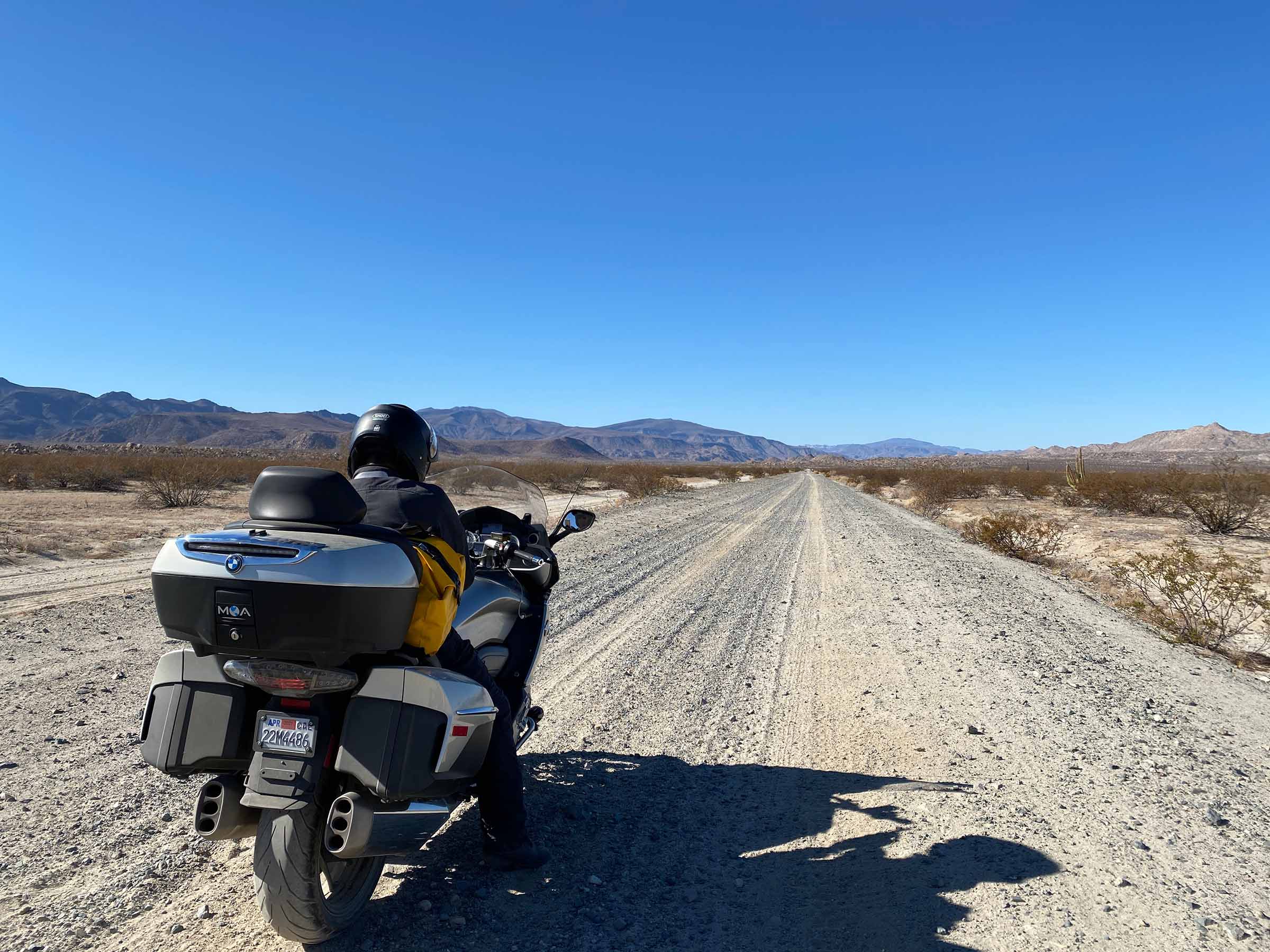
These journeys gave him time to consider the immigrant childhood, the companies and the ambitions that had survived their outcomes. They also supplied a fresh undertaking with its own ordinary demands. A route must be planned. A motorcycle must be ridden. The next place remains somewhere you have to reach yourself.
His Christian faith runs through his account of the journey, alongside his Korean heritage and family life. He lives in La Cañada Flintridge with his wife, Sunny; they have four children. His interests also include Taekwondo, in which he holds a fourth-degree black belt. The professional biography has acquired quite a few competing claims on its space.
Coming Alive on the Ride: A Memoir of Motorcycle Travel, Self-Discovery, and Korean Heritage was published on March 10, 2026, by Greenleaf Book Group Press. Yang celebrated its launch at EK Art Gallery in Los Angeles. In June, his website announced that it had been selected as a Travel finalist in the National Indie Excellence Awards.
Writing gives him another way to share the experience. He has spoken about encouraging people to try unfamiliar things, continuing to travel and exploring history and culture with his family. Those aspirations are roomy enough to accommodate both the founder he has been and the author he is becoming.
The used Yamaha was gone long before any of this. Its purchase had been practical, its theft abrupt, its place in memory surprisingly durable. Yang eventually found his way back to the activity it introduced. After years spent helping people decide where to buy, he still had places he wanted to go.