Michael White started with money people could see but could not easily spend. Employees at private technology companies might hold valuable shares while waiting for an exit that had yet to arrive. Multiply, the company he co-founded with Gautam Gupta in 2022, offered a way to borrow against that equity. Then the customers supplied a useful plot twist. Many wanted the money for a home.
A business built around private shares was encountering an ambition considerably older than venture capital. People wanted somewhere to live. White and Gupta followed the spending rather than insisting on the original product. Multiply introduced mortgages in early 2024 and developed an employer benefit around home financing. The customer had effectively edited the business plan.
“It makes sense,” White said of the connection between liquidity and buying a home. His explanation of the pivot was practical: watching what people did with the original service led the founders to examine housing more closely. There was no need to invent a use case. The use case was already making an offer on a house.
That turn gives White’s career an interesting shape. Before founding Multiply, he had worked on payments, point-of-sale systems and food ordering. Now he was taking on the financing behind a home purchase. The products changed, but each business involved getting software, people and an everyday transaction to cooperate. A mortgage adds considerably more paperwork to the arrangement.
Before the closing table, the engineering team
White graduated from Stanford with a bachelor’s degree in computer science in 2012. The university lists him in the 2011 Mayfield Fellows cohort, placing an entrepreneurship program alongside his technical training. His early work included an Eventbrite internship in 2010 and a Square engineering internship beginning in 2011. These were apprenticeships inside businesses already turning software into services people used.
At Square, his work moved from iOS engineering into management. His public career history dates the iOS role to 2012 and 2013, followed by engineering management between 2013 and 2017. He managed teams working on payments, point of sale and hardware products. The progression gave him responsibilities on both sides of a familiar engineering divide: making the thing and helping other people make it.
He went on to lead engineering for Caviar at Square, then held that role at DoorDash. His own website preserves both entries. It also lists angel investing and advising among his current activities. The résumé is compact, but the sequence matters: White arrived at founding after years of work inside operating companies, with experience extending beyond an individual technical specialty.
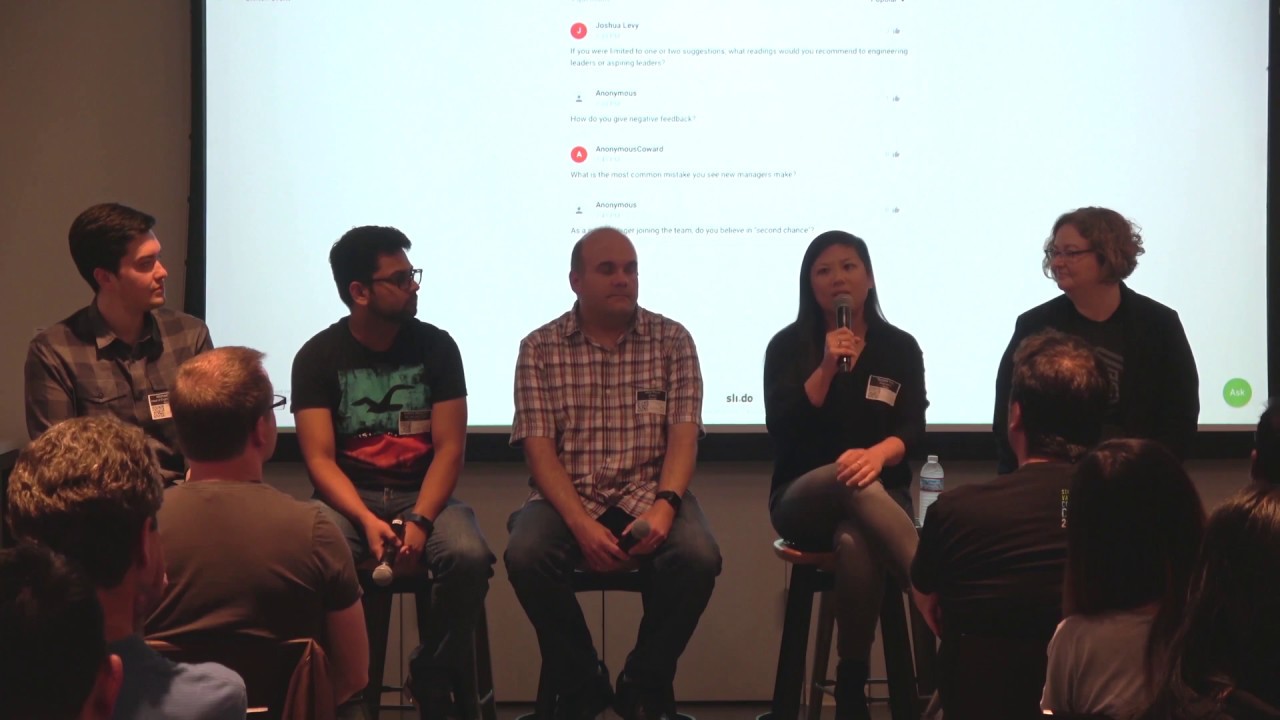
In July 2018, he moderated an engineering leadership panel at Quora in Mountain View. The participants included Jocelyn Goldfein, Raylene Yung, Mike Riccio and Krishna Bhagavan. Their subject was taking over engineering teams, including the successes, failures and moments of realization that come with the job. Long before mortgage benefits became his subject, White was helping organize a conversation about how people work together.
A ladder with two ways up
One piece of White’s writing makes that interest concrete. In July 2019, he published Square’s explanation of its growth framework for engineers and engineering managers. The framework treated technical work and people management as distinct tracks, with comparable scope and impact at equivalent levels. An engineer could take on greater responsibility without having to acquire direct reports.
“Becoming a manager is not a promotion,” one principle stated. Moving into management was a change of work at the same level; advancement depended on demonstrated responsibility and impact. The distinction gives an unusually useful glimpse of White’s professional subject matter. A title was insufficient. The actual work needed a definition.
Read alongside his later move to CEO, the framework provides an interesting counterpoint. Running a company brings a different set of responsibilities from running an engineering team. The continuity lies in the attention paid to roles and incentives. Who should do which work? What encourages someone to take it on? How should the organization recognize a contribution once it happens?
“Becoming a manager is not a promotion.”
Michael White’s explanation of Square’s framework, 2019
The new work: getting people to agree
White returned to the transition from engineering leader to founder in a March 2026 appearance on The Tech Trek with Amir Bormand. The conversation covered communication, influence and alignment, along with the difficulty of taking on larger challenges before feeling ready. Leadership, as the discussion framed it, increasingly involves persuading people and building conviction around a direction.
The episode also examined the timing of founding and the advantages that experience can bring. That is a fitting topic for someone whose path includes both hands-on software work and years managing teams. A founder must make a product, recruit colleagues and give other people enough reason to commit. Expertise in one of those activities does not automatically complete the others.
There is a less solemn detail in White’s engineering-event biography: an enthusiasm for craft cocktails, listed alongside building teams and helping small businesses grow. It is a welcome interruption in a professional life otherwise described through platforms and responsibilities. Even an engineering biography can leave room for something that comes in a glass.
An employer opens the conversation
Multiply’s mortgage business places White in front of another audience: employers and the people who choose employee benefits. The company offers home financing support through those employers, combining mortgage advice, educational resources and access to preferred rates. Employers can offer the program without paying a fee. Multiply earns commissions when mortgages originate.
That arrangement changes how a lender meets a possible borrower. An employer already has a relationship with its workforce, and a benefits program gives the service an introduction. For White, distribution is part of the product’s economics. Reaching customers through an organization they already know can reduce the acquisition expense associated with finding each borrower separately.
In March 2025, Multiply announced a $23.5 million Series A led by Kleiner Perkins, bringing disclosed funding to $27 million. A*, Box Group, Mischief and Workshop also participated. The money supported a company combining mortgage professionals with a technology platform. For a former engineering leader, the assignment now included building a business that could finance and support its next stage.
The relationship with Kleiner Perkins extended back further: its portfolio lists Multiply as a 2022 partnership, names White and Gupta as founders and identifies Mamoon Hamid as the partner. Gupta is also a co-founder and general partner at A*. White’s company therefore sits within an existing network of operators and investors, even as its service depends on the much more personal decision of an employee choosing a mortgage.
- EmployerOffers the benefit
- EmployeeChooses to explore
- MultiplyAdvice + financing
Put the software where the paperwork is
The engineering part of White’s job remains visible in Multiply’s products. In October 2025, the company introduced Rate IQ and Loan Sentinel. Rate IQ examines mortgage offers, including points, lender credits and fees. Loan Sentinel handles work behind the application: extracting information from documents, checking for inconsistencies, organizing files and communicating progress.
These are specific places to put automation. A borrower wants to understand an offer. A processing team needs information organized and checked. White described the goal as removing time-consuming manual steps so advisers could concentrate on helping borrowers. The intended division of labor preserves a human guide while giving software more of the repetitive work.
It also connects his old and new professional concerns. The Square framework distinguished jobs by their responsibilities. Multiply’s product design raises a related question about the boundaries between software and staff. Which tasks benefit from automation, and where does an experienced person remain useful? In a mortgage business, the answer must work across an entire application, rather than only in a convincing demonstration.
Private-share liquidity
Home financing
Benefits distribution
From a benefits meeting to Busta Rhymes
By March 2026, White was announcing a commercial partnership with Sequoia Group, the compensation and benefits advisory firm. The arrangement brought Multiply to its professional employer organization platform, with expansion across the wider advisory business planned. It gave the company a route to employers through an established benefits intermediary.
“We started Multiply to make the mortgage process less expensive and less painful for employees,” White said. The partnership made his CEO responsibilities tangible: another organization had to understand the service, agree to carry it and make it available within its own operations. Influence and alignment had become part of getting a mortgage product to the people who might use it.
At the Transform conference that spring, White reported roughly 150 conversations over three days with People executives and other leaders. He credited the team’s advance preparation and enjoyed the event’s jump from benefits strategy to a Busta Rhymes set. The detail is amusing because the two activities rarely share a calendar invitation. Both, apparently, fitted into the week.
Multiply’s current website describes access through more than 1,200 employers, covering over 220,000 employees. Those figures describe the potential audience for the benefit; they do not count completed mortgages. White’s task is to turn availability into a service people choose, understand and can use when a home purchase becomes real.
The ambition is broader access to homeownership, but the route is a series of concrete decisions: a founder follows customer behavior, a team changes its product, an employer adds a benefit, an adviser helps someone examine an offer. White’s story keeps returning to the connection between a system and the person using it. The original customers made that connection especially plain. They had shares. They wanted keys.