A lint roller is a modest object to bring into a story about starting a company. It has no screen, no pitch deck, and a fairly narrow understanding of success: something was on your jacket, and now it is on the roller. Michael LaFauci’s account of his entrepreneurial life nevertheless gives one a part. A prototype for his current venture began with that ordinary household implement. The polished explanation came later.
LaFauci is the founder and chief executive of MIDAS Healthcare Solutions, Inc. He is also an inventor whose earlier work included a way for sports fans to order refreshments without leaving their seats. Across those projects, the attraction is easy to recognize. An everyday procedure contains an inconvenience. People accommodate it. An entrepreneur asks whether the accommodation has become unnecessary.
There is humor in that starting point, and considerable work waiting behind it. A nuisance can be described over lunch. A working product tends to consume rather more lunches. LaFauci’s career is interesting in the space between the two: where an observation needs collaborators, an object needs engineering, and a business needs enough persistence to outlive the original burst of enthusiasm.
The view from the stands
Consider the sports seat. Someone has paid to be in a particular place, looking in a particular direction, while something unpredictable happens. The refreshment counter asks that person to leave. The transaction is familiar enough that its oddness can disappear. A ticket buys the view; a queue temporarily takes it away. In-seat ordering makes a straightforward promise about the experience the customer came for.
LaFauci developed technology to let fans place those orders from their seats. The appeal lies in a small rearrangement of effort. The fan stays put while the order travels. Behind that simple proposition sit the practical questions every convenience business eventually encounters: where the customer is, what was ordered, and how the request reaches the people who can fulfill it.
Those questions reveal something about product development. Making an experience feel easier usually moves complexity somewhere else. The person holding the drink need never think about the coordination behind it. The people building the system have to think about little else. A successful transaction is wonderfully untheatrical. Everyone gets what they expected, and the game continues.
That earlier project gives LaFauci’s career an accessible point of entry. Before considering company titles or patent language, there is a recognizable customer with a recognizable wish. A business idea becomes much easier to understand when you can picture the person who would be pleased if it worked.
A code with moving parts
Another LaFauci invention starts with a different ordinary thing: the scannable visual code. On August 20, 2024, U.S. patent 12,067,436 was granted for reconstructed segmented codes and methods of using them. The inventors named on it are Jeffrey R. Wahl, Michael A. LaFauci, and Jonathan Pinsky. RVC Technologies, Inc. is the named assignee.
The underlying arrangement is pleasingly physical. Portions of a visual code can sit apart, leaving it nonfunctional. Bring the portions into the appropriate relationship and a functional code forms. Movement changes what can be read. The concept connects a physical arrangement to a digital response, giving a scanner something meaningful to recognize when the pieces come together.
A patent makes an unusual companion to an executive biography. It replaces adjectives with conditions. What changes position? Which state produces which result? What must happen for the mechanism to work? That level of specificity brings an invention down to earth. You can admire an idea at a distance; development requires getting close enough to discover its awkward parts.
The three names matter as much as the mechanism. Wahl and Pinsky also appear in the professional circle around MIDAS. A shared invention has a different texture from the familiar picture of someone having a solitary flash of inspiration. It leaves a public record of collaboration, with more than one person attached to the result.
The company an idea needs
MIDAS was founded in 2017. By October 2022, the company had announced a $1.19 million investment from IQ Inc., alongside a software development partnership. Barbara VanKirk, IQ’s chief executive, was to join the MIDAS board. The agreement joined capital, technical work, and a continuing role in the company’s direction. It gave the development story an organizational shape.
That arrangement is useful to consider on its own business terms. A software partner has to engage with requirements that resist a neat verbal summary. A board member has to keep asking what comes next. Bringing those responsibilities together puts different kinds of knowledge in the same conversation. The original idea acquires people whose work is to make the details hold.
For LaFauci, the founder title sits beside that network of responsibilities. An executive must give a project direction while making room for expertise that changes the plan. The sentence that explains a product can stay short. The list of decisions behind it grows: what to build, who should build it, what it must connect to, and which unresolved question deserves attention first.
- 2017MIDAS founded
- 2022$1.19m IQ investment announced
- 2023$2m MCPC investment announced
In October 2023, another piece arrived. MIDAS announced a $2 million investment from MCPC Healthcare Investment, LLC, extending its Series A round. The announcement placed the funding in the context of further development and deployment. For a founder, raising money changes the resources available to a project. It also gives the next stage a set of expectations.
The dates make a useful counterweight to the speed of a business introduction. Between founding in 2017 and that investment announcement lie six calendar years. A listener can absorb a company’s premise in a minute. The organization behind it takes shape through agreements and decisions spread across a much longer period. LaFauci’s story has room for both clocks.
Making the object behave
The physical design work adds another set of people to the picture. MIDAS collaborated with Nottingham Spirk, whose account of the project describes electrical engineering, connected data collection, and industrial design. Its designers considered stability, durability, height, and the placement of features. Engineering and prototyping teams built a working model for testing.
These are practical nouns with practical consequences. Height determines how someone reaches. Stability determines what happens when a person touches an object. Placement determines whether the next action feels obvious or requires a search. A product can have a coherent explanation and still put the thing someone needs in an inconvenient place. The object gets the final vote.
A prototype makes those questions discussable. People can stand beside it, reach toward it, and discover where their expectations diverge from the design. A description leaves considerable room for everyone to imagine a slightly different object. A model occupies the room and reduces that freedom. Occasionally, this is embarrassing. It is also the point.
Set that development work beside the lint roller in LaFauci’s origin story. The distance is substantial. A first object gives an idea a visible beginning. A tested object must answer to the people who will use it. The founder’s job includes keeping the project moving through that change in audience, from people willing to imagine the possibility to people entitled to expect it to work.
Thirty years at the same table
Some of the continuity in LaFauci’s career comes through his colleagues. Stephen Drummond has publicly described working professionally with LaFauci and Sebby Borriello for well over thirty years. That is a striking span to find inside a startup account. New company names can sit on top of relationships built over a much longer working life.
MIDAS’s leadership includes Wahl as general counsel, Pinsky as chief operating officer, Borriello as chief commercial officer, and Pamela Baglino as chief product officer. Each title points toward a different set of questions. Put together, they describe the breadth of work required around an invention: legal judgment, daily operations, selling, and the product itself.
“Thank you, Sebby for leading our commercial team and creating awareness during this important meeting.”
Michael LaFauci, in a public acknowledgment of Borriello
LaFauci has made those acknowledgments himself. After a 2026 interview appearance, he thanked John, Steve, and Jacob, then added Kathy McKeon to the list. A small courtesy tells a concrete part of the story: other people were involved, and he named them. It brings the business biography back to the ordinary professional act of remembering who helped.
The pitch gets shorter. The work does not.
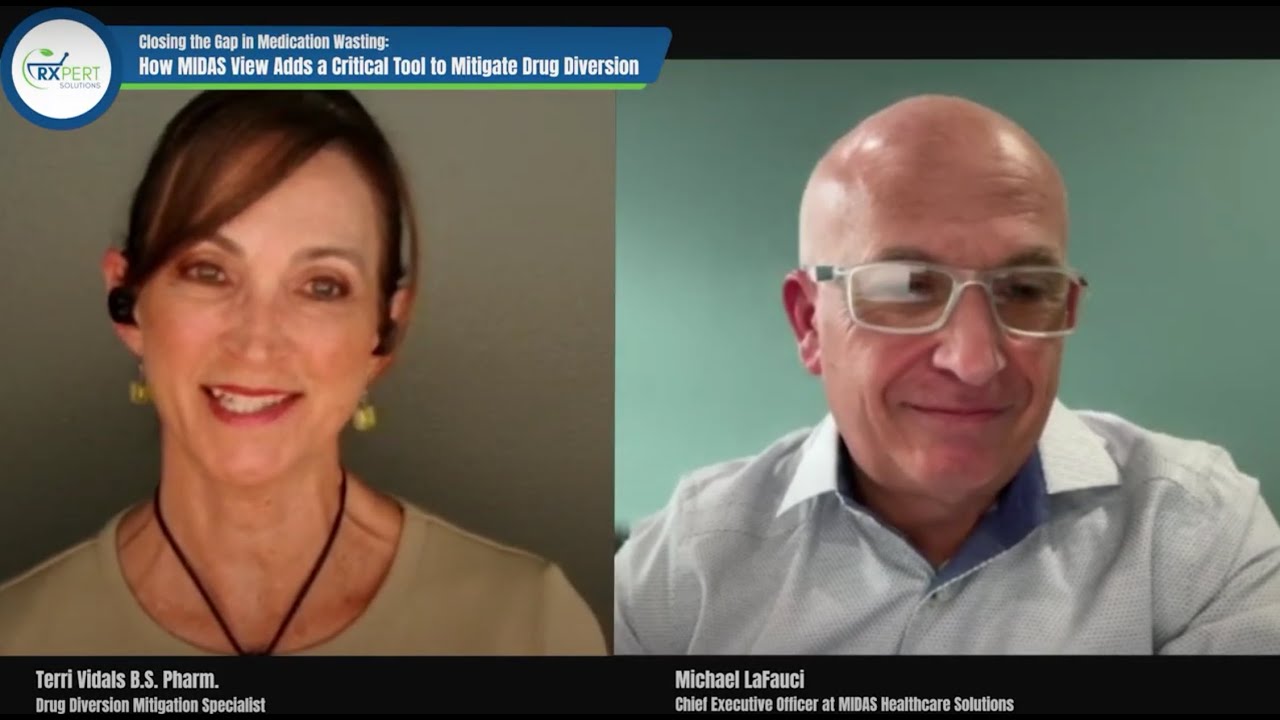
LaFauci has explained his company in a sixty-second elevator pitch with Hays Waldrop. He has also sat for longer conversations, including a thirty-six-minute interview published in February 2026. The formats ask different things of a founder. One needs compression. The other can accommodate the detours, early objects, and persistence that a short introduction has to hurry past.
The appealing part of this career is its collection of tangible beginnings. A seat in the stands. Pieces of a visual code. A household roller. Around them gather the less photogenic necessities: patent applications, software agreements, funding rounds, and people willing to return to a problem after the first explanation has stopped feeling new.
A lint roller has a reassuringly immediate job. Building a business offers fewer such tidy endings. There is always another question waiting at the edge of the drawing, the demonstration, or the meeting. LaFauci’s story follows the work of giving those questions a form, then assembling the company and collaborators needed to keep answering them.