Cybersecurity has a language problem. Its nouns are often invisible, its verbs are alarming, and its acronyms breed faster than anyone can arrange them into a reassuring slide. Michael Callahan has spent much of his career in the narrow, valuable space between the people who build security products and the people who must decide whether to buy them. He did not arrive there by the usual marketing route. He started in engineering. A mentor helped him make the crossing. The engineer never quite left.
That origin explains the line Callahan uses to describe his discipline: marketing is a machine. It is an engineer’s metaphor, but also a marketer’s warning. A machine can be instrumented. Its inputs can be inspected. Its output can be judged. If the thing whirs beautifully while solving the wrong problem, the polished gears are merely expensive theatre.
Callahan’s public writing keeps returning to that point. He has written about “problem marketing,” questioned the traditional funnel by comparing it to funnel cake, and gone looking for the marketing metrics that matter. The titles have a light touch; the operating belief beneath them is severe. Motion is not progress. A prospect does not owe a company attention simply because the company has manufactured content. The problem must feel recognisable before the product can feel necessary.
A long apprenticeship in invisible risk
His résumé reads like a tour through the changing perimeter of enterprise security. There were senior roles at McAfee and Credant Technologies, then TippingPoint and HP. Juniper Networks put him in corporate and security product marketing. FireMon preceded a move to Zimperium in 2017, where the proposition was mobile threat defence at a moment when the phone had become the new endpoint. Cofense followed. In January 2022, Acronis named him chief marketing officer, giving him a global brand and a cloud cyber-protection platform to explain.
Each stop changed the object being protected. The communications task remained stubbornly similar: turn an abstract exposure into a concrete decision. At Zimperium, Callahan described mobile devices as repositories for banking, travel, business, and other sensitive interactions. At Acronis, the emphasis moved to a cloud-based digital ecosystem and the need to stop evolving threats. The technical perimeter migrated. His job was to keep drawing the new map.
In October 2023, he joined Salt Security as CMO. The company’s territory was API security, a category with a particularly wicked storytelling problem. APIs are essential and mostly unseen. They connect the services behind everyday applications, transport data, and let software perform useful work. They are plumbing with permissions. Few executives wake eager to discuss plumbing, at least until it floods the boardroom.
The API steps into the spotlight
Callahan arrived at Salt as APIs were becoming easier to describe for one unsettling reason: artificial intelligence was making their consequences visible. An AI model can produce words. An AI agent can use APIs to retrieve data, invoke tools, and take actions. Suddenly the forgotten connection is not merely passing a request. It may be giving software agency.
His memorable formulation is also simple: “The risk with AI isn’t just the model. It’s what the model can access and act on.” The sentence converts architecture into behaviour. It invites the useful follow-up questions. Which tools? Whose data? Under what identity? With which permissions? Logged where? Revoked how? This is technical translation made clear. Nothing has been made less serious; it has merely been made legible.
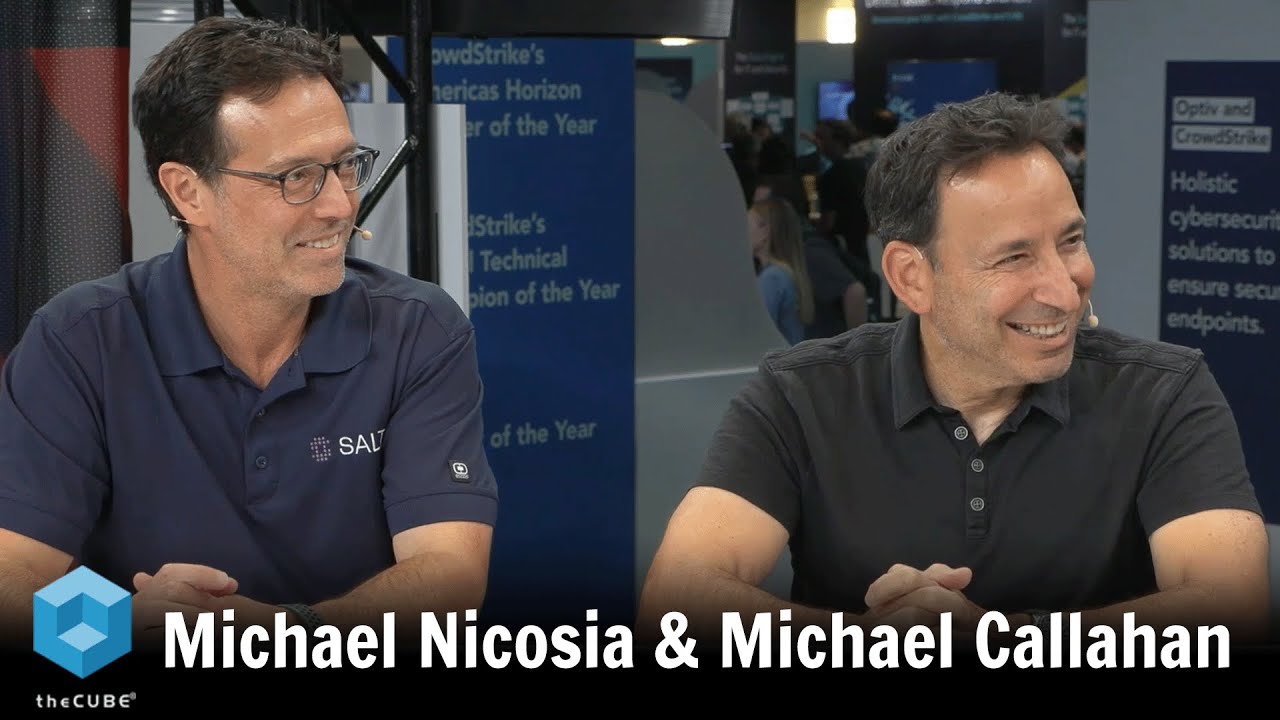
At Black Hat in 2025, Callahan discussed agentic AI, Model Context Protocol servers, shadow infrastructure, and the emerging “API fabric.” The metaphors were doing serious work. A fabric suggests many threads whose strength depends on the connections between them. A shadow server is not necessarily malicious; it is dangerous because the organisation may not know it exists. He compared one class of MCP risk to DNS poisoning, reaching for a familiar security story to illuminate a new one.
By 2026, his remit had widened to VP of Strategy and CMO, and Salt’s vocabulary had widened from API security to agentic security. The company announced a Policy Hub with 100 pre-built policies spanning access control, API architecture, MCP configuration, compliance, and autonomous-agent behaviour. Callahan framed the milestone around a recurring customer confession: leaders knew they needed posture governance, but did not know where to begin. A library of controls turned a vague mandate into a first move.
The human operating system
Callahan’s systems language might suggest a devotion to dashboards over people. His interviews point in the other direction. In a 2025 podcast conversation, he discussed mentorship, authenticity, vulnerability, and the value of embracing failure at work. His career pivot itself contains the evidence: someone recognised that an engineer might become a marketer and helped open the door.
“Fail fast, learn faster” is useful precisely because the second clause saves the first from becoming startup wallpaper. Failure without learning is only repetition in fashionable trainers. Learning requires enough psychological room for someone to describe what actually happened, and enough measurement to separate a brave experiment from a careless guess. Callahan’s machine metaphor and his human vocabulary belong together. Instrument the work; do not mechanise the people.
Recommendations from former colleagues describe a collaborative executive who defends a position with data, sets clear objectives, and remains approachable. That combination matters in security, where certainty is often sold in excess and delivered in instalments. A marketer must be confident enough to make a claim, technical enough to know its boundary, and candid enough to revise it when the world changes.
The Ohio State University sits near the beginning of his public biography, along with Delta Sigma Phi and service on the Student Union Board of Directors. The available record does not turn those college years into a grand origin myth, which is just as well. Careers rarely announce their plot on the first page. What becomes visible later is a comfort with two different kinds of room: the one where a technical argument must withstand inspection, and the one where a group must agree on what to do next.
That dual fluency helps explain why Callahan has worked in both global companies and growth-stage firms. A large organisation rewards navigation, alignment, and repeatable process. A younger company rewards category-making, fast feedback, and a tolerance for an unfinished map. The same executive can struggle when carrying habits from one setting into the other. Callahan’s public emphasis on clear objectives and accountable experimentation offers a bridge: build enough machinery to learn, but not so much that the machinery becomes the mission.
There is also evidence of an operator who enjoys the reset. After his first 90 days at Salt, Callahan wrote that January is his favourite time of year: a season for reflection, goals, and aspirations. The detail is modest, but revealing in the way a well-kept notebook is revealing. His public work likes cycles - funnels, metrics, first 90 days, annual predictions, policy libraries. Categories change quickly. A cadence gives the team somewhere firm to stand.
He also seems to enjoy rescuing useful ideas from tired business furniture. The funnel becomes funnel cake, a joke with a diagnosis hidden inside it. The first 90 days become a chance to report surprises rather than declare victory. A policy library becomes an app store, a familiar shelf for an unfamiliar category. None of these metaphors does the work alone. Each gives a busy reader a handle. In a trade where language can become a thicket, a handle is a small act of hospitality.
Clarity is a security control
The next act of Callahan’s career is happening while AI agents move from demonstrations into ordinary enterprise workflows. The marketing temptation will be enormous. Every tool will acquire an agent; every architecture diagram will sprout a sparkle. Yet the hard questions will remain unglamorous. What can the agent reach? What may it do? Which API did nobody inventory? Can the organisation prove its policies are active rather than promised?
Callahan’s recent writing follows those questions into AI-generated code, posture management, governance, and runtime protection. It is the same old apprenticeship with new nouns. Study the system. Find the customer’s actual problem. Build a clear path from risk to action. Measure whether anyone took it.
The craft is easy to underestimate because good translation makes complexity look briefly tame. It is not tame. APIs multiply. Agents acquire permissions. Infrastructure hides in shadows and outlives its owners as “zombie” services. A clear story cannot secure any of it by itself. But an unclear story can prevent the budget, ownership, and urgency required to begin.
That is why a career in cybersecurity marketing can be read as more than a sequence of launches. Callahan has spent decades naming the next invisible thing before it becomes an obvious problem. The endpoint became the phone. The application dissolved into APIs. The model learned to act. The perimeter moved again. Somewhere between engineering precision and a marketer’s instinct for the human ear, he kept drawing the map.