In November 2014, the most interesting room in an American high school was, for a moment, on a phone. It belonged to the students of that school and admitted them under a peculiar bargain: they could say what they wanted without attaching their names. After School, the app built by Michael Callahan and Cory Levy, supplied a separate feed for each campus. A compliment might appear beside a confession. A joke might become a rumor before lunch. The same curtain that made honesty possible made cruelty easier, too.
The founders thought a school network without parents, teachers or a public follower count could let teenagers discuss what polished social profiles kept out: crushes, fear, friendship, sexuality, trouble at home. The early product moved fast. In a 2015 account of its first four weeks, the company said it had hundreds of thousands of engaged users across half of U.S. high schools. That reach was a company claim, but the complaints were plain enough. Reports of bullying and a school threat put the app before parents, administrators and Apple. In December 2014 it briefly disappeared from the App Store, then returned with changes.
- After School was a private social feed for verified students at the same high school.
- Its first version grew rapidly, while anonymous posts generated bullying and safety complaints.
- The 2015 relaunch added human review of every post, filters, reporting and age checks.
- Later features linked distressed students to counselors and invited teens into campaigns and polls.
- The original app and website were reported unavailable by 2020.
The first product was a permission slip
After School served American high school students; its unit of community was the school. The app was free to use. A student selected a campus, passed a verification process, chose an avatar and entered a feed visible to classmates. Posts could include text, images or video. Names were optional. The point was intimacy without the usual reputational tax of posting under your own name.
The details distinguished it from the anonymous apps of the period. Yik Yak organized posts by geography; After School organized them by school membership. Facebook and Instagram offered wide audiences and persistent identities; After School narrowed the audience and softened identity. It also omitted public friend lists and follower counts. Those are small design decisions with social consequences: a student could enter a conversation without first assembling a visible rank among peers.
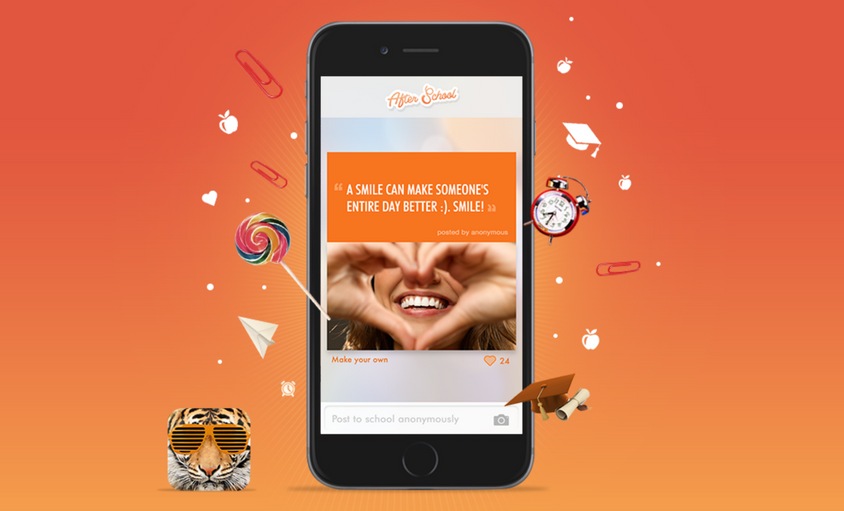
Students could post anonymous compliments and “shout outs,” make polls, or use a feature called “Would You?” That last feature asked two students whether they would do something together; a mutual yes revealed the match. Its charm lay in a modest idea: make a potentially awkward invitation safer by requiring both people to opt in. The app tried to turn its most controversial feature, anonymity, into a way to start ordinary human encounters.
Then the room needed a doorperson
Early criticism was more than a public relations inconvenience. An anonymous message board for minors has a structural problem: the person who wants to ask for help and the person who wants to wound a classmate both benefit from concealment. In its own safety post, the company said it had analyzed millions of early posts and classified 79% as positive and 21% as negative. That was the company's judgment, not an independent safety audit. Even by that account, one post in five missed the atmosphere the founders wanted.
“We took a giant step back and looked at what we were trying to accomplish versus what was currently happening.”After School team, April 2015
The April 2015 relaunch turned a light social product into a labor-intensive one. Every post was to be reviewed by a person before publication. Software helped flag threatening or harmful language. Students could report a post; the company described an immediate removal process while staff checked it. It added community guidelines, age verification for mature content, parental controls and advisers on bullying and mental health. TechCrunch reported 15 employees working on moderation around the clock at the time, with approvals usually taking less than a minute.
Keep each campus feed for its students rather than everyone nearby.
Human reviewers and software assess a post before classmates see it.
Reports, threats or signs of distress trigger removal or support.
What did the reset cost? Its visible costs were people on shifts, escalation rules and software that had to keep pace with student language. The company later announced a $16.4 million Series A, led by Accomplice with Tikhon Bernstam and Naval Ravikant, and said the capital would support safety features and new opportunities. By 2018, the San Francisco Chronicle reported 17 employees and about $17.4 million in total funding. Those figures describe the scale of the undertaking, even if they cannot price an individual safer post.
From secret posts to useful signals
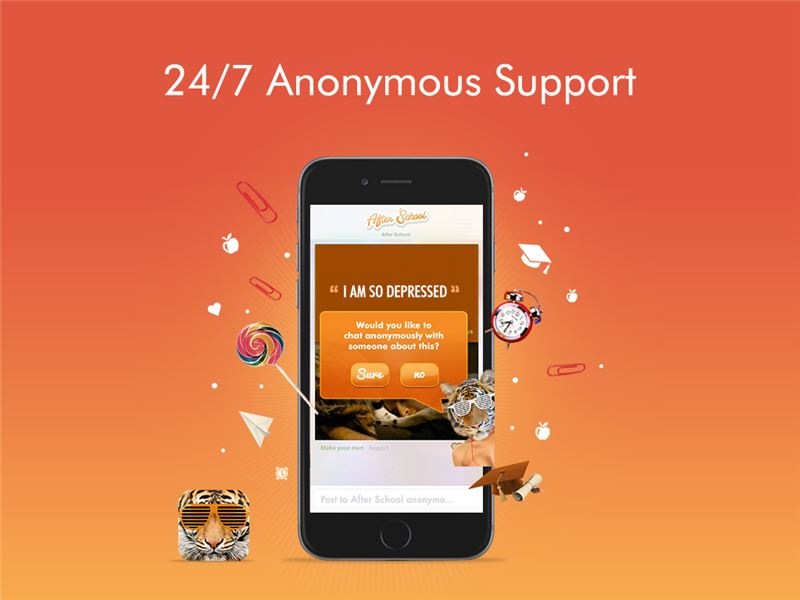
After School's second act asked whether a school feed could do something more constructive than carry speech. A post suggesting depression or self-harm could prompt an offer to contact a live Crisis Text Line counselor, free and anonymously. Cory Levy said in a June 2016 interview that the app had helped connect more than 60,000 students to crisis counselors. That is a founder-reported referral figure, not a measure of clinical outcomes. The mechanism still matters: the company used the moment of disclosure to offer a next step, instead of treating the post only as content to remove.
The company also partnered with DoSomething.org on “Mirror Messages,” encouraging students to leave positive notes on school bathroom mirrors. Its “Would You?” prompts offered another route from the feed into shared action. Neither campaign required the app to become a school authority. It needed students to recognize the invitation as their own. That is a different skill from accumulating posts.
By 2017, After School was offering media organizations and nonprofits a way to poll teenagers. A one-day BuzzFeed collaboration about fake news drew 39,000 responses, according to the company's release. Its election project asked students about candidates and directed eligible teens toward registration and volunteering. The polls were self-selected responses from app users, so they could tell a vivid story about participants without standing in for a national scientific sample. The business proposition was access to an audience adults frequently discuss and seldom ask directly.
Ask users what they need before launch, as the founders said they did in teen focus groups. When misuse appears, redesign the path from post to consequence, not just the wording of a rule.
A closed school network needs reliable membership checks, paid review capacity and a way to handle urgent posts. Anonymity alone supplies none of those.
The bargain anonymity could not settle
After School remains a useful case because it does not supply a tidy verdict. It grew quickly and found a real demand for less performative teen conversation. It also discovered that a private audience is not automatically a kind one. Human review and crisis referrals addressed visible failures, but the underlying tradeoff never vanished: the more freely a teenager can speak, the more care the operator owes to everyone else in the room.
The original app and website were reported unavailable by April 2020. Its safety redesign changed how the network worked, while the central bargain stayed difficult. What remains is a transferable lesson in product design. A company can make a vulnerable audience feel seen with one elegant affordance. Keeping that promise requires an organization behind the screen, awake when the feed is.