A job advertisement can tell you things a company brochure leaves out. In 2014, the agency advertised for interns. The duties included keeping track of samples, helping with stylist pulls and returns, updating databases, and collecting editorial coverage. Somewhere beyond those tasks lay the parties. First, someone had to know where the clothes were.
That small detail explains a surprisingly large part of fashion publicity. A brand can produce something lovely and still struggle to get it in front of the person who will choose it. Between a collection and a celebrity photograph sit requests, decisions, schedules, and physical objects. The glamour has an administrative life.
MHA, founded by Marilyn Heston in 1998, made that territory its business. Its history runs through luxury fashion, jewelry, accessories, beauty, and lifestyle brands. Its particular interest is the point where Hollywood attention becomes useful to a designer. A dress needs a wearer. A brand needs its name to travel.
A publicist at the fitting-room door
Heston’s background includes film publicity, with credits on Return to the Blue Lagoon, Buffy the Vampire Slayer, and Needful Things. It is a useful prehistory for someone whose later work would connect two businesses that spend considerable energy thinking about how people appear in public. Cinema supplies the recognizable face; fashion supplies another part of the image.
Public reporting credits Heston with helping introduce Jimmy Choo and Elie Saab to Hollywood. Those names explain MHA’s positioning more clearly than a broad promise to build awareness. The agency worked at the intersection of international luxury and American entertainment, where a relatively unfamiliar designer could acquire a much wider audience through the right association.
Its client history also includes a smaller designer with a different set of pressures. The documentary Peace, Love & Bikinis! follows swimwear designer Ashley Paige as she prepares for Los Angeles Fashion Week. Its press materials describe meetings with her publicist, Heston, amid the pressures of keeping an independent business moving.
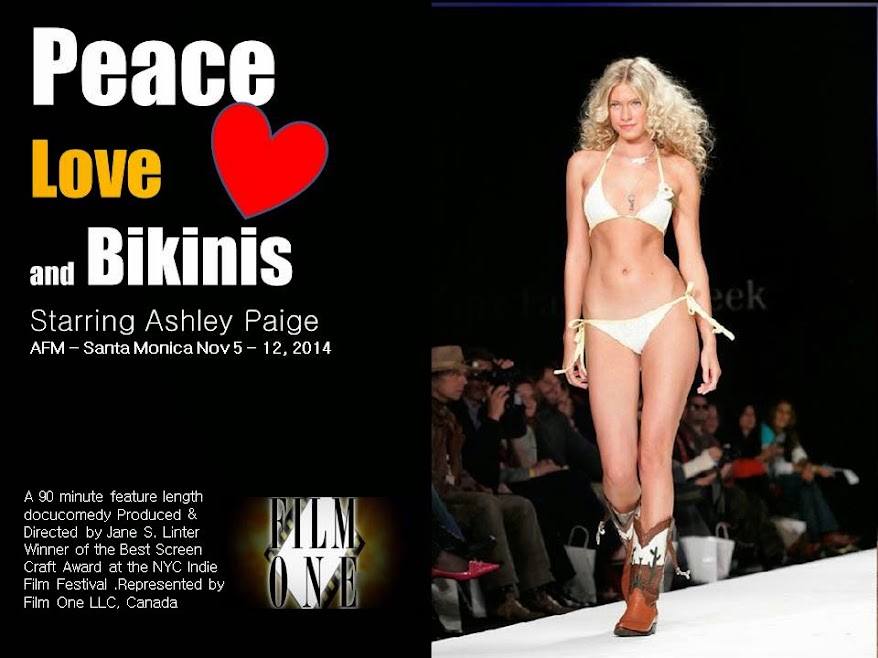
The film’s account matters because a small label has more to worry about than an invitation. Paige’s story involves production, sales, sponsorship, and the effort to get a collection in front of press and buyers. Publicity enters a business already full of demands. It must fit around the making and selling of the clothes.
The showroom is part of the service
MHA’s offer combines celebrity placement with media relations, brand consulting, customized events, and cross-marketing. Its historical client list includes Bulgari and M.A.C Cosmetics alongside fashion labels. This is a business-to-business service: brands are the customers, while celebrities, stylists, editors, and event audiences are among the people the work tries to reach.
Read the internship notice again and those services become tangible. Someone organizes the showroom. Someone handles the movement of samples. Someone records what appears in the press. The notice asked for attention to detail and familiarity with fashion and entertainment. Its perk list included the wonderfully specific promise of “Parties and giggles.” The inventory still needed doing.
As a practical interpretation of that work, consider the stylist’s decision. A collection becomes easier to consider when the relevant pieces can be located, requested, and returned without confusion. A well-run showroom reduces the effort between interest and action. For a designer, that coordination is part of what an outside agency can contribute.
- 01CollectionA piece worth considering
- 02SelectionA stylist’s working choice
- 03AppearanceThe piece reaches the event
- 04RecognitionThe brand name travels
Each handoff matters. A photograph alone does not complete the journey.
This is where MHA fits in the market: a specialist in the relationships and execution around luxury visibility. A brand evaluating this kind of agency would compare it with other fashion publicists, a broader communications firm, or its own internal team. The useful distinction is relevant experience and access, followed by the ability to handle the work after someone says yes.
The photograph has a budget
The appeal of celebrity exposure is easy to understand when placed beside the cost of conventional advertising. Reuters reported that a thirty-second commercial during the 2013 Oscars averaged $1.65 million, citing Kantar Media. That figure describes advertising inventory at one historical event. It is a benchmark for the attention surrounding the ceremony, not a price for MHA’s services.
Average price of a 30-second advertisement during the 2013 Oscars.
Historical industry benchmark · Kantar Media, reported by Reuters · Not an agency feeA celebrity appearance and a purchased advertisement also offer different kinds of control. In planning a placement, a brand should separate its service budget from the practical costs of preparing and moving the product. Then it should decide what result would justify the effort. A photograph, a clear fashion credit, a qualified inquiry, and a sale are different outcomes.
The distinction becomes particularly useful when someone attaches an impressive monetary value to coverage. The cost of buying a comparable advertising slot does not establish how much a brand earned from a photograph. A sensible evaluation follows the response that the business can actually observe. For a boutique label, a manageable number of serious buyer inquiries may matter more than a very large audience with little intention to buy.
When everybody wants the same woman
Heston’s public comments also puncture an appealing assumption: an Oscar nomination does not automatically put an actress at the front of every designer’s queue. In 2012, she explained that established fashion personalities could command access even over nominees. The entertainment industry’s ranking and the fashion industry’s ranking did not line up neatly.
The implication for a brand is subtle. The relevant celebrity is not necessarily the person attracting the most general attention that week. A particular look, an existing relationship with fashion, and the fit between a person and a label can shape the opportunity. Heston’s work sits inside those judgments, where broad popularity becomes a much more specific choice.
“For young designers, finding their way into this world, it’s really difficult.”
Marilyn Heston, speaking to Reuters in 2014
By 2014, Heston was describing an increasingly crowded field in which established luxury houses made major-event placements harder for newcomers. The opportunity that helped build an emerging designer’s reputation had attracted more competitors. This is the important complication in MHA’s history: knowing that a channel can work does not mean access to it stays equally available.
A useful brief therefore starts with fit and feasibility. Which people would plausibly wear the collection? Which occasions suit it? What can the brand prepare on time? A small label that cannot supply the right pieces, or act on the resulting demand, has a different problem from one that simply needs an introduction.
Give the next person less work
MHA’s documented range continued beyond its best-known luxury associations. In May 2017, trade coverage announced its representation of Mara & Mine X Candice Swanepoel, Tobi Tobin, and DHELA. These are dated examples of the agency’s work, and a reminder that a company’s history is made of individual assignments as well as recognizable names.
The lesson a reader can borrow is practical. Make the product easy for the next person to understand and consider. Keep track of what leaves the room. Give the resulting coverage a chance to identify the maker. Decide in advance what useful attention would look like for the business receiving it.
Those are editorial lessons drawn from MHA’s work, rather than a promise that any particular placement will succeed. They travel beyond luxury fashion because they concern ordinary points of friction: unclear information, unavailable products, missed handoffs. The famous person may be the most visible participant. The person who knows where the dress is has a consequential job, too.